






How to Get There
Visitor Information
Processes and Offerings
Water Offering
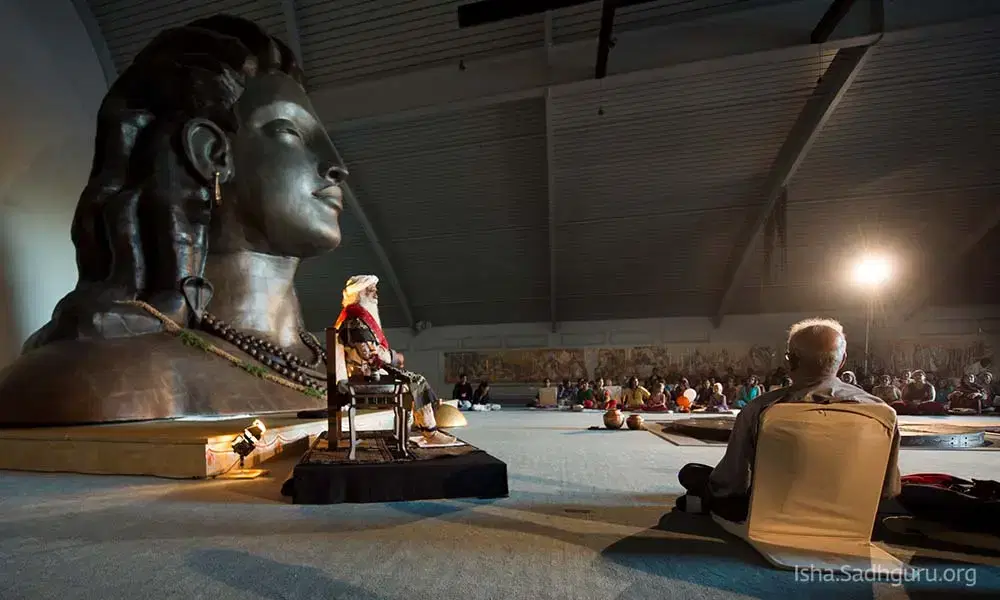
Visitors to the Abode may offer water to the linga and make contact with it as a way to connect more deeply with the powerful energies the form radiates. This offering is available daily, free of charge.
Visitors to the Abode may offer water to the linga and make contact with it as a way to connect more deeply with the powerful energies the form radiates. This offering is available daily, free of charge.
Trigun Offering
Vibhuti, turmeric and vilva or neem leaf are offered to the linga. These represent three qualities of Adiyogi. Ash (vibhuti) represents the right--ascetic, masculine. Turmeric represents the left--passionate, feminine. Vilva or neem leaf represents the third eye that is beyond polarities. This offering is available daily with a $7 voucher purchased at the reception or Isha Life Shoppe.
Vibhuti, turmeric and vilva or neem leaf are offered to the linga. These represent three qualities of Adiyogi. Ash (vibhuti) represents the right--ascetic, masculine. Turmeric represents the left--passionate, feminine. Vilva or neem leaf represents the third eye that is beyond polarities. This offering is available daily with a $7 voucher purchased at the reception or Isha Life Shoppe.
Pournami Pooja 'Full Moon Offering' - by Mail
Be in touch with the Grace of the Abode throughout the year. Receive prasadam by mail from the aarti offered to Adi Yogi on full moon days. This prasadam package includes black sesame prasadam, sutras, and consecrated vibhuti/ash.
Register NowBe in touch with the Grace of the Abode throughout the year. Receive prasadam by mail from the aarti offered to Adi Yogi on full moon days. This prasadam package includes black sesame prasadam, sutras, and consecrated vibhuti/ash.
Vijaya Arpanam – An Offering for Success & Prosperity
Prosperity and wellbeing pave the way for a seeker to pursue deeper dimensions of life. Vijaya Arpanam supports new endeavors, existing businesses and careers. The process involves an elaborate offering of the five elements to the Abode.
Learn MoreRegister NowProsperity and wellbeing pave the way for a seeker to pursue deeper dimensions of life. Vijaya Arpanam supports new endeavors, existing businesses and careers. The process involves an elaborate offering of the five elements to the Abode.
Bhuta Shuddhi – Purification of the five elements
The basis for all creation, including the physical body, is the group of five elements: earth, water, wind, fire, and space. The wellbeing of the body and mind can be established by purifying these five elements within the human system. This process also shapes the body into a stepping stone towards one’s ultimate wellbeing.
Learn MoreRegisterThe basis for all creation, including the physical body, is the group of five elements: earth, water, wind, fire, and space. The wellbeing of the body and mind can be established by purifying these five elements within the human system. This process also shapes the body into a stepping stone towards one’s ultimate wellbeing.
Yoga Namaskar
At the Abode, visitors can learn a very powerful system of yoga called Yoga Namaskar, and offer it by practicing within the Abode to become more receptive to the energies there.
Learn MoreAt the Abode, visitors can learn a very powerful system of yoga called Yoga Namaskar, and offer it by practicing within the Abode to become more receptive to the energies there.
Science & Mysticism
Donate
Contact Us
