Discover Sadhguru’s compelling reflections on how Eastern traditions honor nature’s life-giving elements, his personal bond with Cauvery River, and the pioneering Cauvery Calling movement, aiming to revitalize the region both ecologically and economically through tree-based agriculture.
Question: When I traveled along Cauvery to the delta, I saw many temples, shrines, and rituals around the river. Do you view the Cauvery as a goddess, and how has that perspective impacted your work on the Cauvery Calling movement?
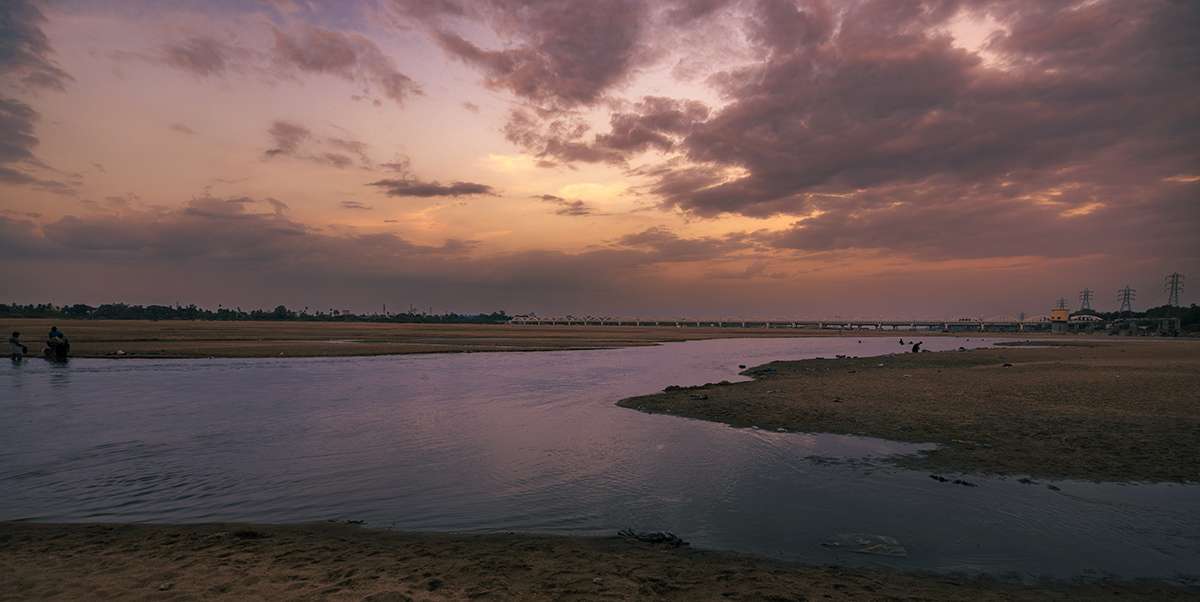
Sadhguru: If you reside on the banks of Cauvery and experience a drought year when the river flow is lean, you might face a shortage of food and water. Imagine if this situation leads to the loss of your children. In the following year, when Cauvery flows again, would you worship her or not?
To comprehend this concept of gods and goddesses, it is necessary to look at it from a completely different perspective. In Eastern civilizations, there is no one God or Goddess somewhere. Instead, anything that sustains life is revered. For example, food is referred to as Anna Lakshmi; trees are called Vanashri, and cows are recognized as Kamadhenu, because they all nourish our life. Water is considered one god, and air is another.
This may look silly to some, and they may argue, “There is only one God. How can you create all these entities?” Then it is important to remember that the concept of one God was conceived by humans. On the other hand, water, air, and soil were not created by humans, but our existence depends on them. People in the past were aware that their survival depended on the river, hence they revered the river as a goddess. This is a beautiful perspective.
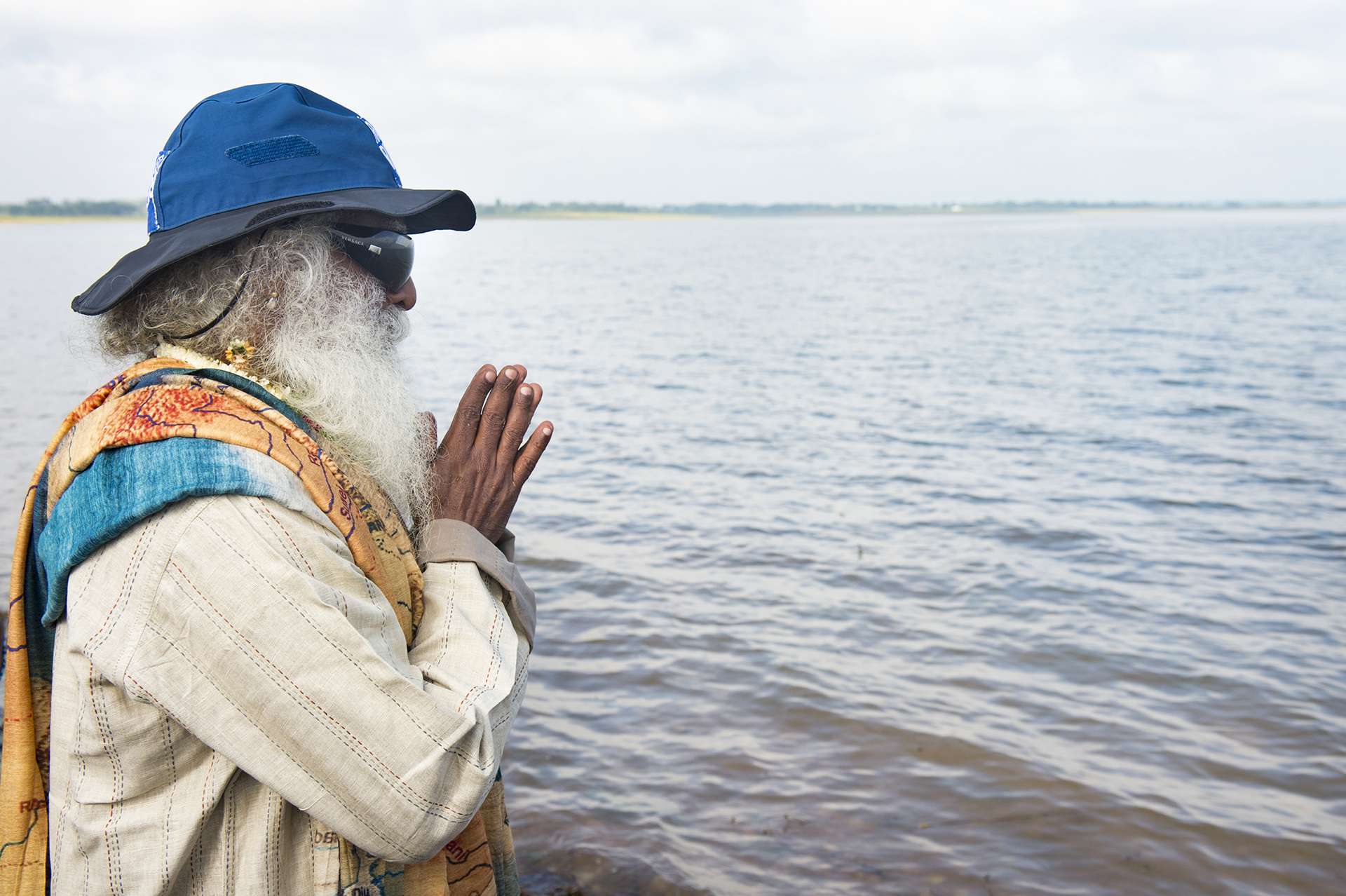
Today, population pressures, government policies, modern agriculture, and certain historical difficulties have contributed to a decline on various levels in the country. I spent my childhood around the Cauvery River, but I did not see her as a goddess. For almost four years, I swam in the Cauvery River every day. Once, I even rafted down Cauvery, from near its source to close to Mysore, where a large dam would inevitably halt the journey.
My engagement with Cauvery has been great. Cauvery is a name borne by thousands of women in India. When I initiated the Cauvery Calling movement, I told everyone in every village I visited, “If a girl child is born this year in this village, she should be named Cauvery.” This is because emotion is necessary to protect something. Human beings protect whatever they are emotional about; they neglect what they are indifferent to. For instance, a person protects their spouse or their child due to emotional attachment.
If there is no emotional connection, and water is merely perceived as a resource, it tends to be used and discarded – this is a prevalent attitude in the modern world. Soil and water are life-making material. Our ancestors recognized this. The great sage of the South, Agastya Muni, left his energies exactly at the midpoint of the river.
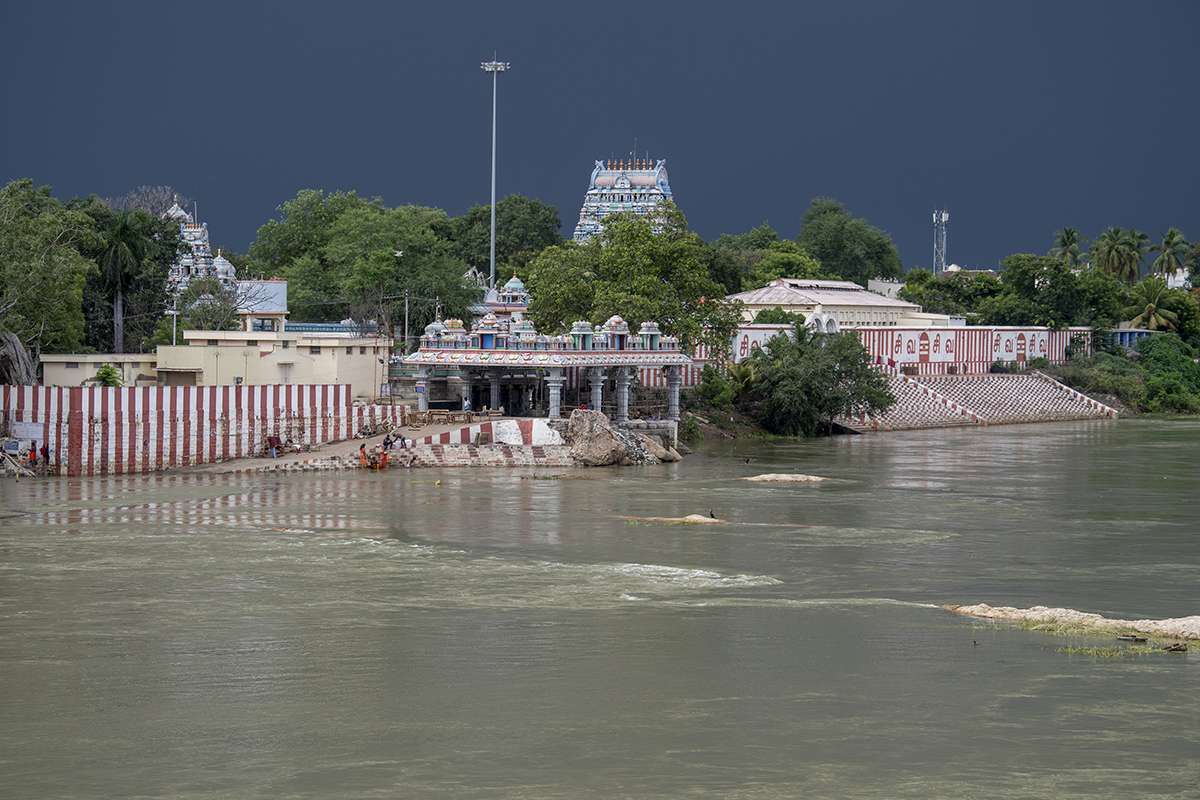
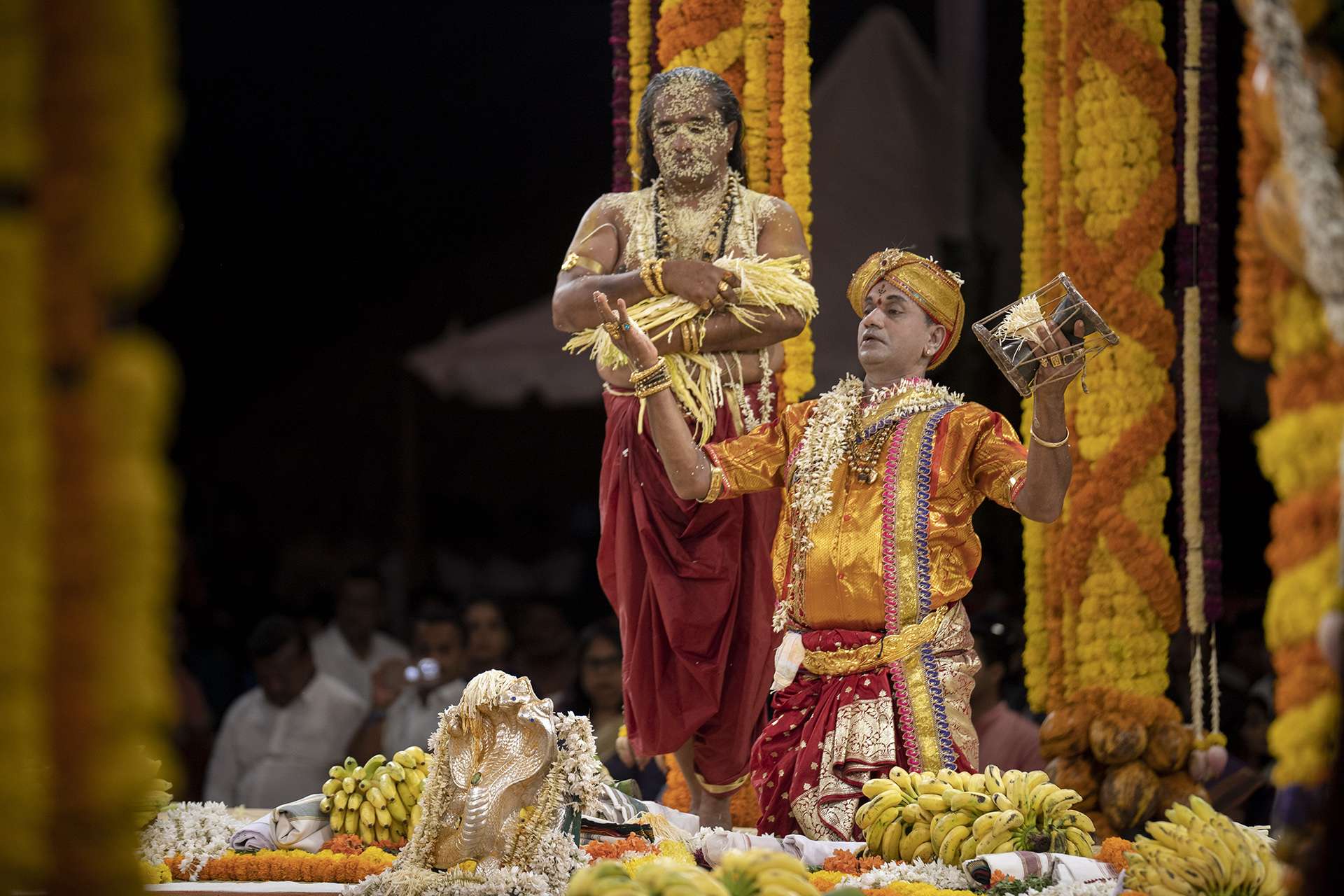
Approximately 6000 years ago, a midpoint temple[1] was constructed. This was done with the foresight that there would be future threats to these rivers. They anticipated that even at that time when southern India was a dense rainforest. Various rituals were established in the temple, each depending on the water level of the river. The purpose was to create a certain awareness about the river, which has been lost over time.
Now, Cauvery dries up around 175 kilometers inland during the summer; this situation lasts for around four to four and a half months. The farmers in the delta region, who were once so proud of their fertile land that they referred to it as gold, are now limited to growing only one crop per year. This is a significant decrease from the four crops they used to grow annually. Consequently, these farmers, who were once the wealthiest in the region, are now facing severe challenges.
For four and a half months, there is no delta, no river. What has happened to the delta? The sand mafia removes the sand. Along with it, they take away the alluvial soil that contributed to the development of the entire civilization. Twelve thousand years ago, there was already a port at the Cauvery delta point where merchant ships docked. All the prosperity in the region was a result of what Cauvery brought to people’s lives. Therefore, Cauvery is seen as a goddess who brought wealth and wellbeing.
Do I perceive it in the same way? I am not made of the same fiber. I know how to value things. I do not need to elevate them to the status of a god or goddess. I know that the most precious thing you have is life, not God. I hold everything that makes my life as sacred. If you wish to personify it as a god or goddess, I am completely fine with that, but this is not how my mind works. Still, I greatly appreciate the fact that people have developed such strong emotions for the river. This is because without these emotions, they might destroy the river to meet their daily needs. Unfortunately, this destruction has already occurred to a great extent.
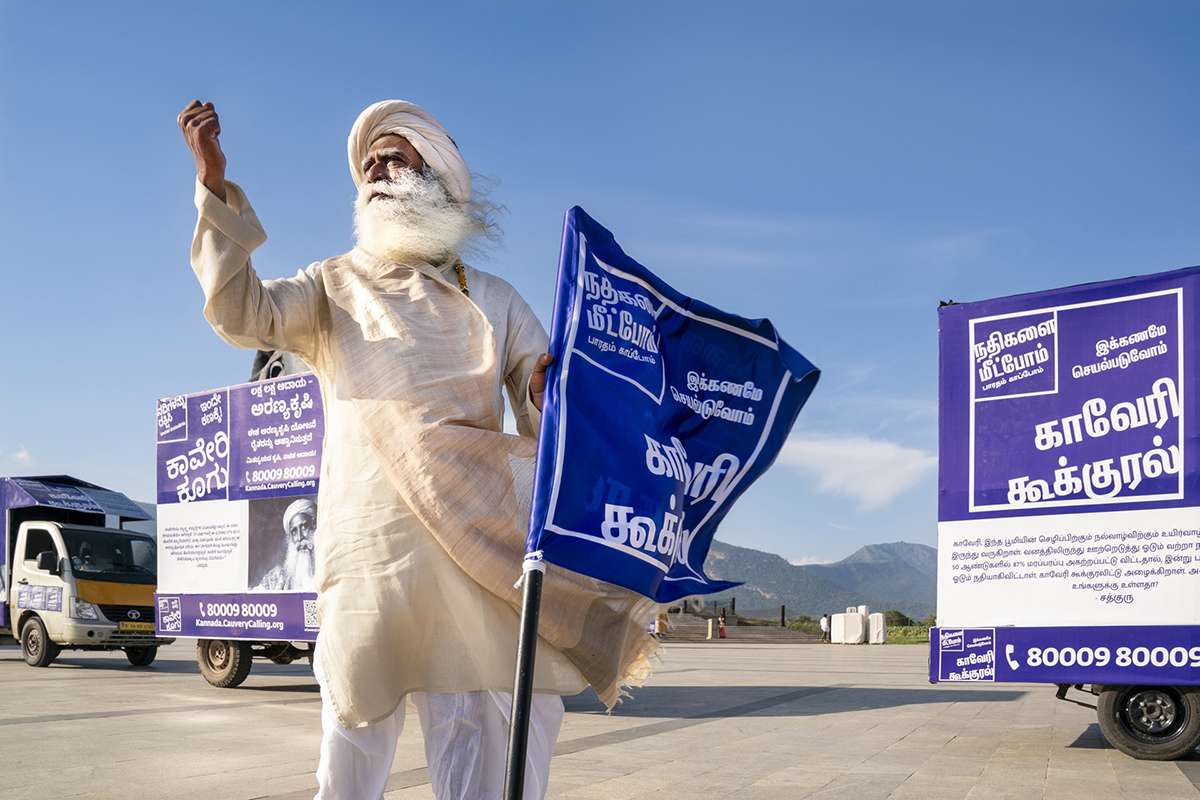
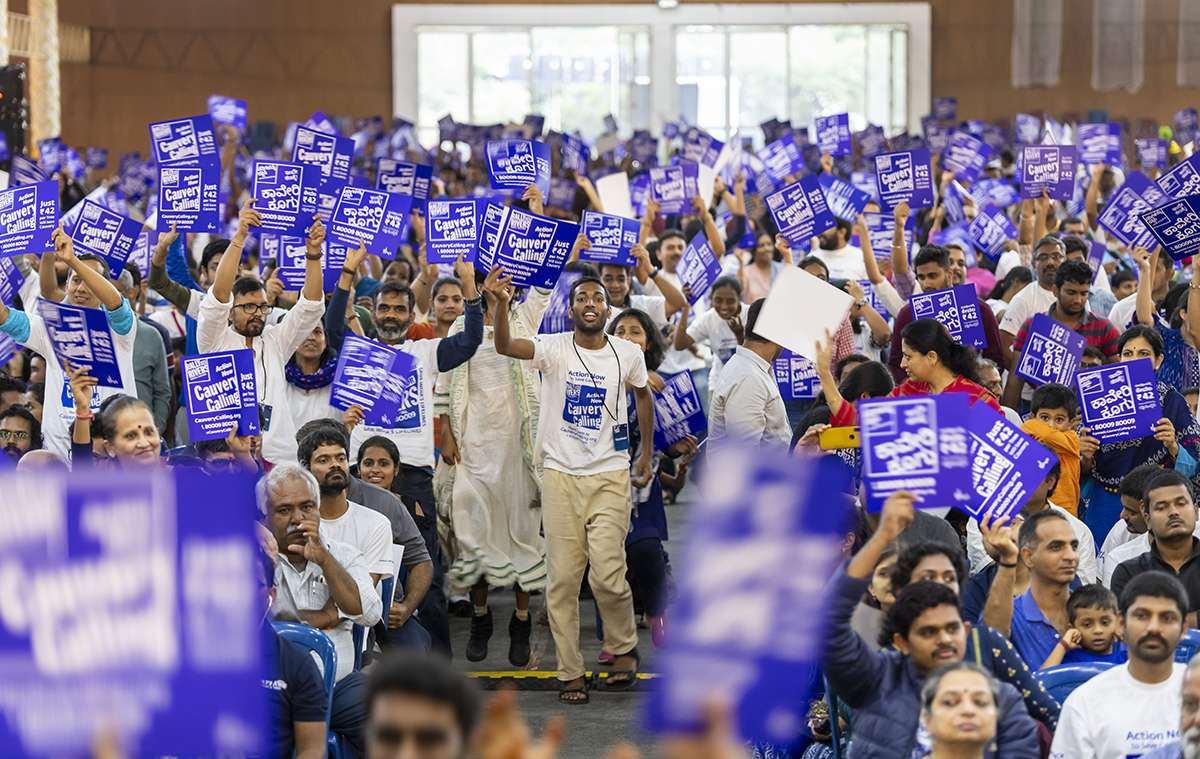
This year, Cauvery Calling is aiming to plant 11 million saplings across Tamil Nadu. This is not an afforestation initiative but tree-based agriculture. Due to the success of Cauvery Calling, the central government has created a detailed project report for 13 river basins. The Cauvery river basin covers about 83,000 square kilometers and includes 5.2 million farmers, with whom we are working closely. The movement is advancing well in one state, slightly slower in another; several laws have been instituted in its support, along with subsidies for farmers, based on the growth of the trees.
It is working wonderfully well, but I am not satisfied with the pace of progress. The aim is not just to plant 25 million trees, but 2.42 billion trees. This ambitious target needs to be met within the next six to eight years if we want to see substantial change within our lifetimes. If we can achieve this, then within 15 to 20 years, we will witness a noticeable difference in the river’s health. Unfortunately, progress is slow because people still fail to understand the implications of a river running dry, for our lives, and for every other life on the planet.
When we displayed the scale of our project, declaring it as a sample, the UNCCD, who is our partner in this endeavor, remarked, “This is not a sample, this is the largest project on the planet at this time.” They think it is the largest, but I think it is not enough. I do not do anything for my own satisfaction. If I close my eyes, I am done with the world. Unless it is a solution, I do not even have an interest in getting involved in it.
Can we bring a solution? A solution can be found; circumstances can be improved. Improvement is happening, but at a slow pace. This means that one generation will have to endure significant hardship before we see a turnaround. I do not think this is a wise approach. Anticipating problems is the human way, not recovering from them. Unfortunately, our current pace aligns more with recovering than with preempting. We aim to accelerate the pace, which requires support from all sides.
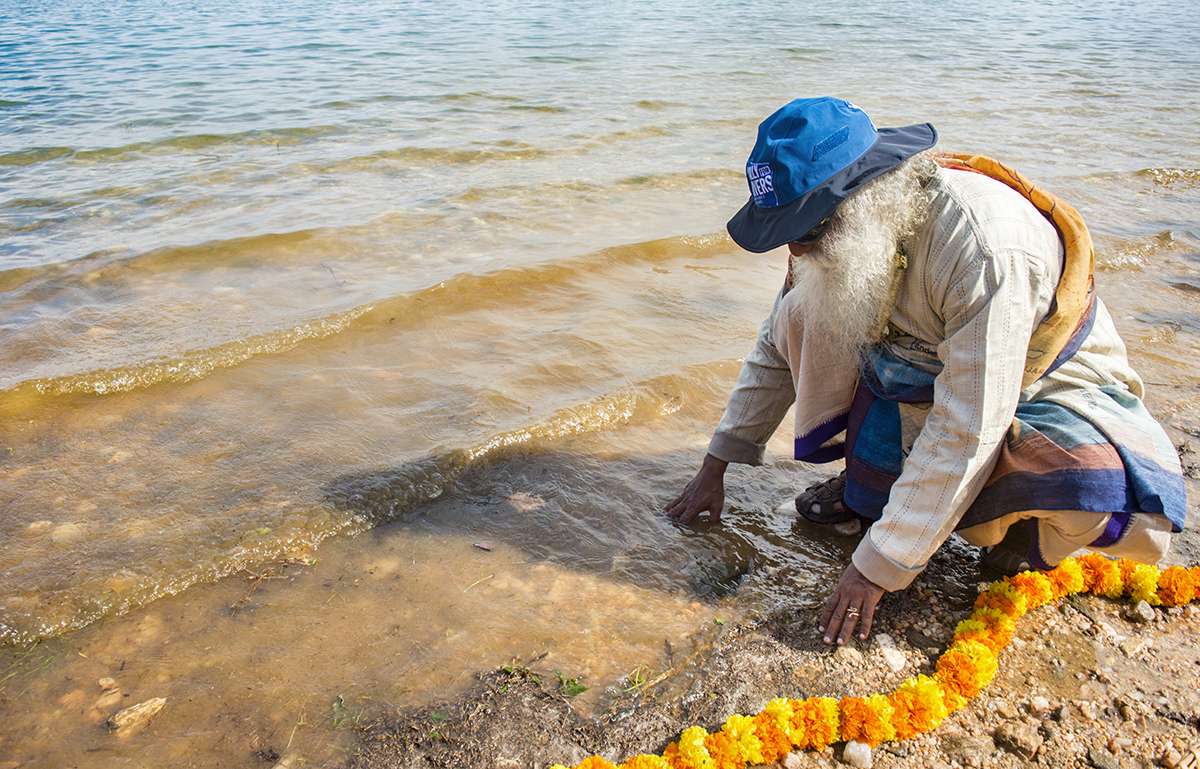
In this country’s history, when a sage gave advice, the king implemented it to the best of his ability, resulting in swift action. I am not suggesting a return to monarchy, but rather to apply some sense in our democracy. Many southern Indian temples were built because sages then understood that nothing can be protected long-term without emotional involvement. Eventually, you will only take care of those things to which you have a strong emotional connection.
When there is no emotional connection, you may care for something today, but tomorrow, you may dump it. Only the things that you are deeply emotionally connected to stay with you for life. So they invested in keeping people’s emotions about it strong. But now, are we utilizing these emotions? We are not. I am not saying, “This is your goddess.” I am simply asking, “If there is no water to drink for three days, will water become your god?”
Essentially, the idea of God has entered people’s minds because they have no explanation for the source of creation and that which makes our life. In Eastern cultures, there is no singular concept of “God.” Anything that exceeds a certain level of performance is considered divine. For example, people call Sachin Tendulkar a “god of cricket” because he excels beyond what is considered as normal human limitations. In other words, we worship excellence.
We also worship all things significant to our daily life, such as our soil, or even the tools we use. A farmer will never use his plow or tractor without first bowing down to it. He understands that it is vital to his livelihood. The same respect is extended to the farm animals. He views anything that contributes to his life as sacred, which is good.
Otherwise, there is such a lack of respect and reverence today for all the things that make our life. Whether it is our soil, rivers, mountains, trees, or people around us, a lack of reverence is a crime.