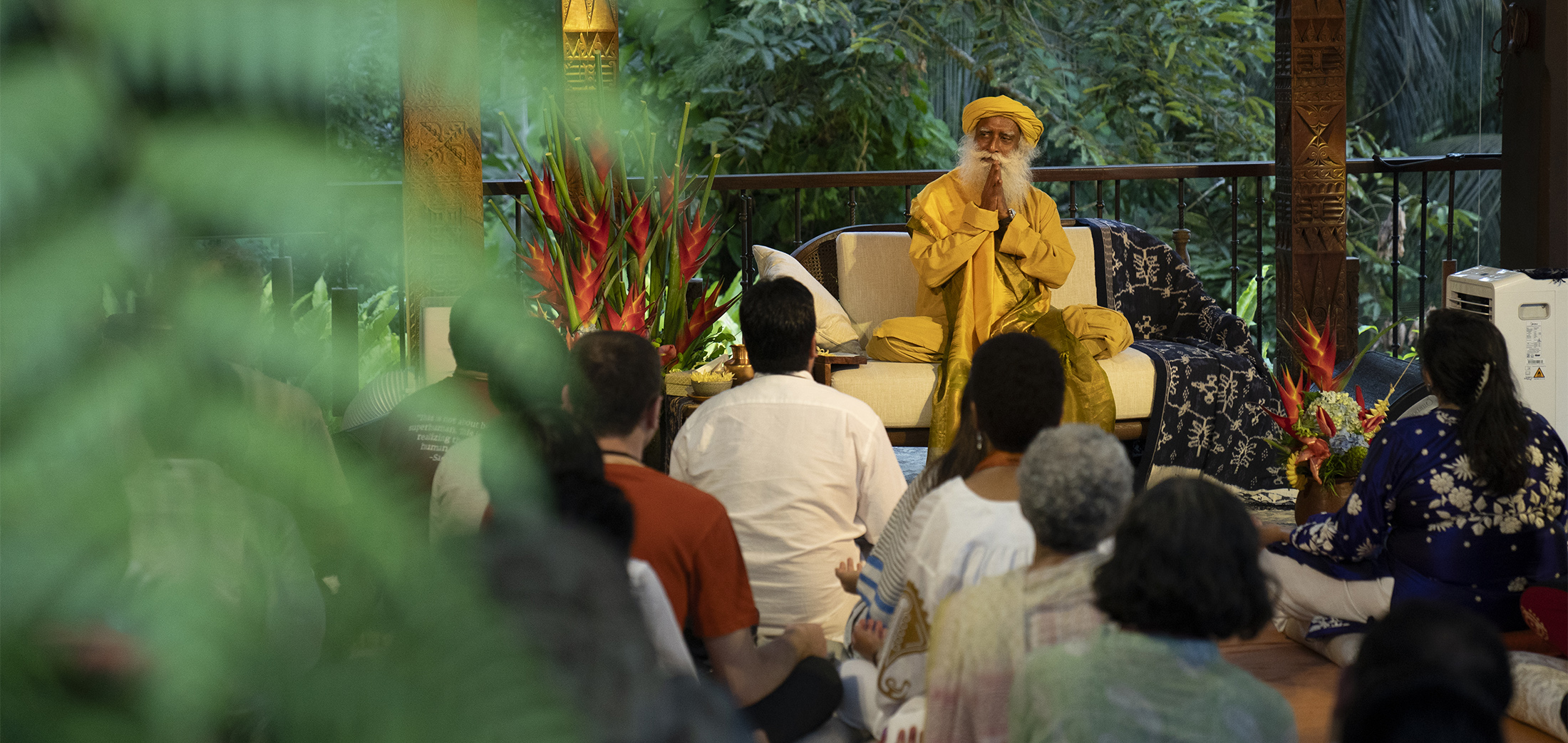
At the culmination of the intimate and intense Mystic Musings program with Sadhguru in Bali and Cambodia, a deeply grateful participant posed an essential question in light of Sadhguru’s immense commitment over the years. Representing the collective sentiment of many, the inquiry concerns ways in which we could support Sadhguru’s extensive work dedicated to human wellbeing and environmental consciousness. His response encapsulates three tangible fields of activity where we can partake in supporting his vision, beyond our individual sadhana, to enable a transformative impact on humanity and the planet. Read on to discover how you can get involved.

Questioner: Sadhguru, you have done so much for us. What are three tangible things we can do for you, besides our sadhana?
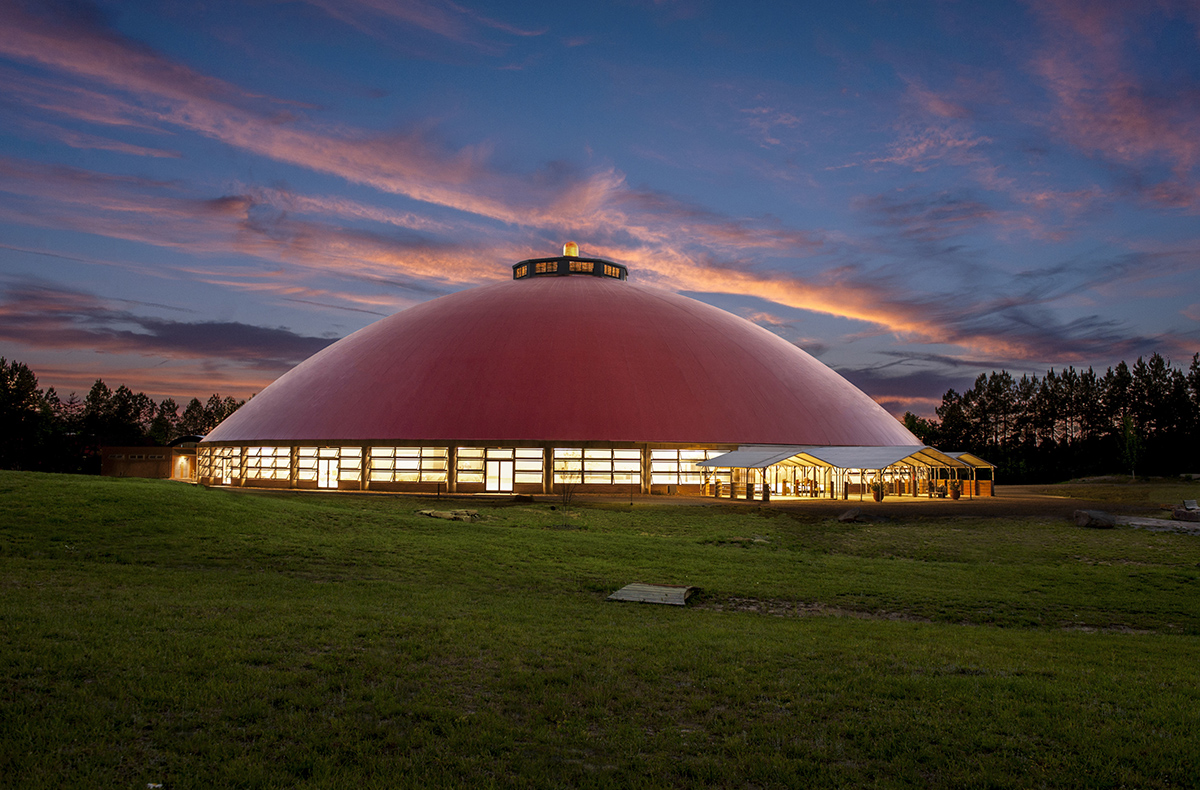
Sadhguru: There is a lot to do in the world, and you can see how to support it. Right now we are in the process of creating many consecrated spaces around the world, wherever possible. As a part of the Conscious Planet movement, we are building a Yogic city in the United States which spans nearly 32 square miles of land. Our goal is to consecrate this land and, within the next six to eight years, build a city where about 30,000 to 35,000 people can live.
We are also building centers in Bengaluru, Mumbai, Delhi, and probably in Guwahati. We want to create such spaces wherever someone gives us land and the necessary support, because my intention is to consecrate the planet. We cannot do this on our own because we have never focused on money.
For nearly 18 to 20 years, I made sure the Isha Foundation remained without money because I did not want to attract the wrong type of people to its core. Those who joined came to work there out of devotion and commitment, not because the foundation was rich. Now we have people to whom a mountain of gold means nothing, even if you offer it to them. The time has come for us to create consecrated spaces – spaces where transformation happens just by entering them – because that is what will work for humanity in the long term.
This needs to happen around the world to whatever extent possible. India is an easier environment for us. We are more active here because people understand this kind of work more quickly. Outside of India, it requires much more effort to get it going. But any country is fine with me; we just need the necessary support. With state governments in India offering us land, naturally, much more of our work will happen here. This is not because of national prejudice, but simply because it happens more easily here.
To make this happen, we need many more people who are practicing and who understand the value of what is being done. As a part of this effort, we are aiming at the youth and have offered 50 percent and 100 percent scholarships for the Inner Engineering program. If you can sponsor those scholarships – whether it be 10, 20, 100, or a million – according to your capability, we will extend them to the youth so that millions can go through the program and start their practice.
Without practicing meditators, we cannot really make this happen. People have to have some experience of it to support this. That is the initial step we are working on right now.
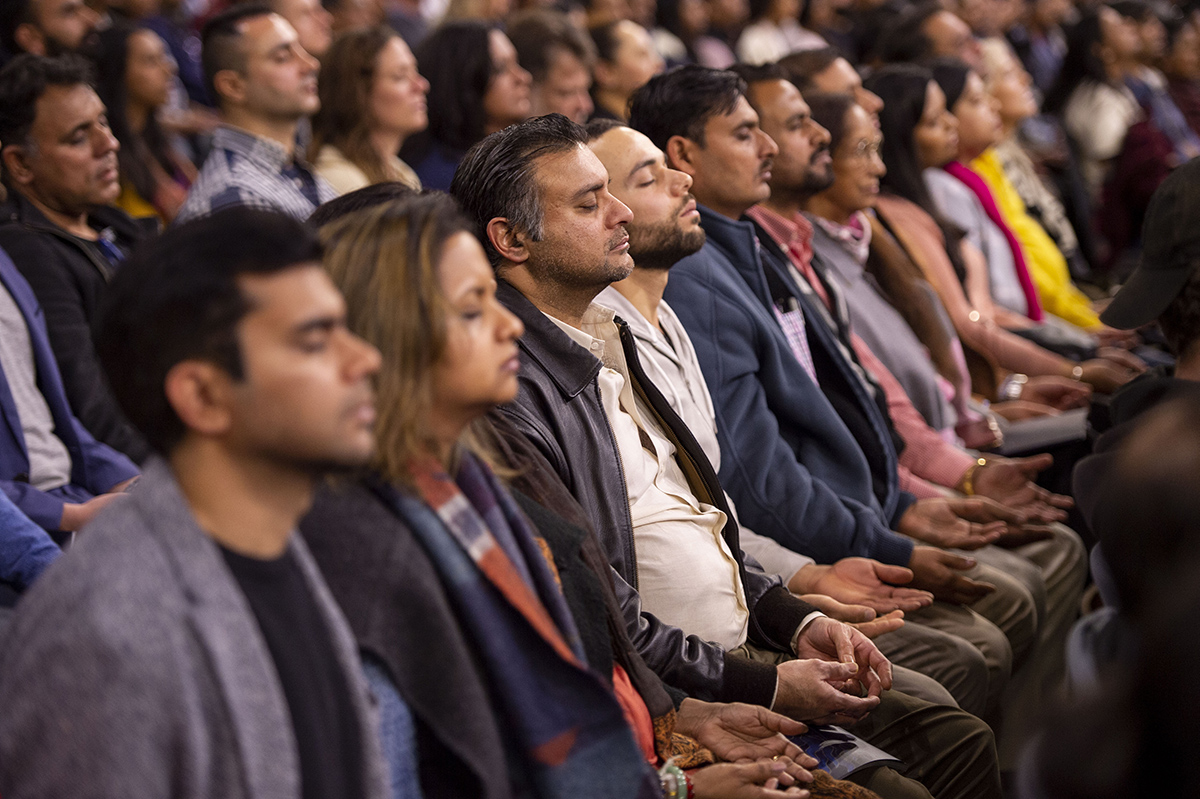
In 2024, we want to touch a few million youth and people of all ages and capabilities who are willing to close their eyes for 21 minutes a day. As a third step, we are addressing mental health with a 15-minute practice that will be offered in 12 to 15 different variations. If we can make the adult population close their eyes for 15 minutes a day, the world will change significantly.
We are exploring ways to encourage at least three billion people to close their eyes by the end of 2025. We are building a mega app to deliver this. We need technology, money, and support at various levels to make this happen. Please see what you can contribute.
For the long-term wellbeing of human beings, the following three aspects are important: mental health, a more meditative state, and consecrated spaces. Human beings, or homo sapiens, are the most capable and competent species on the planet. But unfortunately, we have become the most destructive species on the planet.
The number of species that are disappearing, which are foundational for our life, is phenomenal. If all of them vanish at the same pace for another 25 years, human life will collapse. When I say collapse, it does not mean that all of us are going to die. The first thing that will collapse is the “software.” It is expected that by 2045, 50 percent of the world’s population will need psychiatric help. But finding that many psychiatrists will be impossible. It is also expected that between 2045 and 2055, 20 percent of the human population may commit suicide. These are our children.
Twenty percent out of ten billion would mean two billion people committing suicide in a span of ten years. That would be the worst kind of disaster you can think of, but this is what responsible scientists expect, and we are heading in that direction. But if we do the right things in the next five to ten years, we could reverse this trend. Maybe we cannot entirely stop it, but we could mitigate it significantly by bringing practices that will help people to turn themselves around. It is possible to do that.
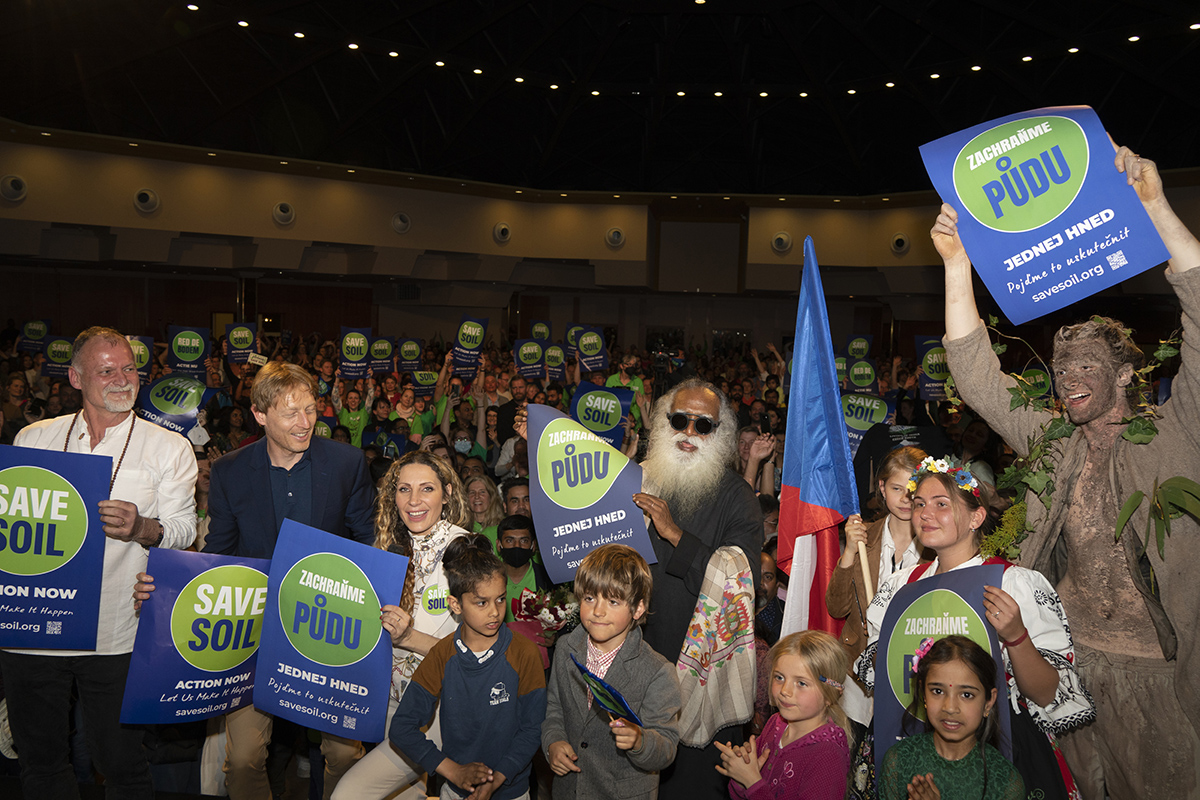
Save Soil is moving ahead, at least in terms of policy. Once the policy is established, action will follow, which could take another five to eight years. We have also been working with COP 28 and are now preparing for the upcoming COP 29. It is moving in the right direction, and we hope it will pick up momentum. Mental health cannot wait that long. We have to act more swiftly; otherwise, things will deteriorate.
When the populations of microorganisms, insects, and worms collapse, the first thing that collapses in the human system is the “software,” or our mental structure. The second thing that will collapse is the hardware, or our physical body. That is expected to happen between 2045 and 2060. People will commit suicide in large numbers because the suffering will be such that it will not be worthwhile living. If 50 percent of the population are suffering, out of that, maybe 20 percent may commit suicide because of unbearable suffering. We are not far away – just look at the way the weather patterns are changing.
If you look at India in April, it has been red hot everywhere, with temperatures over 40 degrees Celsius. For over four months, there has not been a rain shower in many places. This kind of weather makes it difficult to live there. If temperatures cross 45 or 50 degrees, you cannot even fly a helicopter or an airplane.
There are water shortages in almost every city. Those who are better organized are taking water from other creatures or other human beings to serve their own population, but that will not last long. Above all, we are living in a way that is simply not sustainable – neither for our physical and mental health, nor ecologically.
Our population is growing, not necessarily because of more births – births have come down – but because all of us are living longer. Living longer should be a blessing; but unfortunately, it has become a curse. When that is the situation, people will start cursing each other, asking, “Why are you living so long?” Scientific studies are clearly showing that we are heading in this direction, but we are going on as if nothing happened. They say “ignorance is bliss” – like jumping off a tall building, it is quite blissful until you hit the ground.
We want to improve mental health as much as possible so that human beings will conduct themselves sensibly when situations become difficult. If human beings panic and go wild, managing these situations will be impossible.