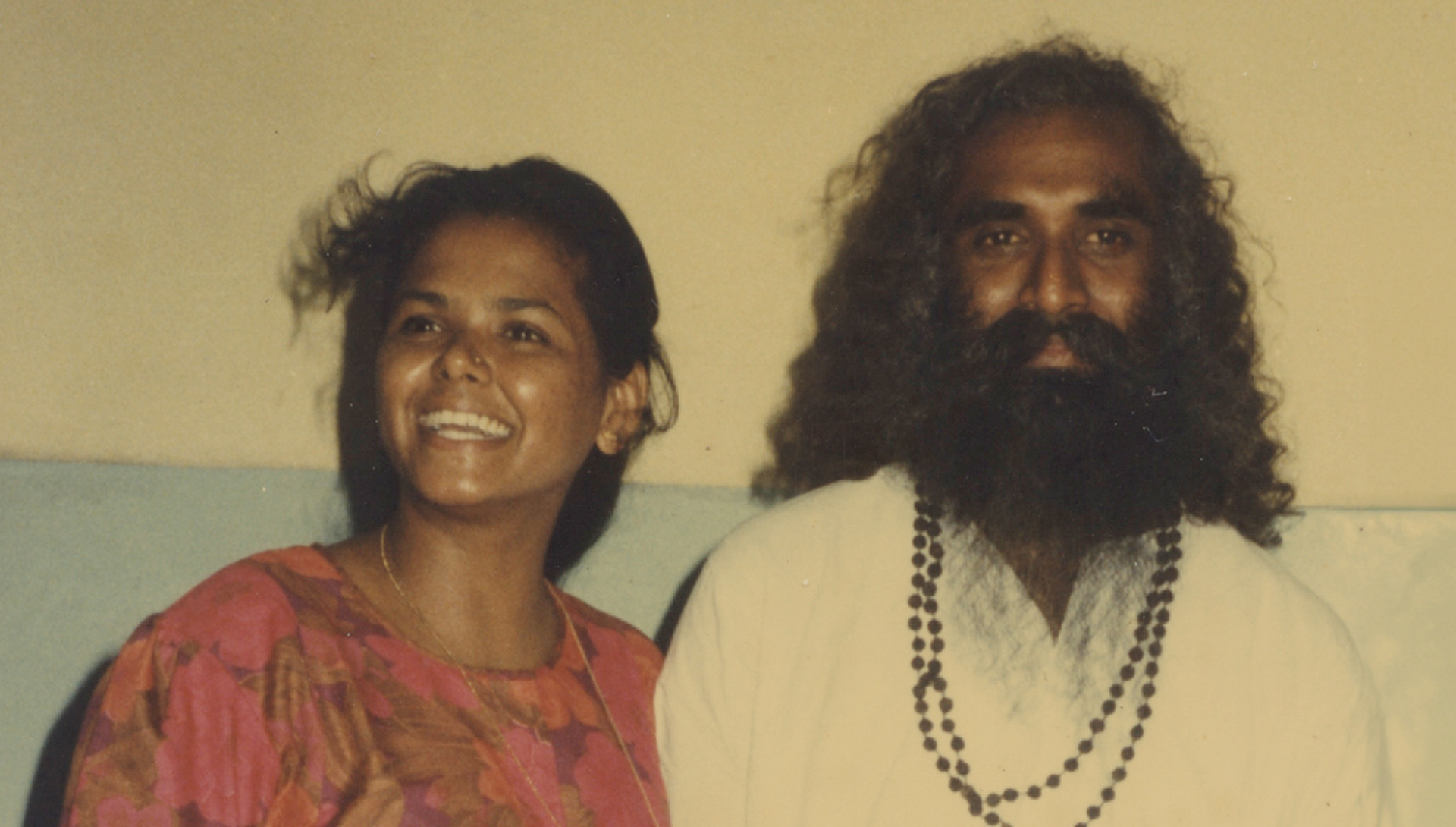
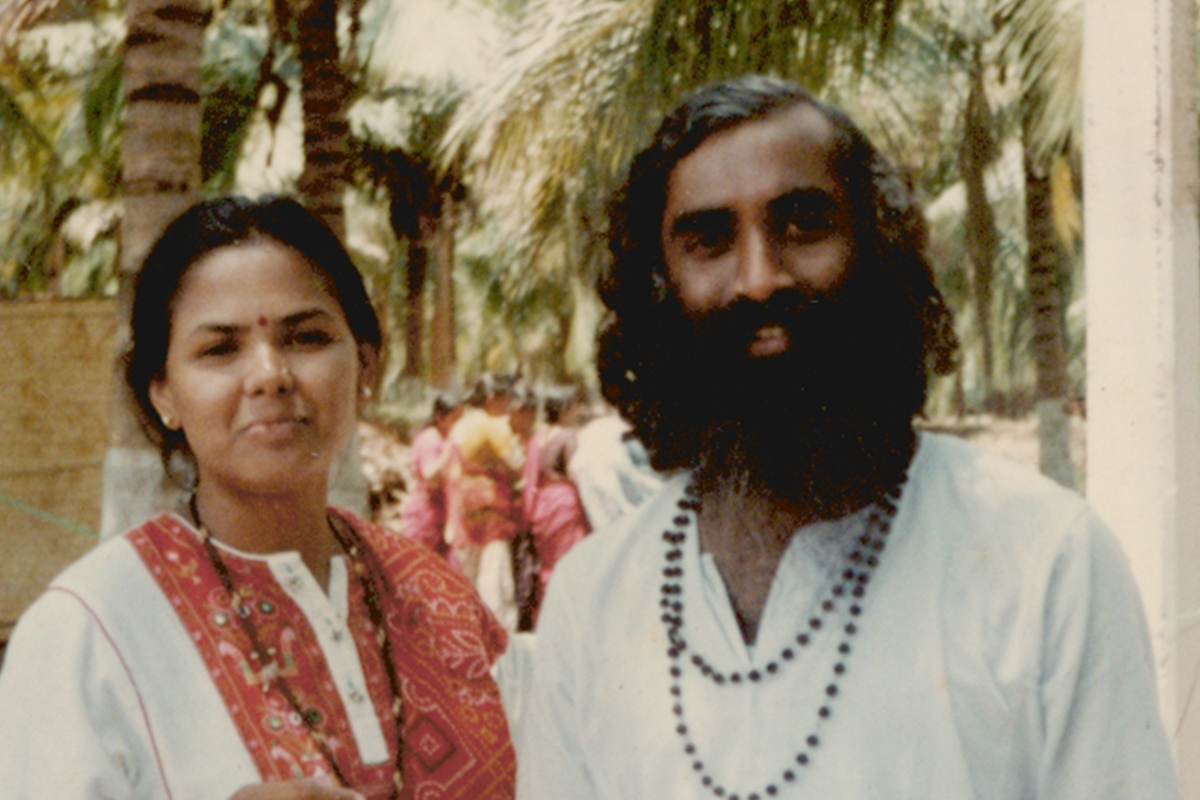
Through a lively weave of memories and reflections, a few of those who had the privilege to walk alongside Vijji in the early days, including Radhe and Sadhguru himself, offer us rare glimpses into a life of profound devotion, unwavering commitment, and spirited living. Their candid accounts paint a vivid portrait of a human being whose presence left an indelible imprint on the fabric of a spiritual movement and the hearts that beat at the core of it. Join us as we unfold a narrative rich with emotion, depth, and the complexity of a journey shared with Sadhguru as a husband and Guru.
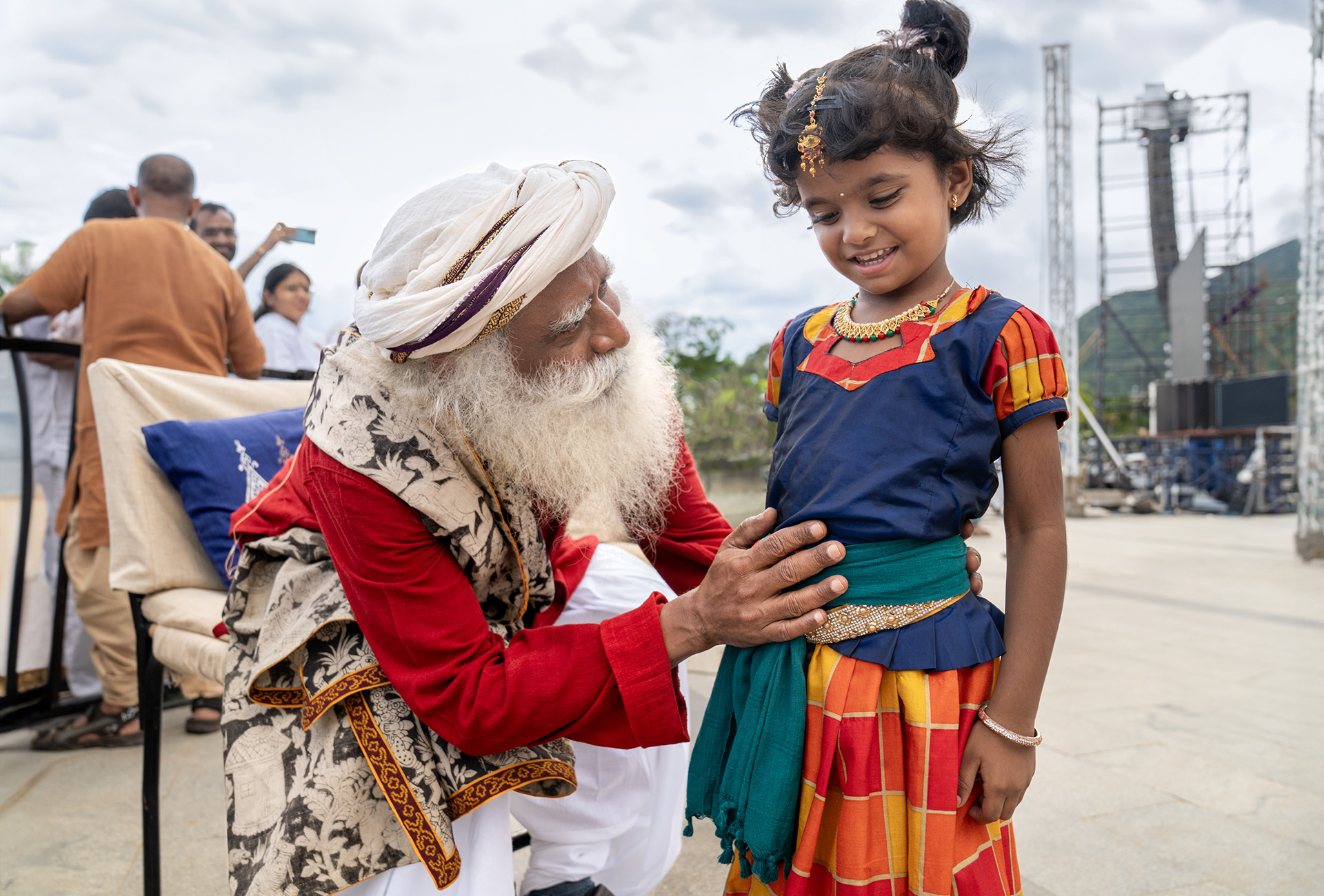
Sadhguru: Vijji wanted to learn dance when she was young, but she did not have the opportunity to do so. She said, “If I have a daughter, I would like her to learn to dance.” I said, “First of all, you are not having a daughter, and she’s not going to dance.” “No,” she said, “I’m not saying I will have a daughter. I mean if there is ever a daughter, she must become a dancer.” I said, “Okay, they can become any number of things. Let the imaginary daughter be a dancer, not a real one.”
Geetha Kandasamy: In those days, it was a thirteen-day program. Vijji always used to sit at the back of the class. She was seven months pregnant at that time. On the last day of the program, we went to Bhavani Sagar dam. When we got off the bus and were walking towards the dam park, Sadhguru had her walk inside the dam. Sometimes he walked with her; sometimes he had someone else walk with her so that there was always someone around her.
I told Vijji, “You know you should tell him, ‘I cannot.’ Why are you going?” She would say, “No, ma. I cannot. He knows that, but I will do it for him.” One evening, we surprised Vijji with a baby shower function. She was really overwhelmed, and she was literally crying. All of us were emotionally bonded people; we were all crying. That moment is still cherished in my mind.
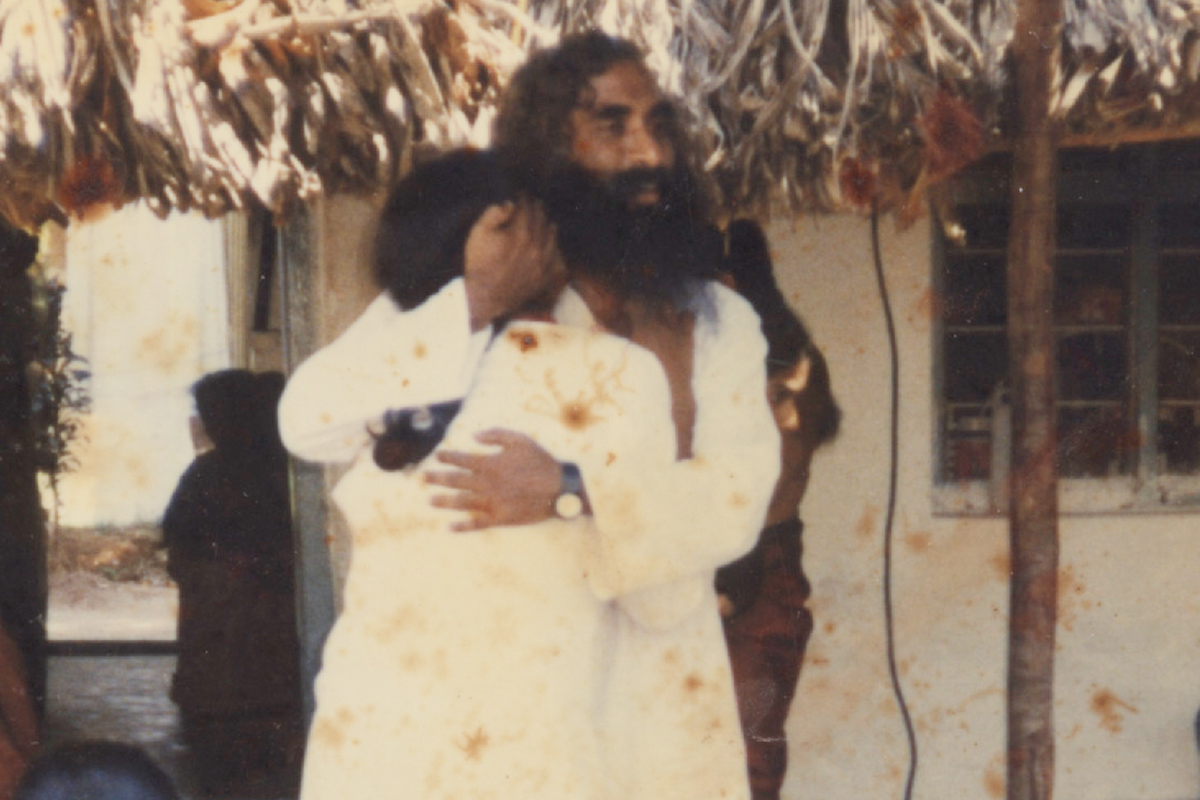
Maa Karpoori: She used to be very touched that when she was carrying Radhe, and she vomited, Sadhguru would come and just take it in his hand. All these are small things, but it made her life so full. Sadhguru was everything for her. The moments of celebration were not Vijji’s and Sadhguru’s alone but also the old meditators’ who were around as a child was born into a family of ours.
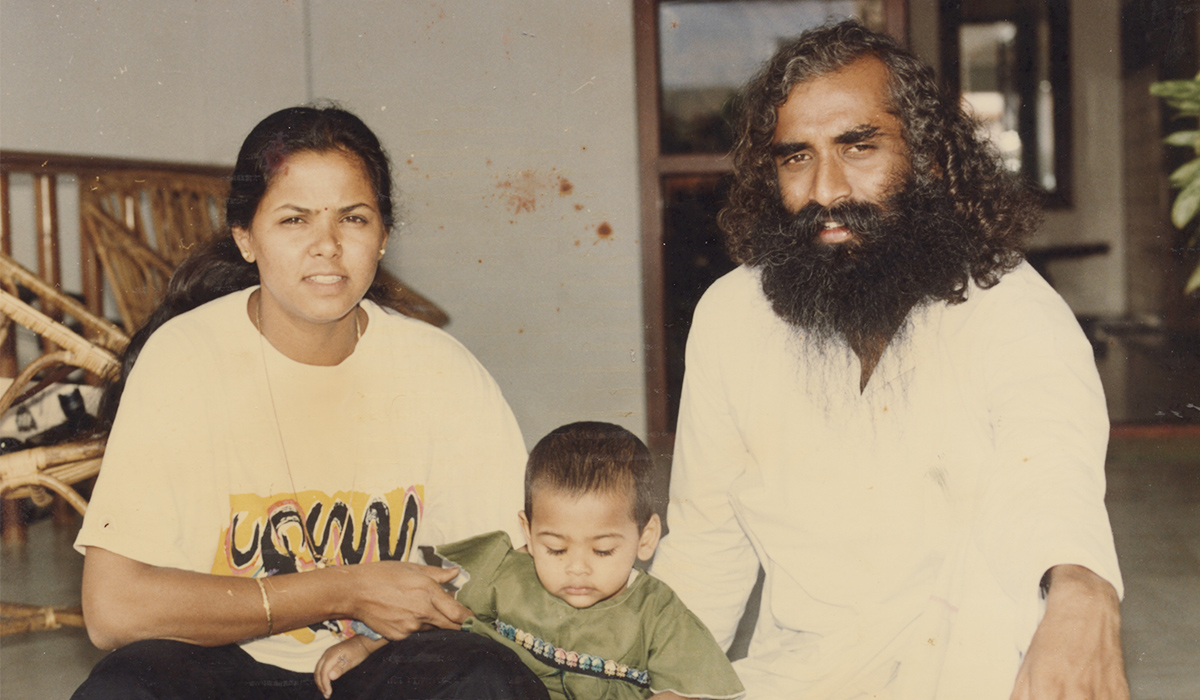
Radhe: I’ve asked my father once why they even decided to have a child, considering the clear purpose he was trying to fulfill in his lifetime, and where he wanted it to go. Even to me, it seems a little strange that, given how much they traveled on a bike and how much they worked, they decided to have a child. But I think that was something my mother wanted. She wanted a home, and she wanted to live in the home with her child and her husband, and she did all of those things.
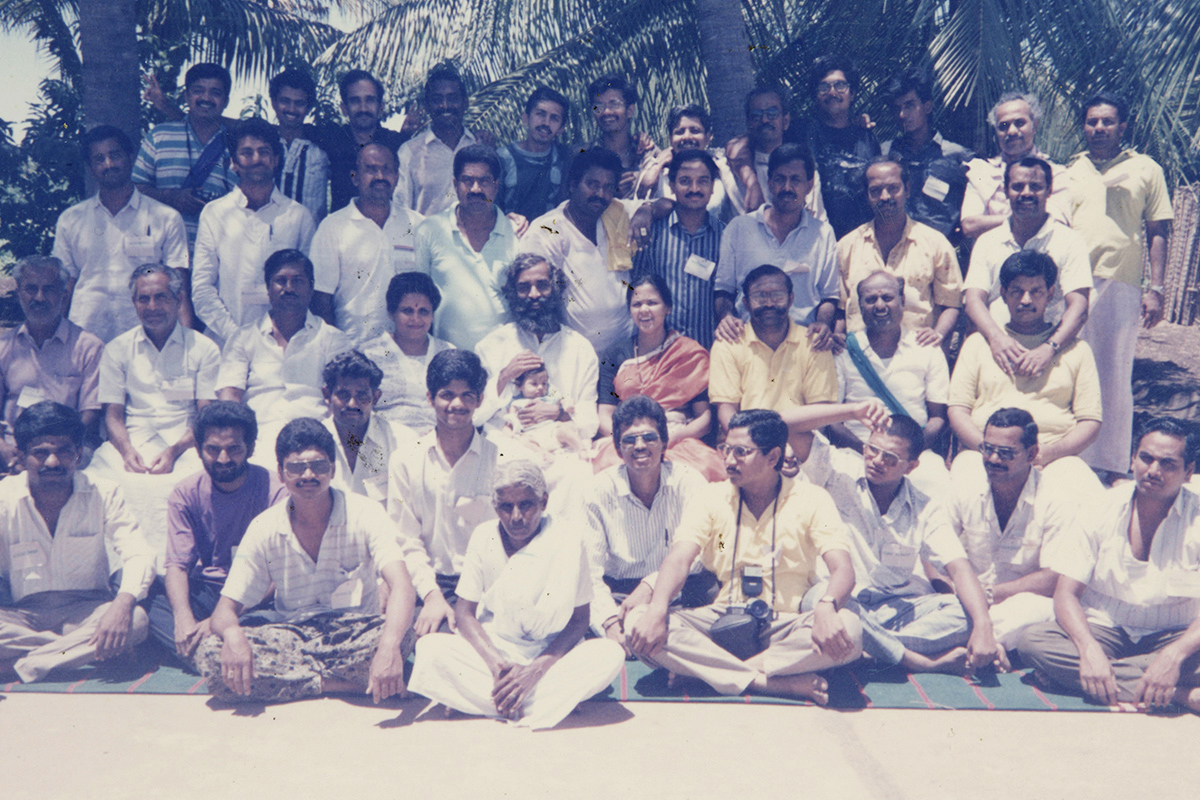
Geetha Kandasamy: When Radhe was not even 90 days old, she was there in the whole program. They didn’t have any private room for the child or for them. They were just with us. And there was no special care for the baby and all that. Sometimes during those classes, they would not even have food. People would commit and forget about it. They would not even ask.
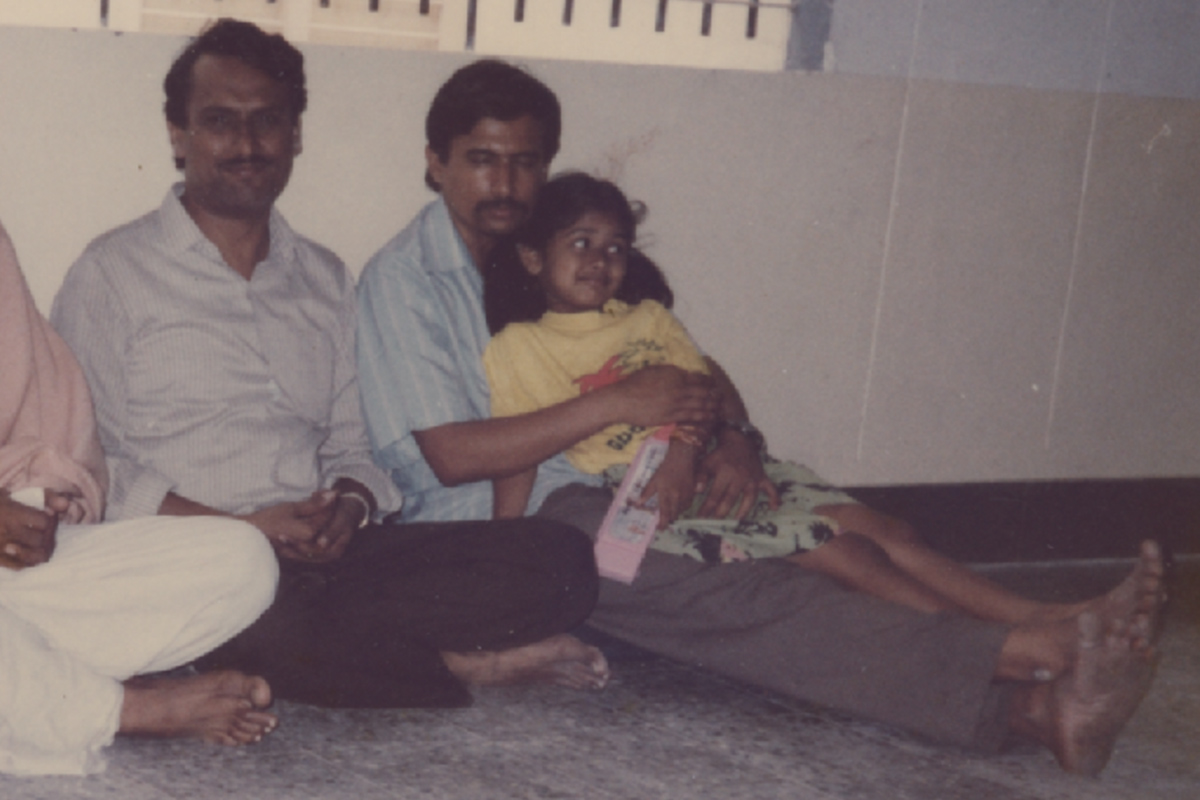
Maa Gambhiri: Vijji was working. Radhe was traveling with Sadhguru, and he would take care of her. And that’s how Radhe grew up in different homes. And I saw that whichever home she would go, she would call the lady of the house “amma” (mother) and the man of the house “appa” (father). She would refer to them as amma and appa, and, of course, Sadhguru was Jaggi for her.
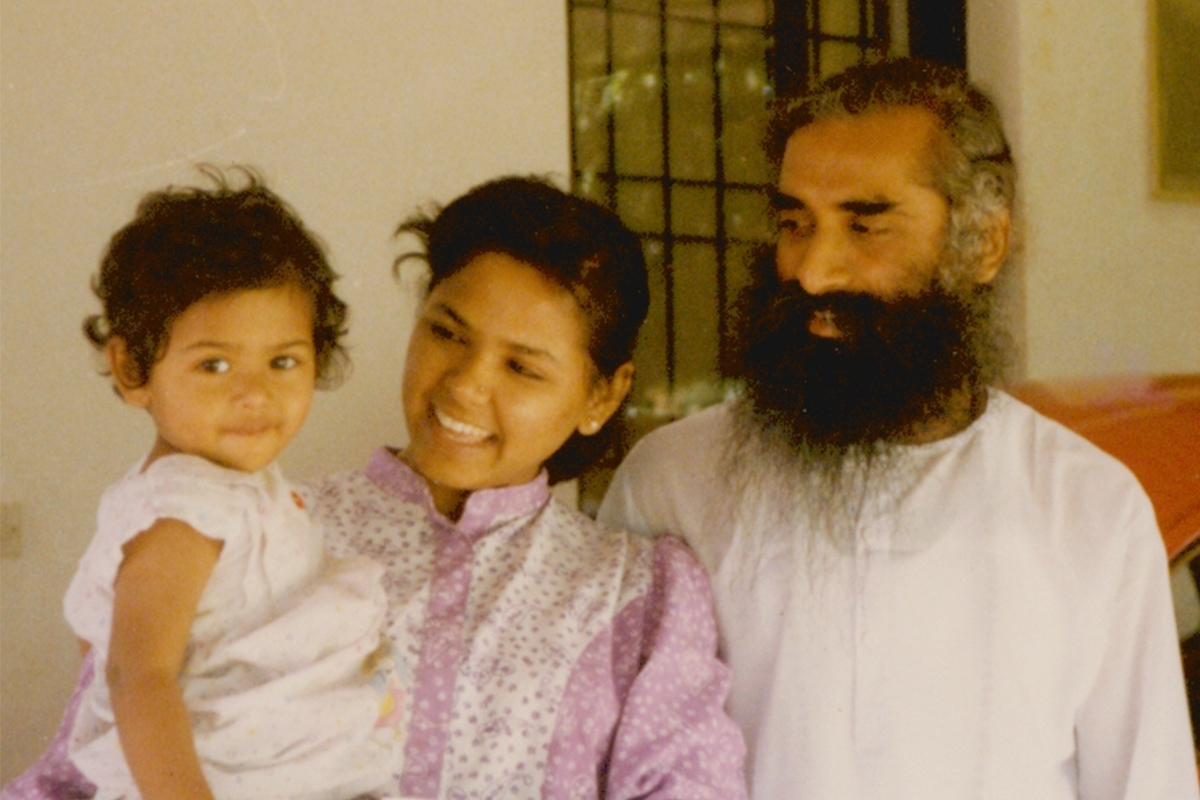
Radhe: At that time, everyone called him Jaggi – my mother, the volunteers, and the people who had joined the foundation full-time. He was like everyone’s friend. I think because I grew up in a house where everyone called him Jaggi, I did too.
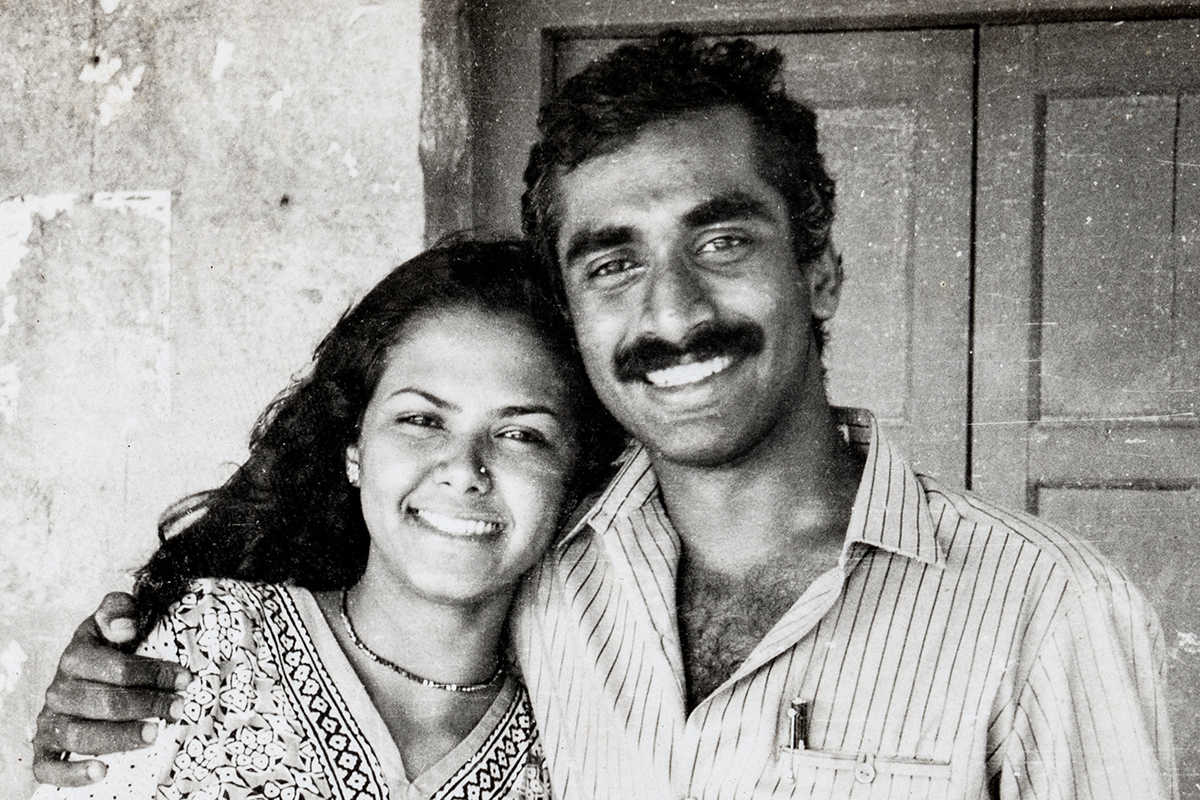
There is an old photograph of both my mother and father together from before my father stopped shaving; he had a mustache and short hair. I had never seen him like that. My whole life, he’s had long hair and a long beard. It used to bug me – who was this person? So I asked my mother, “Who is this uncle who has his arm around your shoulder?” She just would not stop laughing and would say, “Go and ask Jaggi uncle.” It used to bug me to no end.
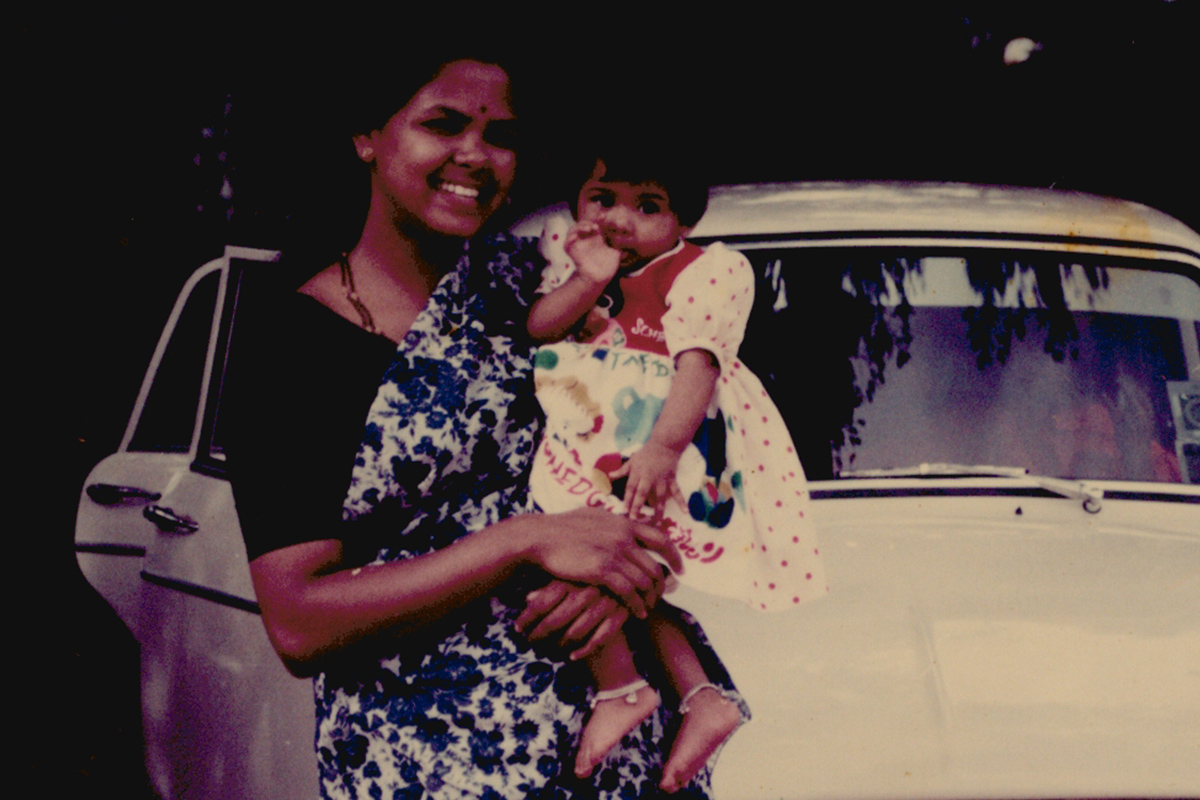
Maa Gambhiri: But I’ve always seen her as a very attentive mother. Yet, Sadhguru meant to her what no one else did in her life; not her mother, not her father, not her daughter.
I remember an incident when I went to volunteer for a ladies’ BSP[1] at a place called Alaghumalai. After the ladies’ BSP, the next day was the men’s BSP. So I asked Sadhguru, “Would you be traveling somewhere else and then coming back here tomorrow?" He said, “No. This BSP starts tomorrow. I will stay here.” I said, “Okay,” and as we were talking, a meditator came and mentioned that Vijji had called to find out if Sadhguru would be coming to Tirupur City in between the two BSPs.
The moment Sadhguru heard that Vijji had called and she wanted to know if he would be coming, he drove all the way to Tirupur because there was no phone call facility in the area where the BSPs were being conducted, made a call to Vijji, and then drove all the way back to this venue, which would have been at least a two-hour drive one way.
[1] Bhava Spandana Program, an advanced meditation program designed by Sadhguru
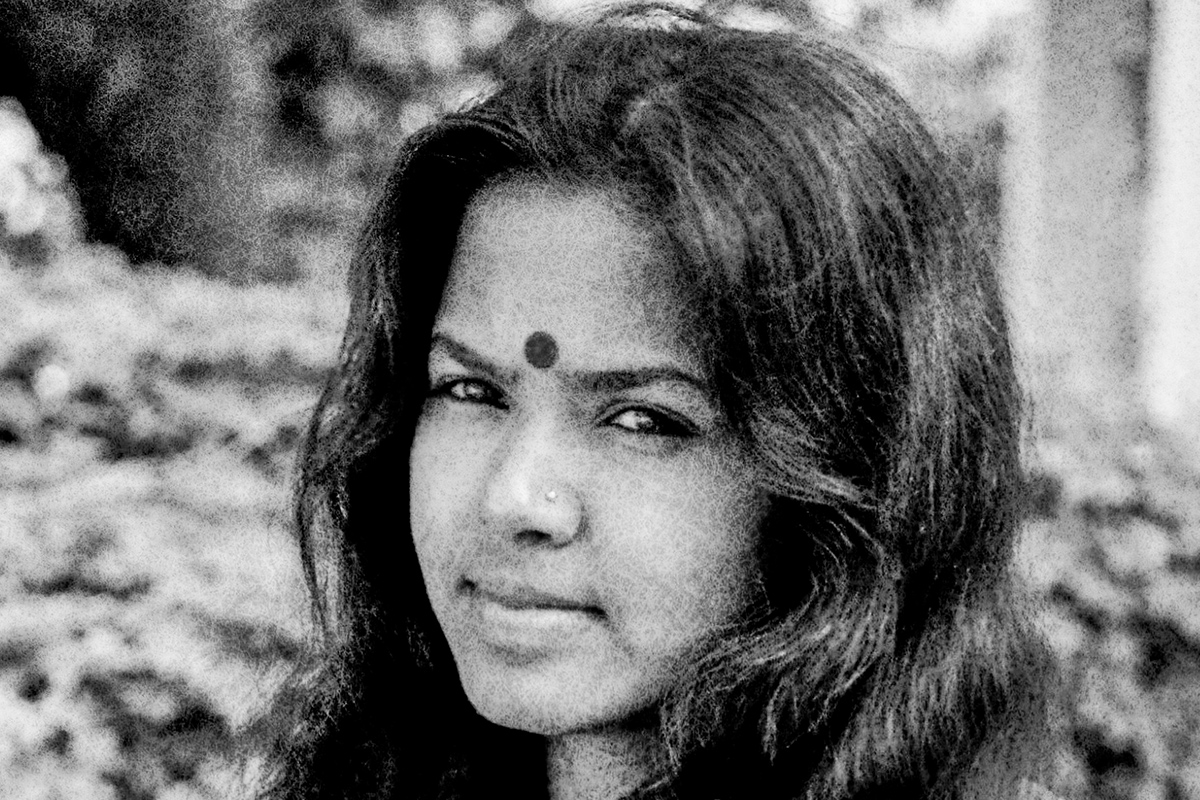
Raja: If she would become angry, that would also be 100%. No one could go near her.
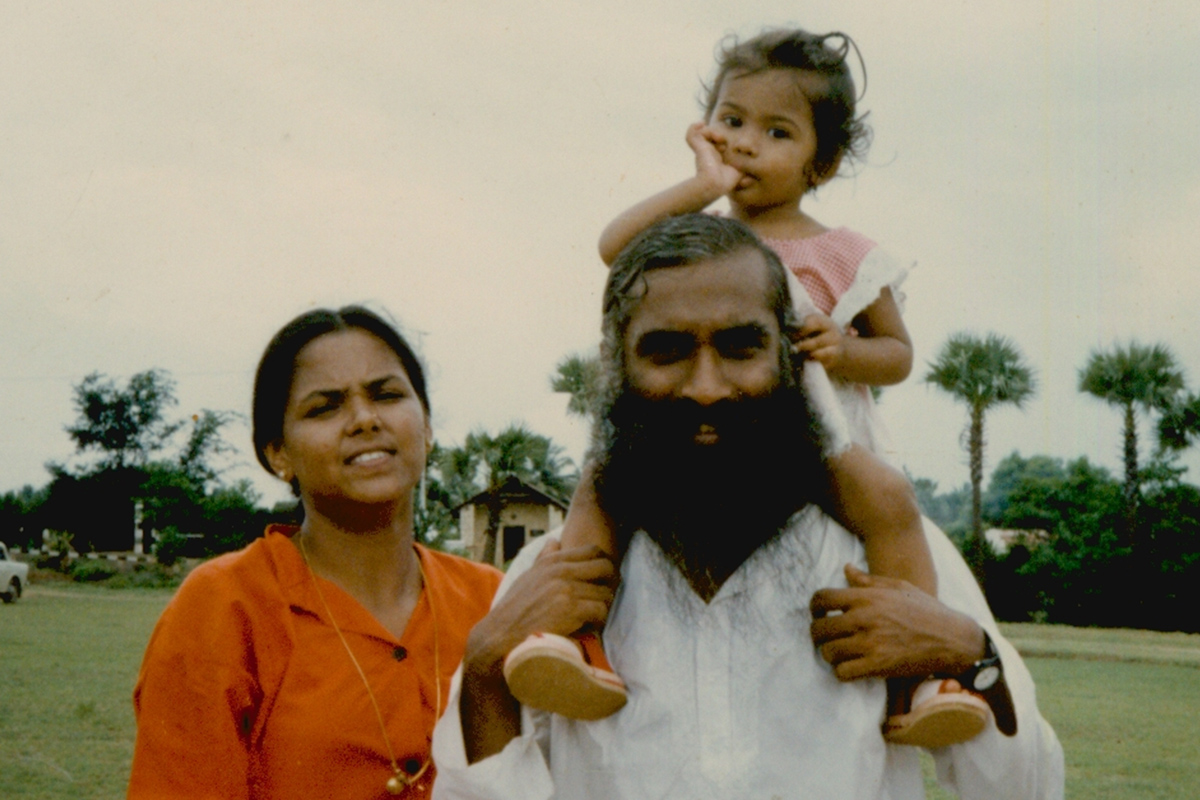
Sadhguru: My wife Vijji used to say, “This moment, he is the most wonderful husband; the most loving, most fantastic man that you can be with. The next moment, he is like an absolute stranger. You don’t know who the hell he is,” and it’s not easy to live like that.
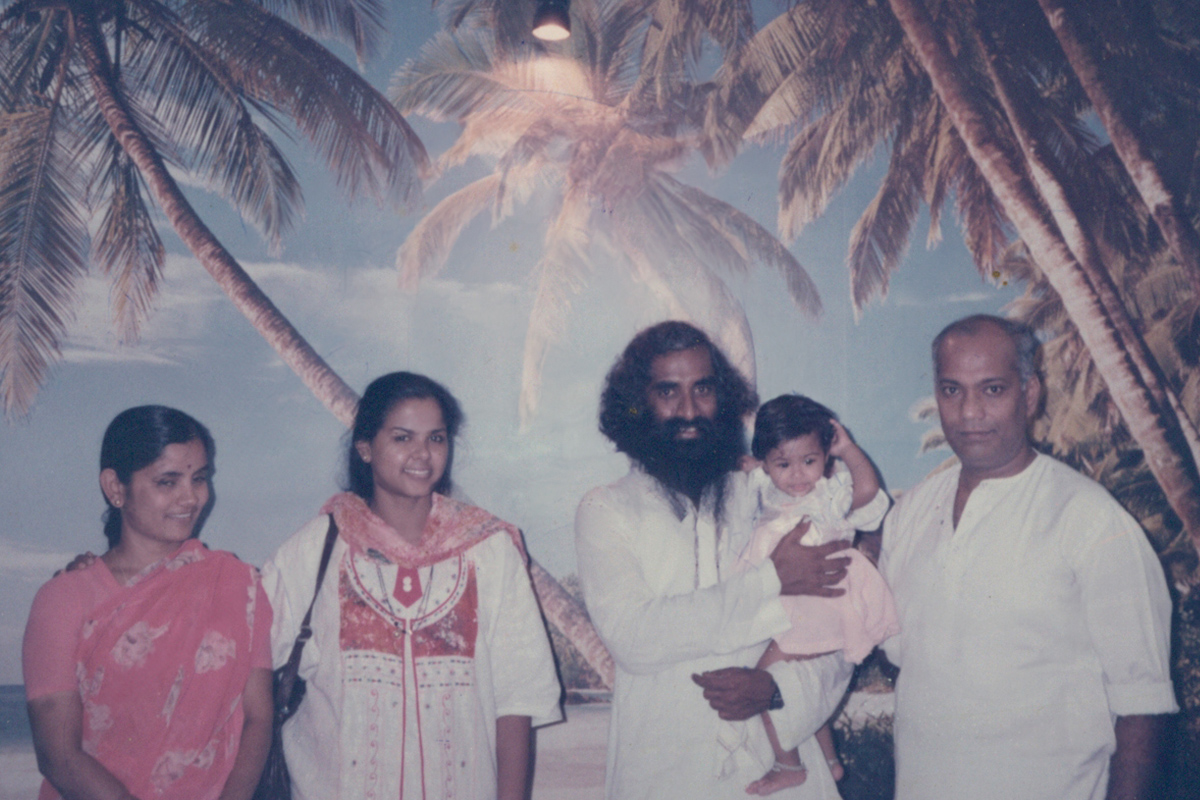
Raja: Once a program was about to start, Sadhguru had to promise something to Vijji akka, because he would be away for thirteen days. It would be something like “You come to the initiation. At night, we will go to a movie.” If he suddenly changed the plan, she would make sure he paid for it.
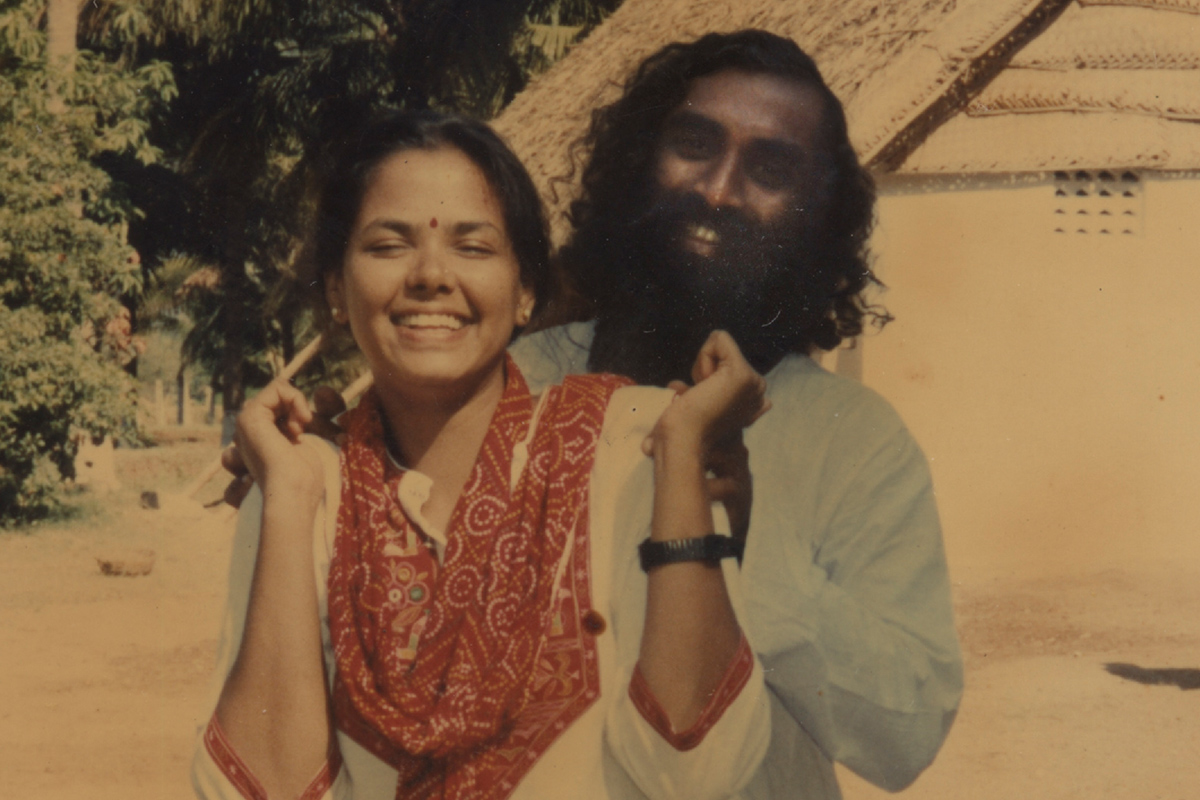
Maa Karpoori: Vijji was a great support to Sadhguru in many situations, like in the initial days in Mysore when Sadhguru would conduct programs. She worked in a bank at that time and took care of Sadhguru financially when he was going through this major transition in his life.
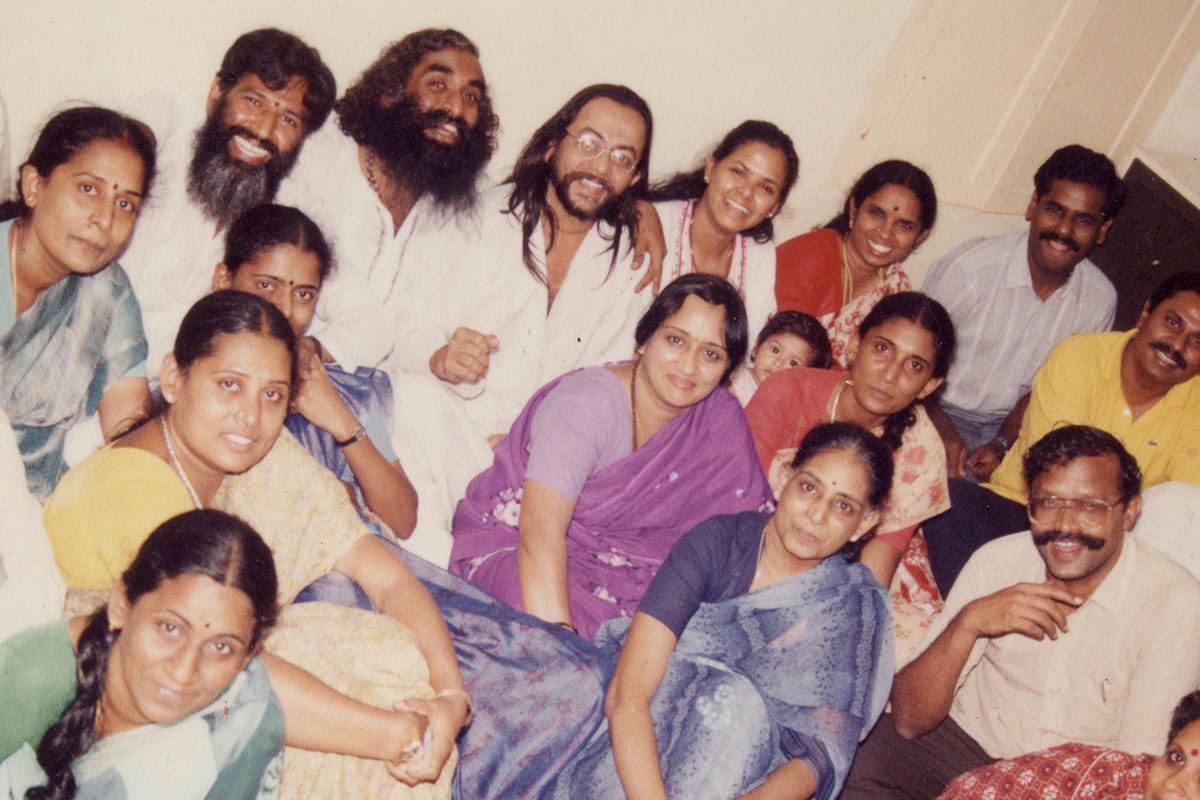
Raja: Once, before introducing a new meditation in BSP and Samyama, Sadhguru went into a week of sadhana to come up with that meditation. Throughout this time, Vijji was there with him, taking complete care of him. After that, Sadhguru conducted the first Hatha Yoga program in Coimbatore, which was a tremendous experience. She shared, “He is like a child; I have to take care always.”
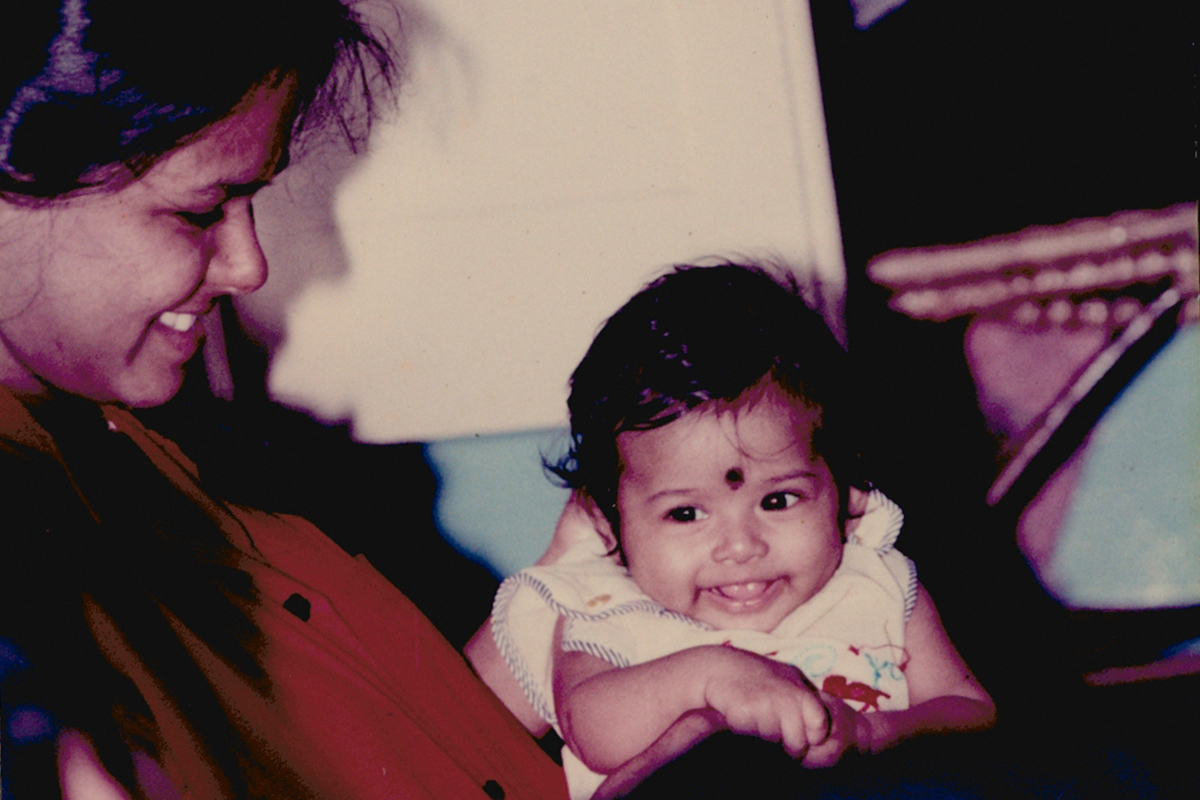
Radhe: I never witnessed any moment where she was not completely involved with whoever was around her. And I don’t just mean Jaggi or me, because we’re family – she was like that with everyone. Whoever she met, she was completely with them and she felt for them in that moment.
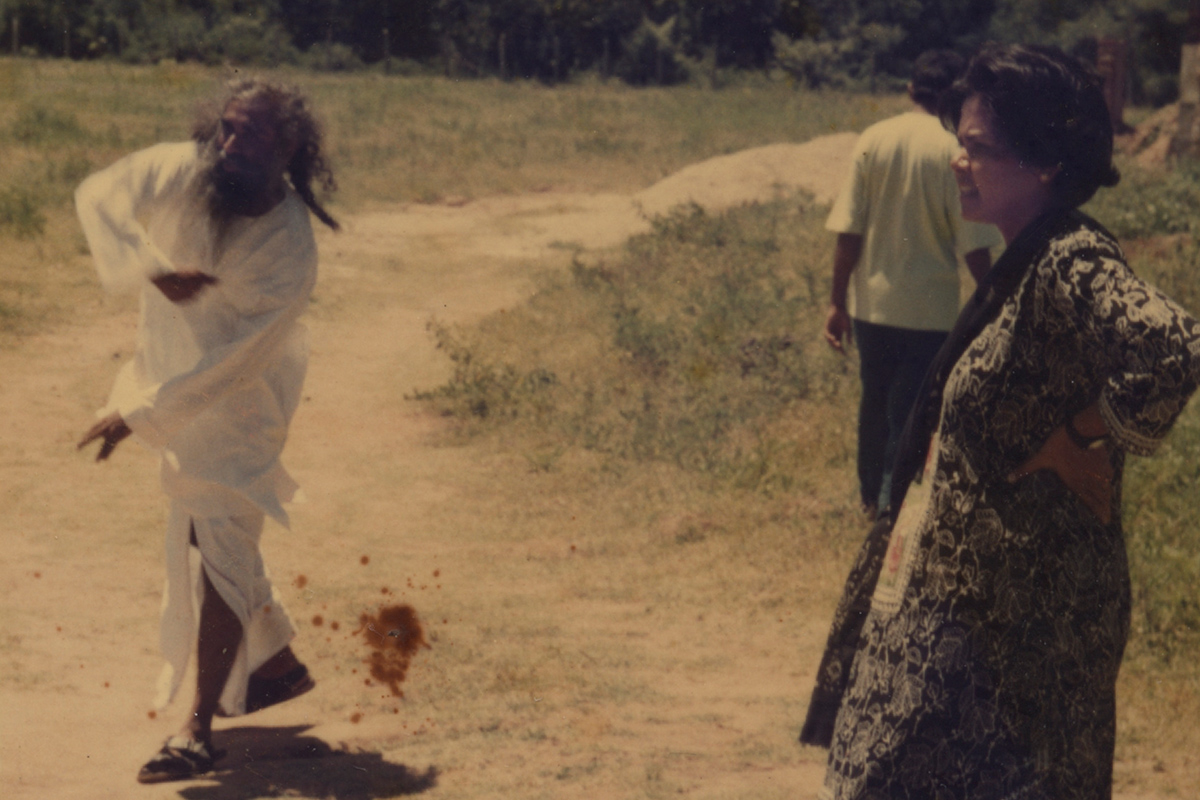
Swaminathan: One example is how we used to play the Seven Stones ball game with one team headed by Sadhguru and the other by Vijji amma.
Maa Gambhiri: Vijji’s single-minded focus was to get Sadhguru out. She would get very competitive.
Swaminathan: She would come and physically challenge him, saying, “Again, you don’t keep the stones correctly.” Those games could last one and a half or two hours with full intensity.
Maa Karpoori: She would stand like this with her hand on her hip and dare Sadhguru.
Geetha Kandasamy: Then they would have these back-and-forth exchanges.
Raja: She would be like Bhadrakali[2] during the games.
[2] A very fierce form of Devi.
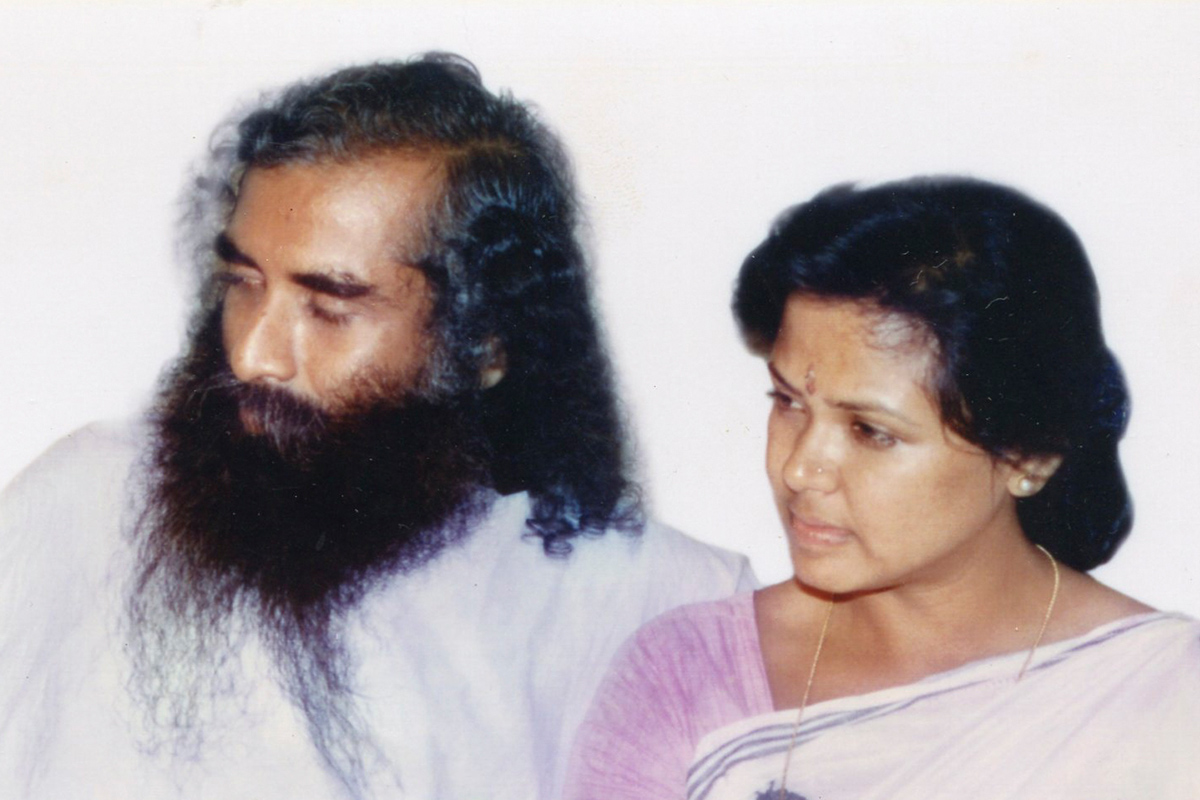
Kothai Sekar: During one of the programs, Sadhguru said that he would leave in ten years’ time. Vijji and I were volunteering, and I was sitting next to her. She suddenly grasped my hand, trembling. When I turned to look at her, I saw she was crying so much. It was an evening class, and she cried throughout the night. At one point, she even fainted. There was no way we could console her.
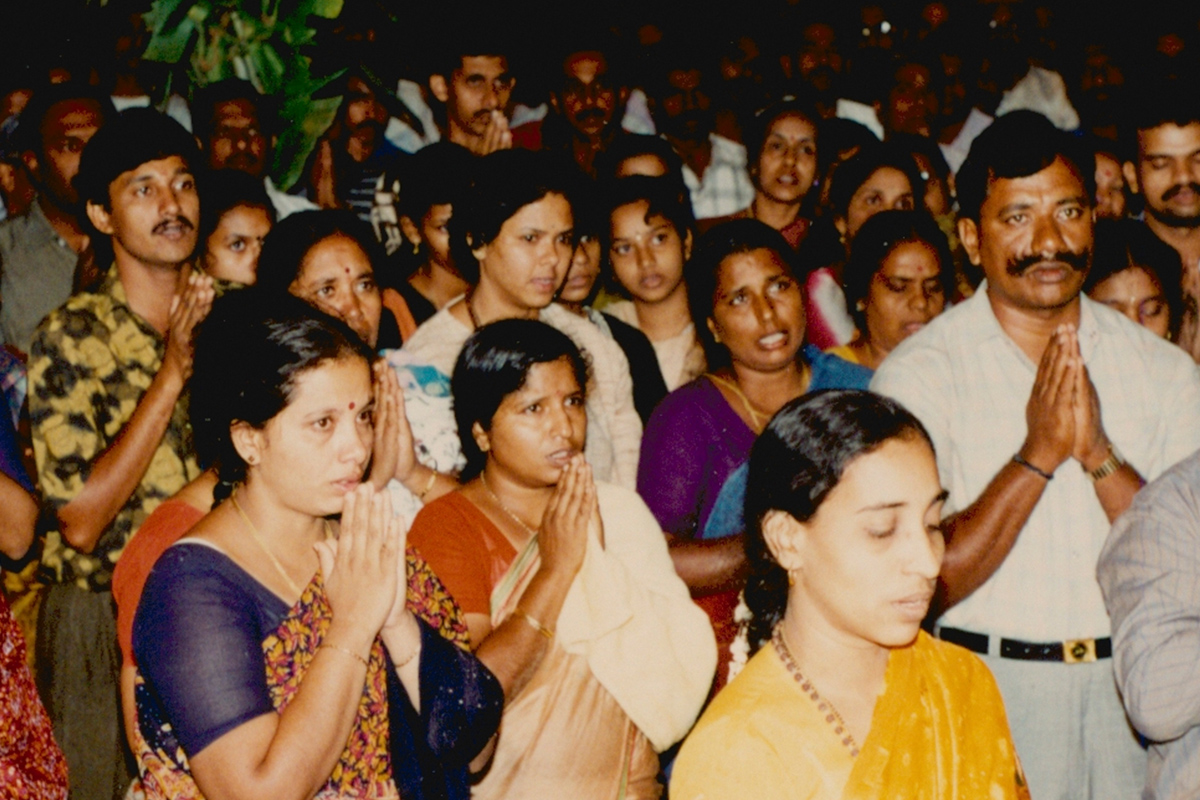
Watch the complete series “Vijji: Victory’s Daughter” on Sadhguru Exclusive.