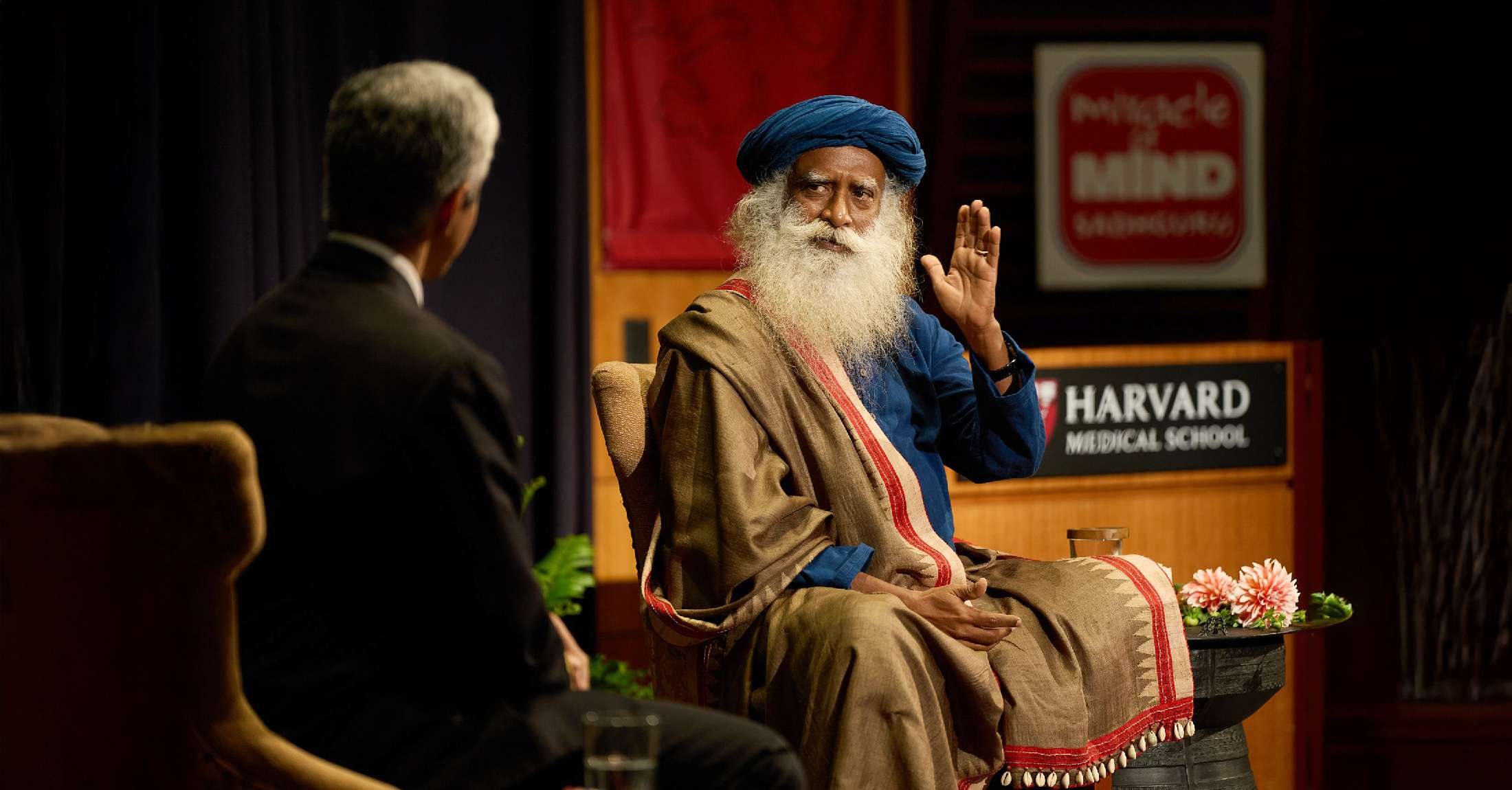
As technology advances, why does genuine human connection retreat? Dr. Vivek Murthy, the 21st U.S. Surgeon General, and Sadhguru confronted this modern paradox in their thought-provoking dialogue titled “Loneliness: In is the Only Way Out” at Harvard Medical School on 28 September 2024. This excerpt explores their insights on combating loneliness and fostering meaningful relationships in a world increasingly starved of depth and true fulfillment.

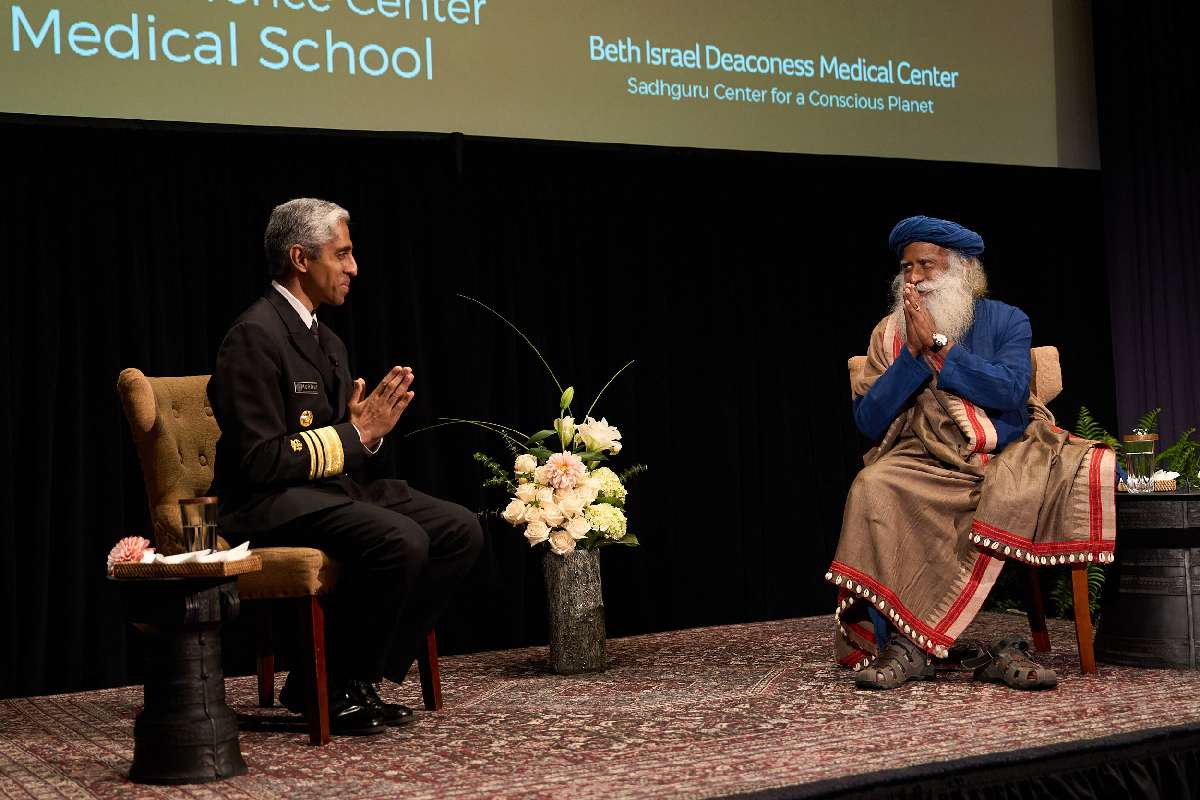
Dr. Vivek Murthy: As a doctor and serving as Surgeon General, I saw that all across our country, among old and young, this feeling of loneliness and isolation is very, very common. Young people, in particular, are struggling the most; well over 50 percent report experiencing loneliness.
When people struggle with this sense of being disconnected from themselves as well as each other, it increases their risk of depression and anxiety, but also of physical illness. We’re talking about a 29 percent increase in the risk of heart disease, a 31 percent increase in the risk of stroke, a 50 percent increase in the risk of dementia, and an increased risk of premature death.
The mortality impact we see with social disconnection is comparable to what we see with smoking and with obesity. We need a sense of community in our lives.
I think a key part that gets lost sometimes with loneliness is the idea that to be deeply connected to other people, one also needs to be connected to oneself.
Rebuilding that, in my view, is one of the most important things we can do not only for our individual health but for the health of our families, our communities, and the world at large.
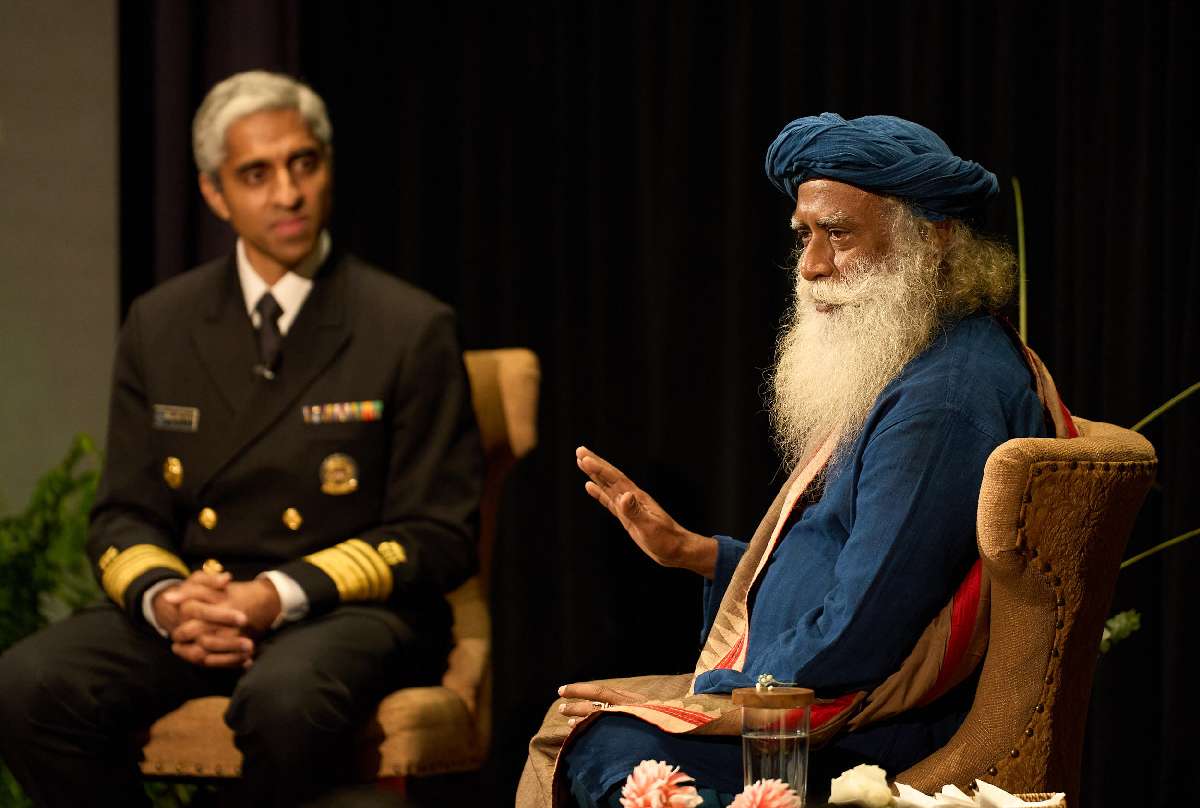
Sadhguru: Well, we are 8.2 billion people, and we are lonely. In a pretty crowded world, people are feeling lonely. There is a societal or sociological aspect to it, which the Surgeon General articulated. If we don’t constantly adjust social situations, international situations, and family situations, everything will become dislocated.
I believe the administration is trying to reduce the gaps in the societal structure, but loneliness per se is not a social phenomenon; it is a psychological phenomenon. Sitting among a crowd of people, you can still feel lonely. Even if you are loved and cared for, you could still feel lonely, because it’s a psychological phenomenon. You can make yourself lonely just about anywhere.
I’m going to say something about society, but my main focus is on the individual. One thing that’s happened in society is that the value of solitude is gone. Solitude is the most profound time of your life. This is the time you soak up life.
One thing maintained in Yogic cultures is this: the ratio of time you spend imbibing or perceiving things versus expressing things must be one to three. If you spend two thirds of your time imbibing and one third expressing, your expression will be profound and worthwhile for everyone.
But today, there are opportunities to express very early on – even a six-year-old child has something to say on Facebook. I hope you guys banned that, at least. It’s a phenomenal creation. When you are a child, you must wonder and imbibe the world as much as you can before you find words for it. But for everything, we have a word, many turning filthy. In this expression, there is no opportunity to perceive life; it’s simply flaky noise.
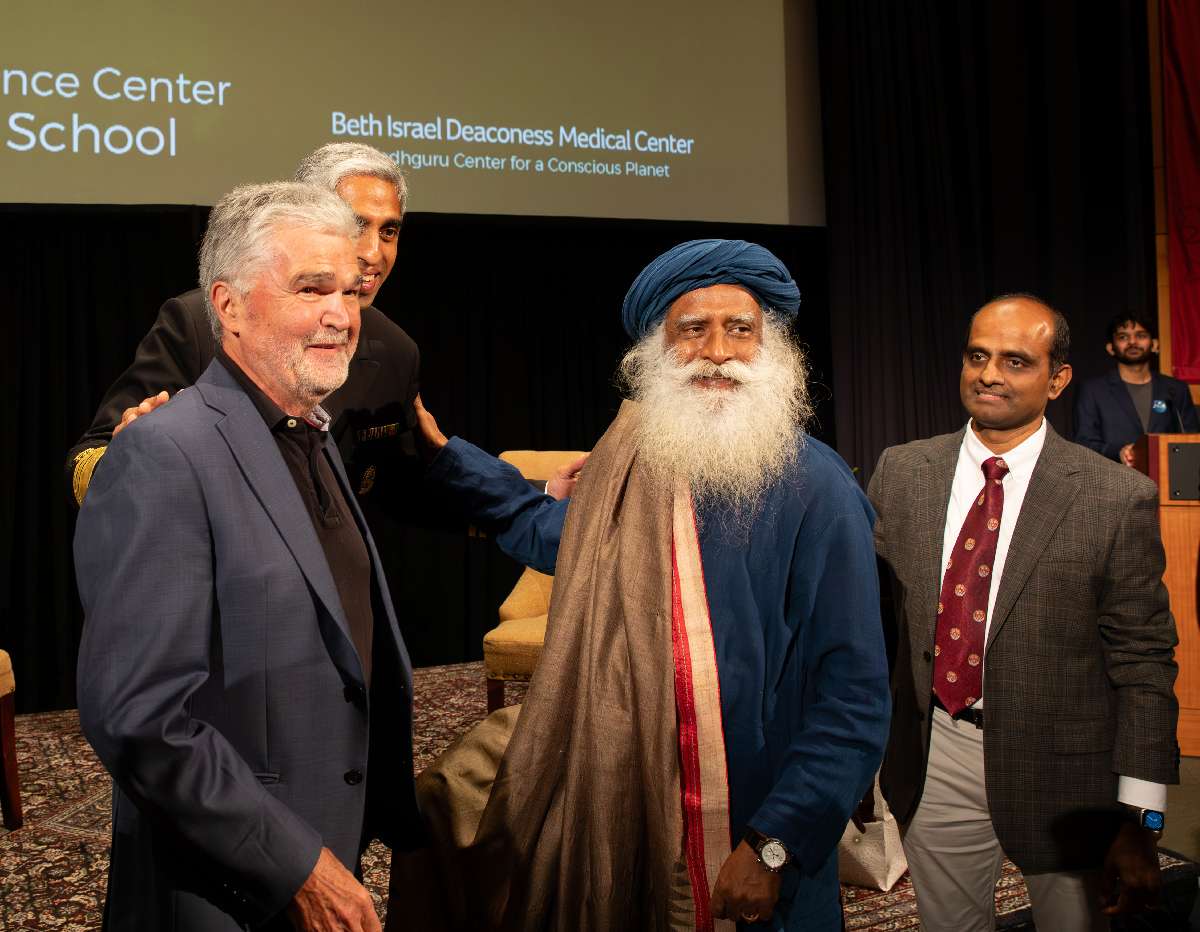
Dr. Vivek Murthy: Building on what you said, Sadhguru, loneliness, which can happen when you are with a thousand people or when you are alone, is a subjective feeling. It’s about how deeply we feel connected to others.
I spent a lot of time traveling and speaking to different types of people. College and university students were telling me that even though they had thousands of other students with them on campus, they still felt alone.
They didn’t feel that anybody knew them. They didn’t feel they could be themselves. They didn't feel comfortable with who they were. I’ve also talked to people who only have one or two people around them, but they feel very content, connected, and have a sense of inner peace and fulfillment.
One of the things that I think about not just as a Surgeon General but as a father of two small kids is how do we reorient society to focus on a deeper fulfillment that comes from a deep connection to ourselves and to others?
One of the greatest antidotes I have found to loneliness is the service we render to others, when we do something for our community and the planet. That helps us find a sense of peace and recognize the value we have. But what I worry about is when I speak to young people these days, they’re clearly surrounded by forces pushing them to think about success in life as some combination of fame, fortune, or power.
But we know many people who have all these three elements and actually are not fulfilled. There’s nothing wrong with being famous, powerful, or rich. The challenge comes when we are conveying to young people that you don’t need anything else. I think that could not be further from the truth. There’s a deep hunger for the kind of fulfillment that comes from a deep sense of connection to oneself and others.
We have to figure out how to wrangle the cultural forces and the technology in our lives to serve our intention to find fulfillment, as opposed to enslaving us to pursue the kind of behaviors, practices, and activities that may generate clicks and revenue on a website but don’t necessarily bring us the kind of fulfillment we need.
As human beings who care about the next generation, we can make sure that we are supporting them in carving out spaces and time for solitude. Also emphasizing to them that service to others is valuable. Also leading by example and sharing with them that reaching out to somebody just to connect each day – not for an agenda, not for any secondary gain, but just to be present with someone else in their life in a real human way – that has value.
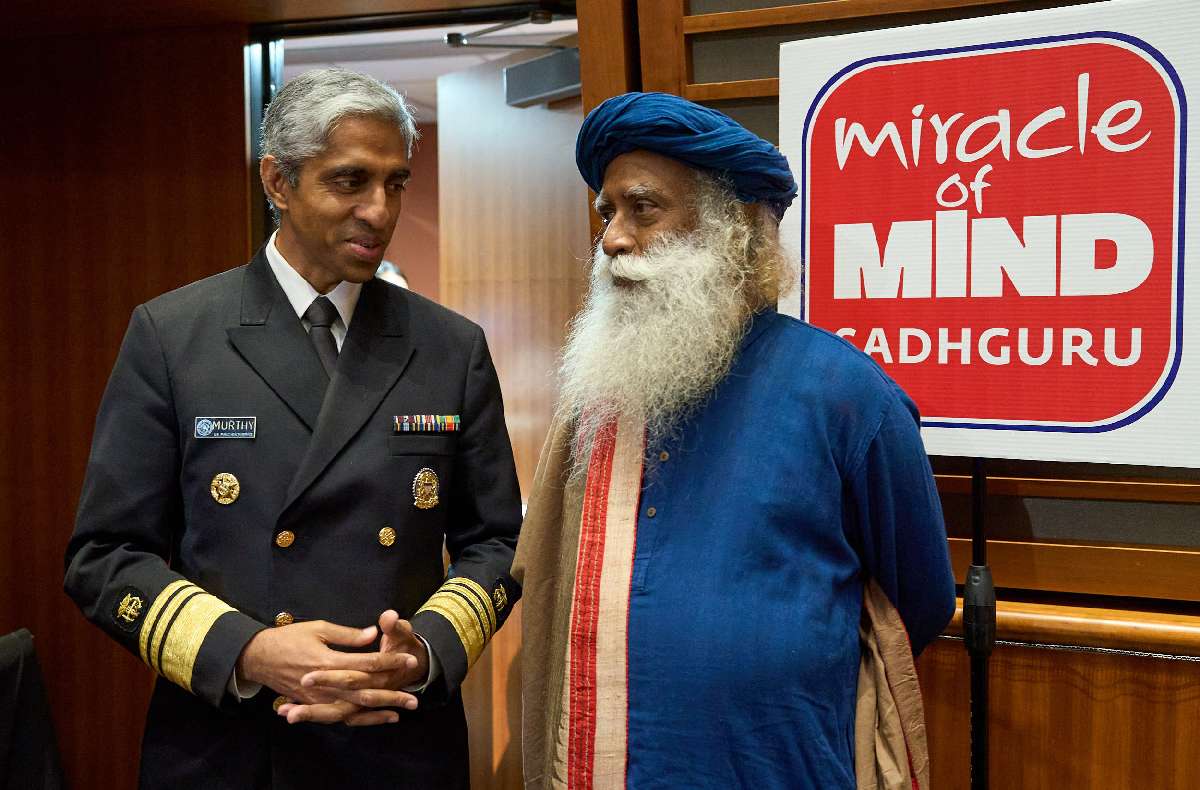
Sadhguru: Loneliness does not necessarily mean there are no people around you. That’s not the point. People are a little bit of an antidote. Maybe you find some release, but that release is just a mask or a little bit of arrangement.
But loneliness is essentially happening because there is nothing beyond your thought and emotional process. You have become just a physiological and psychological process. There is nothing more profound happening within the human being. Even if your thoughts became profound, you wouldn’t be lonely. If your thoughts and emotions happened the way you want, would you keep yourself joyful or miserable? Joyful.
If we don’t do anything about it, it’s possible that in another ten to fifteen years’ time, there’ll not be a single family without at least one person who is mentally broken. We have already achieved some landmarks. There is almost no family with people over 40 years of age who are not on some kind of prescription medication for physical ailments. That will become common for mental ailments as well.
Physical ailments are painful, but mental ailments are painful beyond imagination. If my own intelligence turns against me, no force in the universe can save me. So, addressing these things at an early age becomes important, including the irresponsible use of technology. You cannot stop technology, and it should not be stopped.
It’s time to upgrade your inner technology. If we upgrade our activity without upgrading ourselves, then we will suffer. The most important thing is that human beings take charge of their body and their intelligence. Our school system should come up with this. It’s not just about learning ABC.
There is no way to stop technology. Policymaking cannot move at the pace of technology. When this is the pace at which it is moving, it’s extremely important that we invest in human transformation. As a part of this, we are launching Miracle of Mind. The human mind is the greatest miracle on the planet. The greatest technologies you’re seeing all come from this one.
The human mind is a miracle, but most human beings are using it as a misery manufacturing machine. Individual suffering has always been there on the planet. But now, it is happening on an industrial scale. So, the time to address it has come. Governments, administrations, and organizations address this on various levels, which is meaningful and important, but there is no substitute for individuals taking their physical and mental health as their personal responsibility.