It’s no secret that the Naga Pratishtha was a grand event with participants absolutely immersing themselves in the mystical process. Little did they know about the immense efforts that were underway behind the scenes to bring the event to life. In this piece, we give you an inside scoop on the Naga consecration and its preparations.

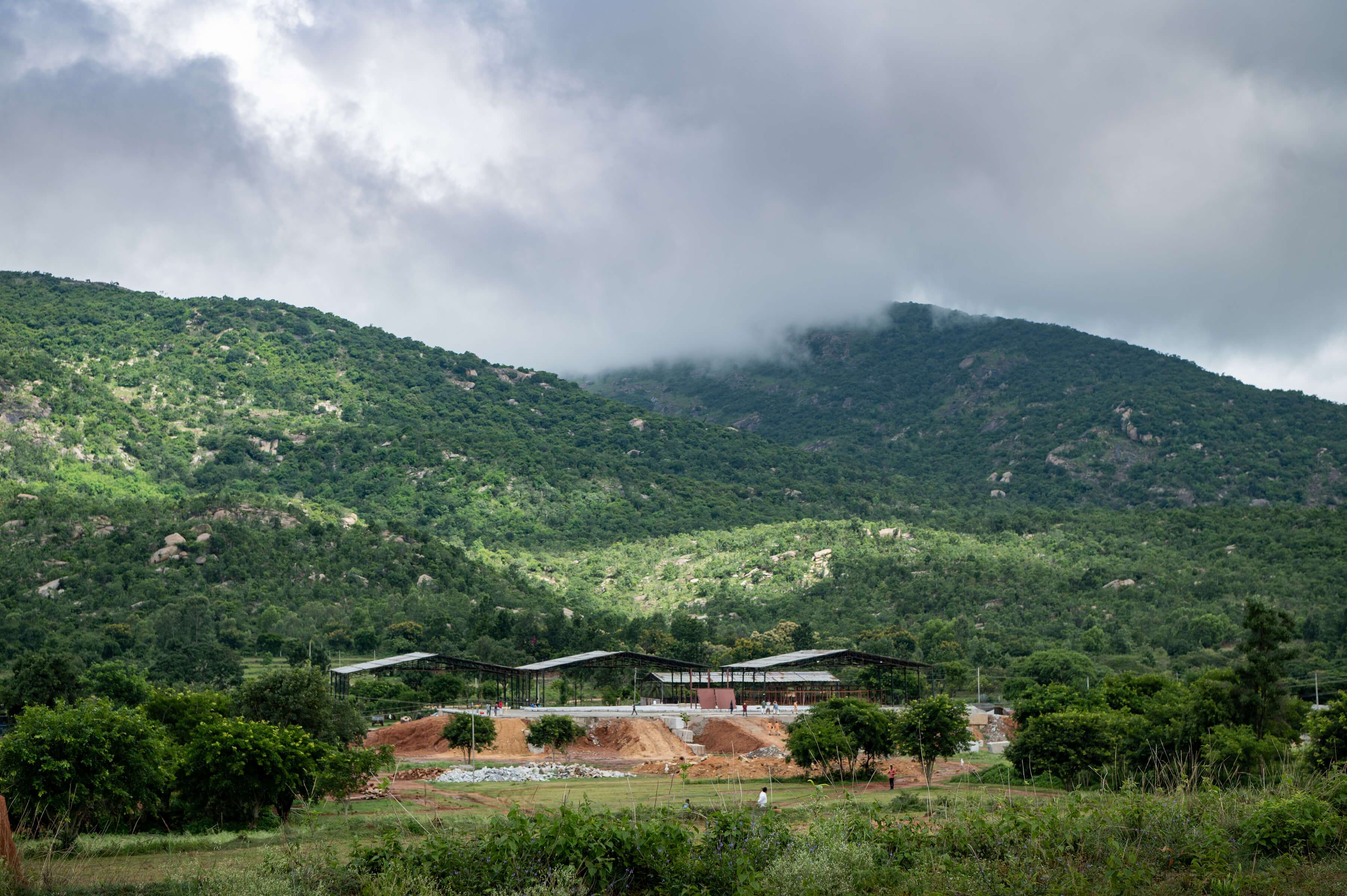
Sadhguru spent a couple of his early childhood years at his grandparents’ home in Chikkaballapur. And even after that, he returned there every summer until he was 17, rollicking with a squad of close-knit cousins. In the following decades, his travels took Sadhguru to almost every corner of the world. But then, as life would have it, Isha acquired a piece of land in Chikkaballapur a few years ago, and the idea of establishing an Isha Leadership Academy there was being discussed.
At the time, perhaps only Sadhguru knew that the space had the potential to burgeon into a full-fledged Isha Yoga Center. But now, during the Naga consecration, Sadhguru disclosed some large-scale plans for the center, which include not only the Naga, a 112-ft Adiyogi, and a Yogeshwar Linga, but also an Adiyogi Alayam, a Linga Bhairavi abode, a whopping 8 program halls – and that’s probably not all.
While the center is still in a nascent stage, especially the Bengaluru volunteers will have the privilege and the responsibility to help fast-track its progress and experience the fulfillment of creating a sacred space for self-transformation in their vicinity. The participants of the Naga Pratishtha were some of the first ones to get a glimpse of its stunning location.
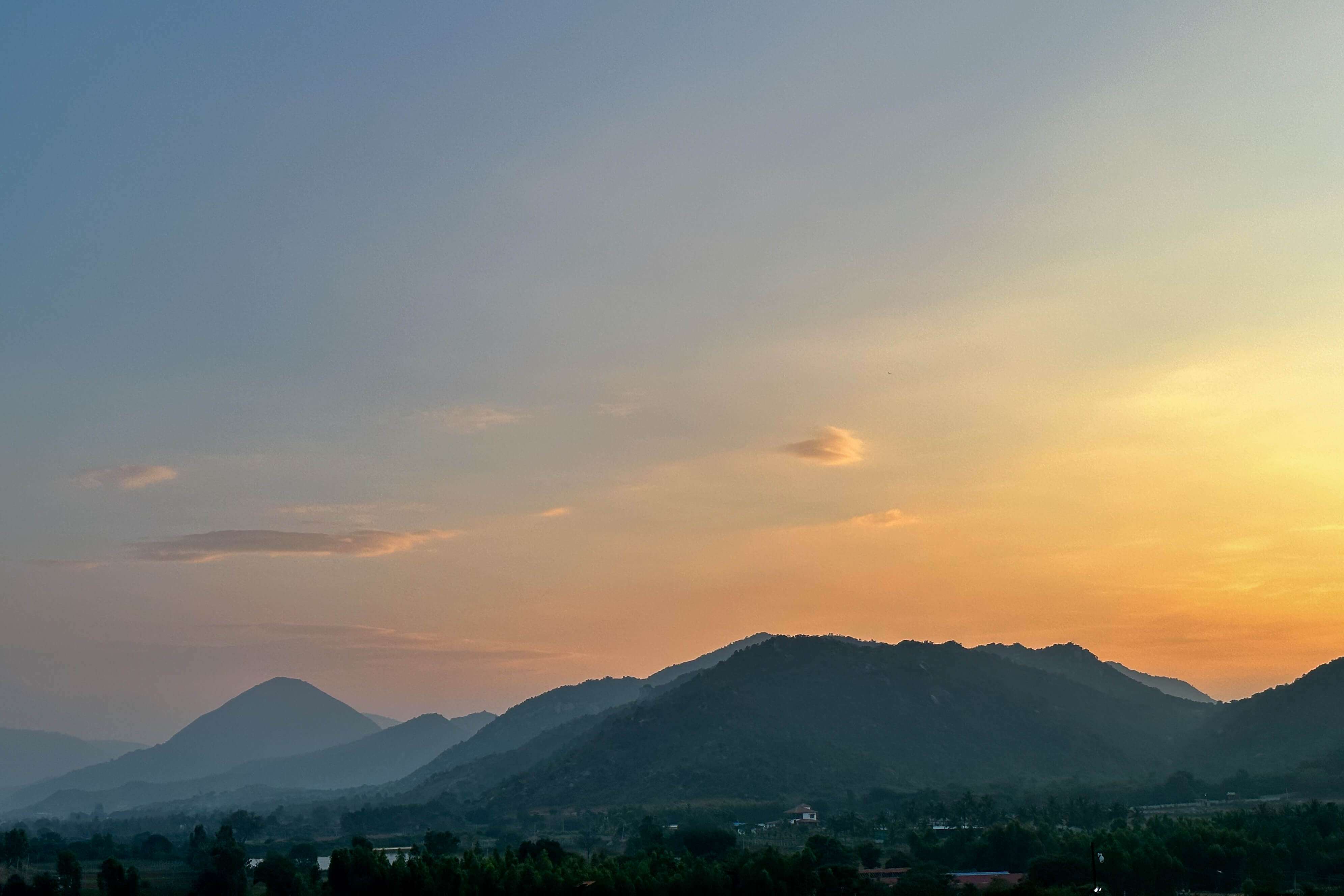
The ride along the winding roads of Nandi Hills is a true feast for the eyes, with scenic views of lucid blue skies, rugged hills, and lush foliage – courtesy of Mother Nature. Tucked away in a bowl-like area between the hills, you won’t be able to spot the Yoga Center from a distance. Only when your eyes suddenly meet the magnificent 9-ft monolithic sculpture of Naga, do you realize you have arrived.

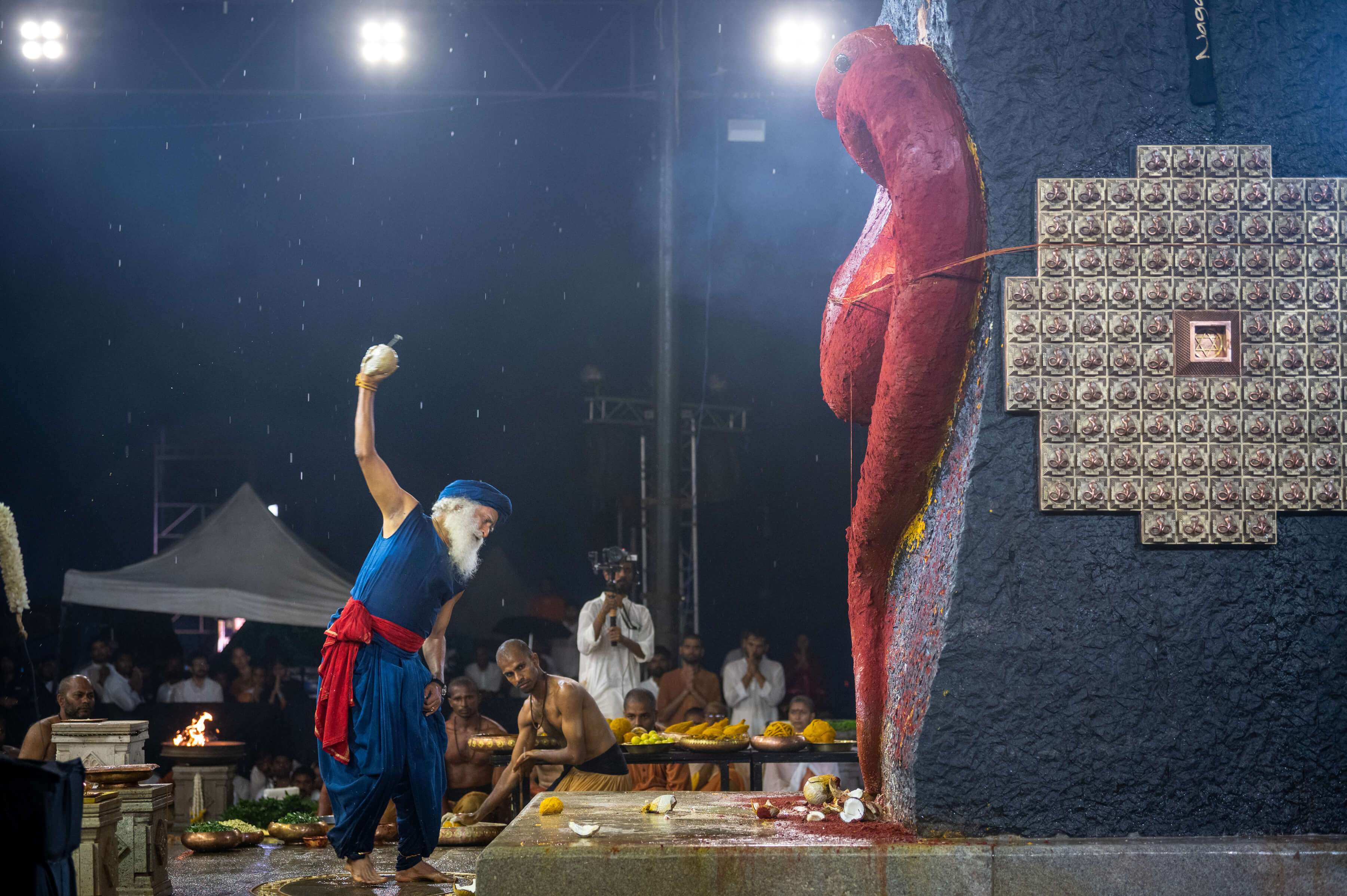
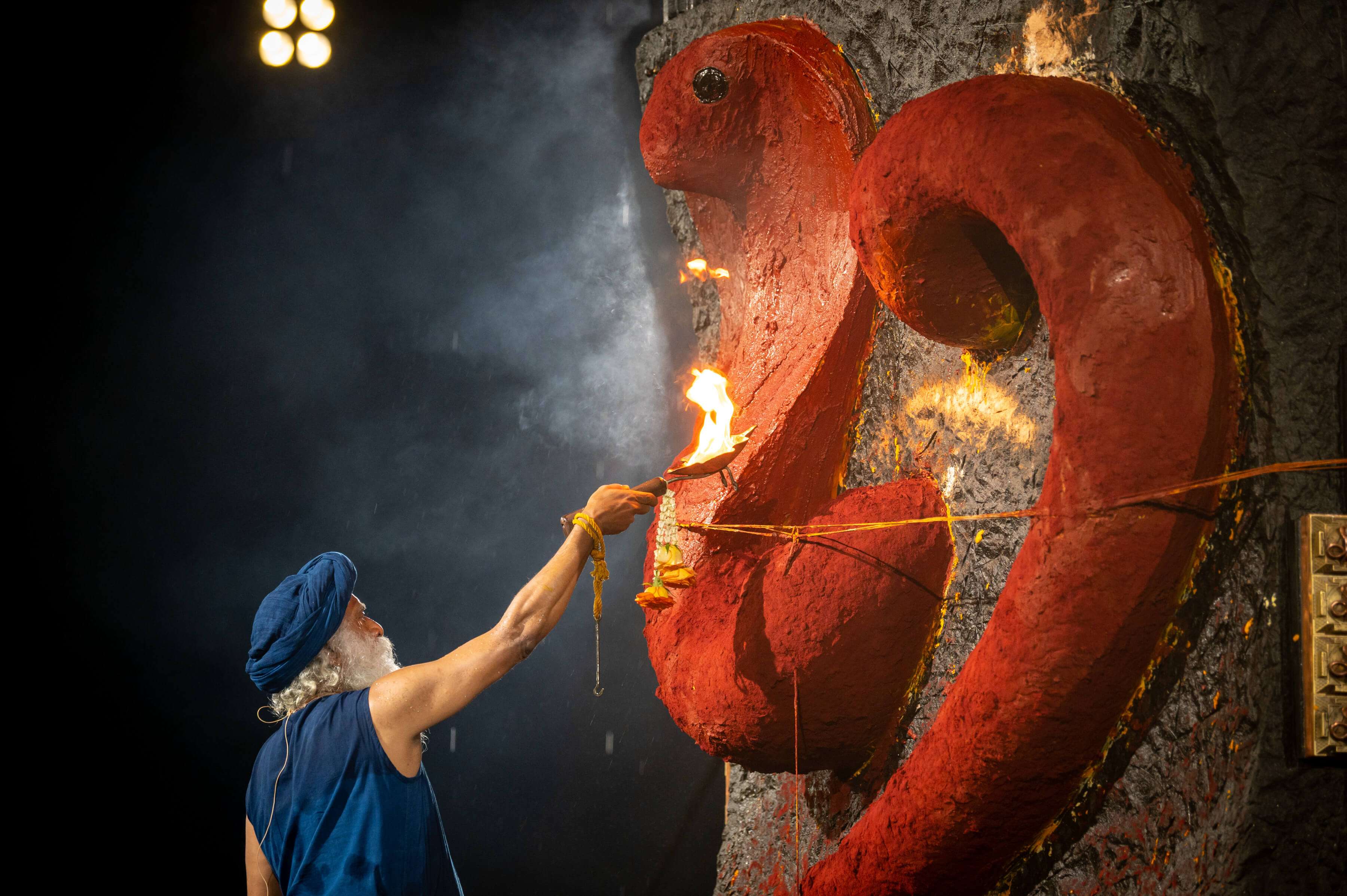
The Naga Pratishtha on 9 October was nothing short of momentous – the first such Naga to be consecrated in 800 years. Even in terms of inclusiveness and scale, the consecration was unparalleled, as Sadhguru opened up an otherwise intimate process to anyone who longed for a taste of mysticism.
Sadhguru’s instruction for the next 3 ½ hours was, “Whatever happens, you sit.” And that’s precisely what transpired. No amount of rain could shake the participants’ sheer determination to partake in this magnificent event. Most sat drenched from top to toe with their eyes closed, absolutely absorbed in the process. One of the participants shared, “It was so powerful and intense to see the mystical side of Sadhguru. To be here for this consecration was a privilege above any other.”
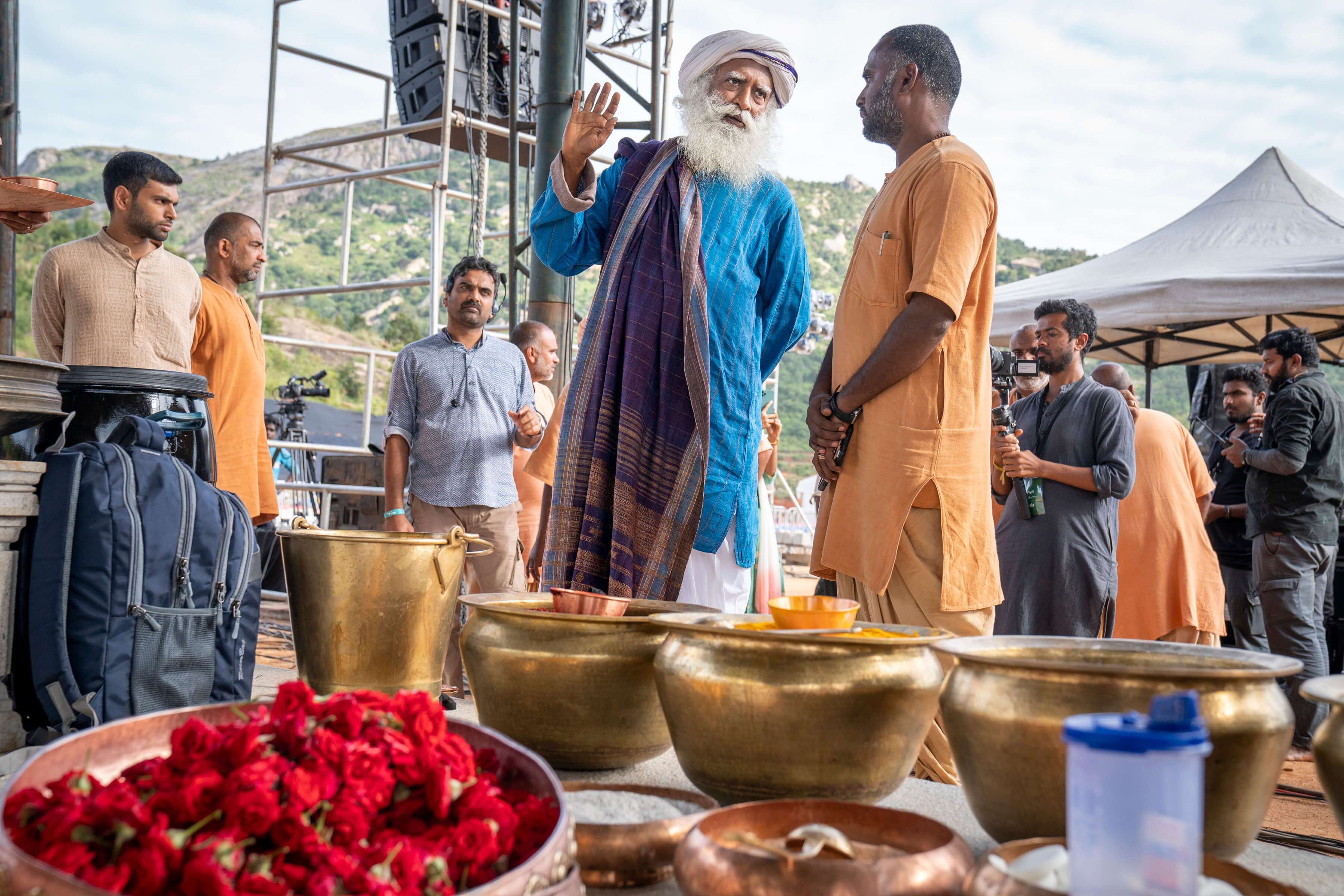
About two years ago, Sadhguru had first shared with a close group of volunteers that a consecrated Naga should take up residence in the Bengaluru Center. From then on, volunteers of various departments tirelessly committed themselves to preparing every little detail for the event to unfold seamlessly.
Like all the major Isha events, with Sadhguru’s grace and an all-hands-on-deck approach, the Naga Pratishtha program was a resounding success. However, it’s worth looking at the behind-the-scenes preparations and how everyone contributed to an electrifying night.
Sadhguru received a very warm welcome in Riyadh. He addressed an enthusiastic and highly engaged public gathering organized by the Embassy of India, Riyadh, answering questions of all kinds, and of course – talking about Soil.
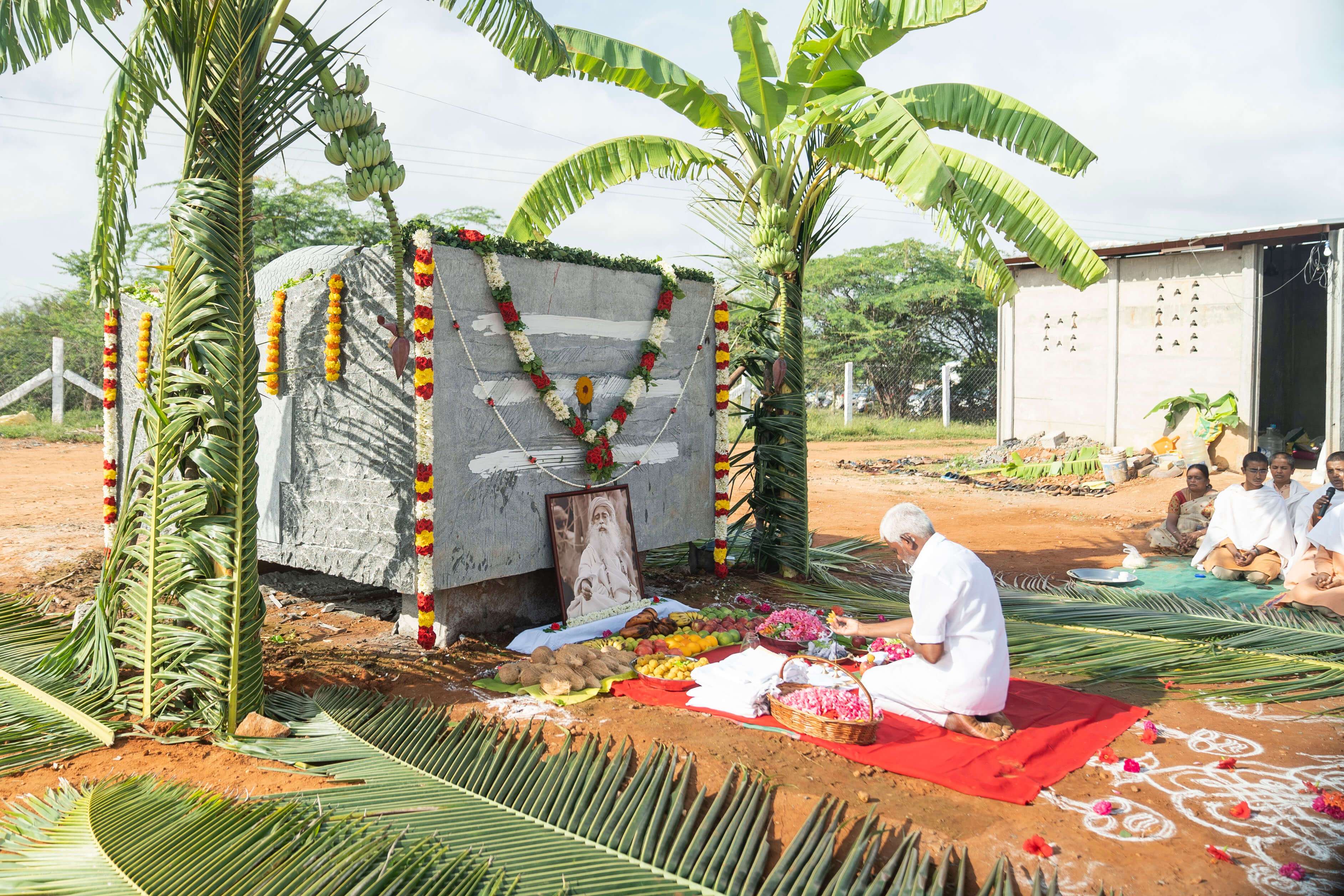
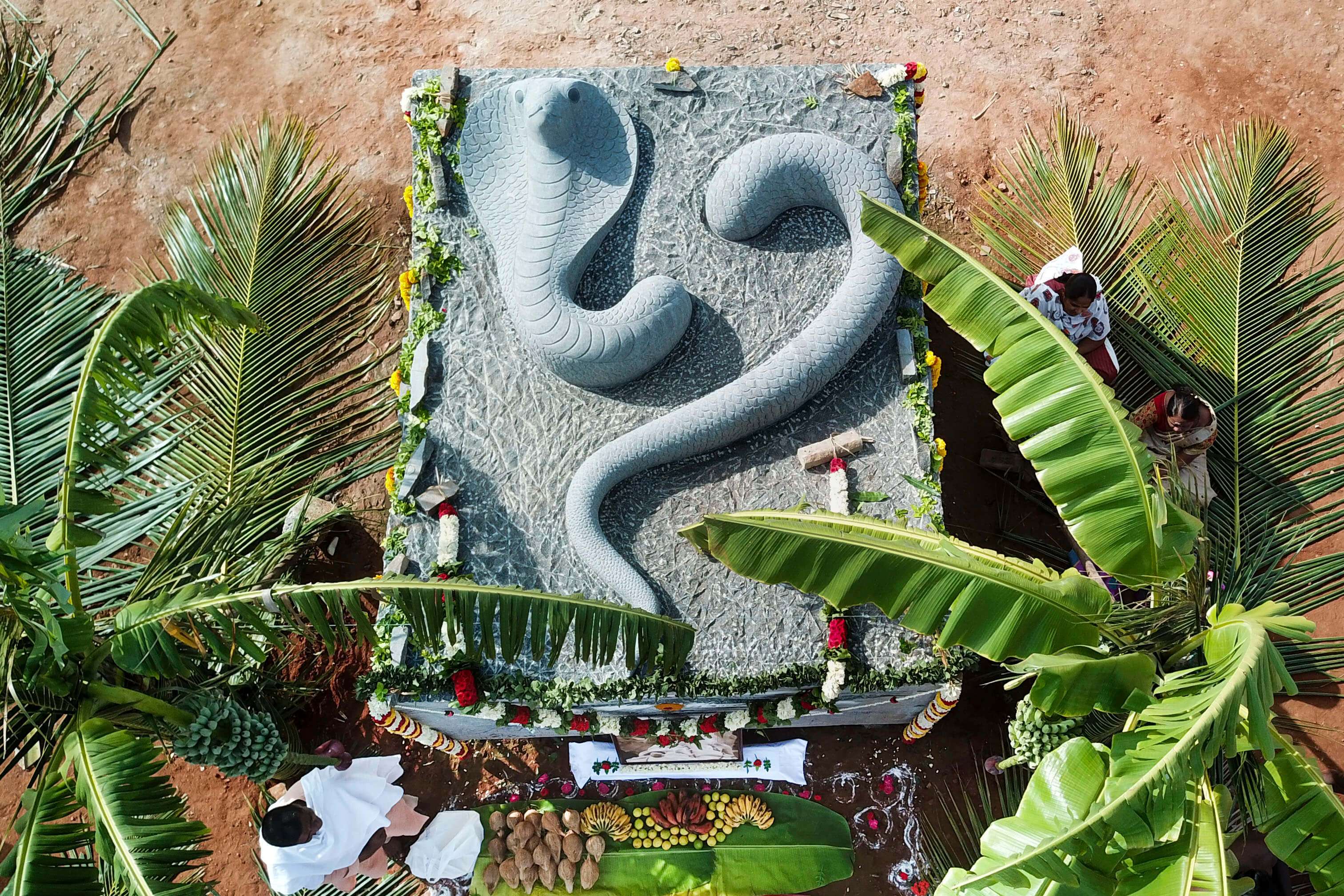
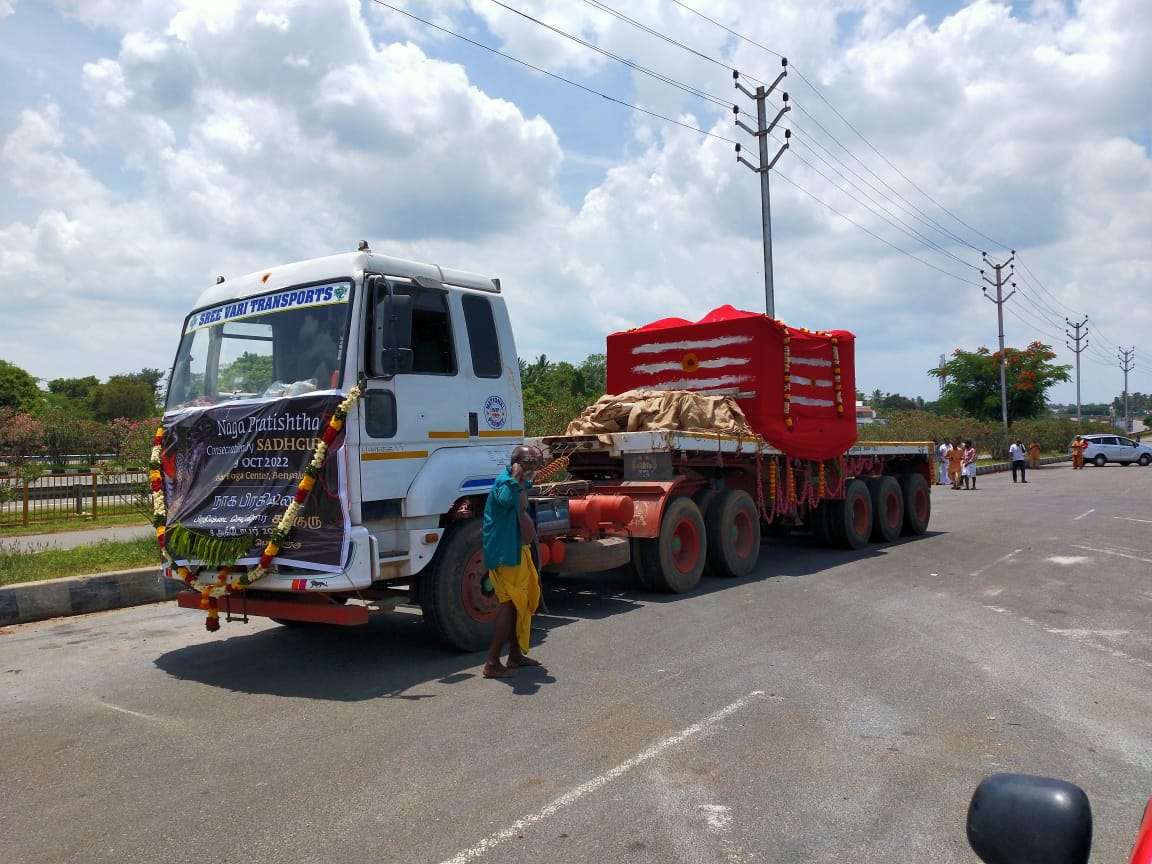
The monolithic Naga stone measures 9ftx5ftx4ft and weighs around 37 tons. The process of identifying, acquiring, cutting, transporting, and carving a stone of such colossal dimensions is generally a long-drawn affair. But Isha Foundation’s construction team had just three months to carry out this enormous responsibility.
By way of luck or grace, the quarry they visited in Tiruppur happened to have an already cut-out stone of the required dimensions. They promptly took a photo and sent it to Sadhguru. He gave his approval, and right away, the construction team delivered it to the sthapatis (temple stone carvers).
Carving the stone took close to 90 days, with 18 carvers working on it. One of them shares, “It was definitely challenging, but we were fully involved. When Sadhguru explained it to us, we became totally immersed in it. We forgot ourselves and got involved without experiencing anything as difficult.”
Once the stone was carved, it was covered in a red cloth and adorned with a garland before being transported from Tiruppur to Bengaluru on a heavy duty truck. The transport happened in a celebratory way, with men playing drums, passerby dancing, and people performing a pooja to welcome Naga in Bengaluru.
Another situation that required swift attention was the uneven ground around the Naga shrine. Initially, the shrine was fringed by hillock slopes, making it impossible to sit comfortably. The construction team came to the rescue again. The team ensured the ground was equally leveled to accommodate the over 16,000 participants. Even the road to the eastern entrance was widened and paved for easy access to the Yoga Center within just one week. No task seemed herculean enough to deter Isha’s construction team, who took up every challenge head-on.
Sadhguru received a very warm welcome in Riyadh. He addressed an enthusiastic and highly engaged public gathering organized by the Embassy of India, Riyadh, answering questions of all kinds, and of course – talking about Soil.
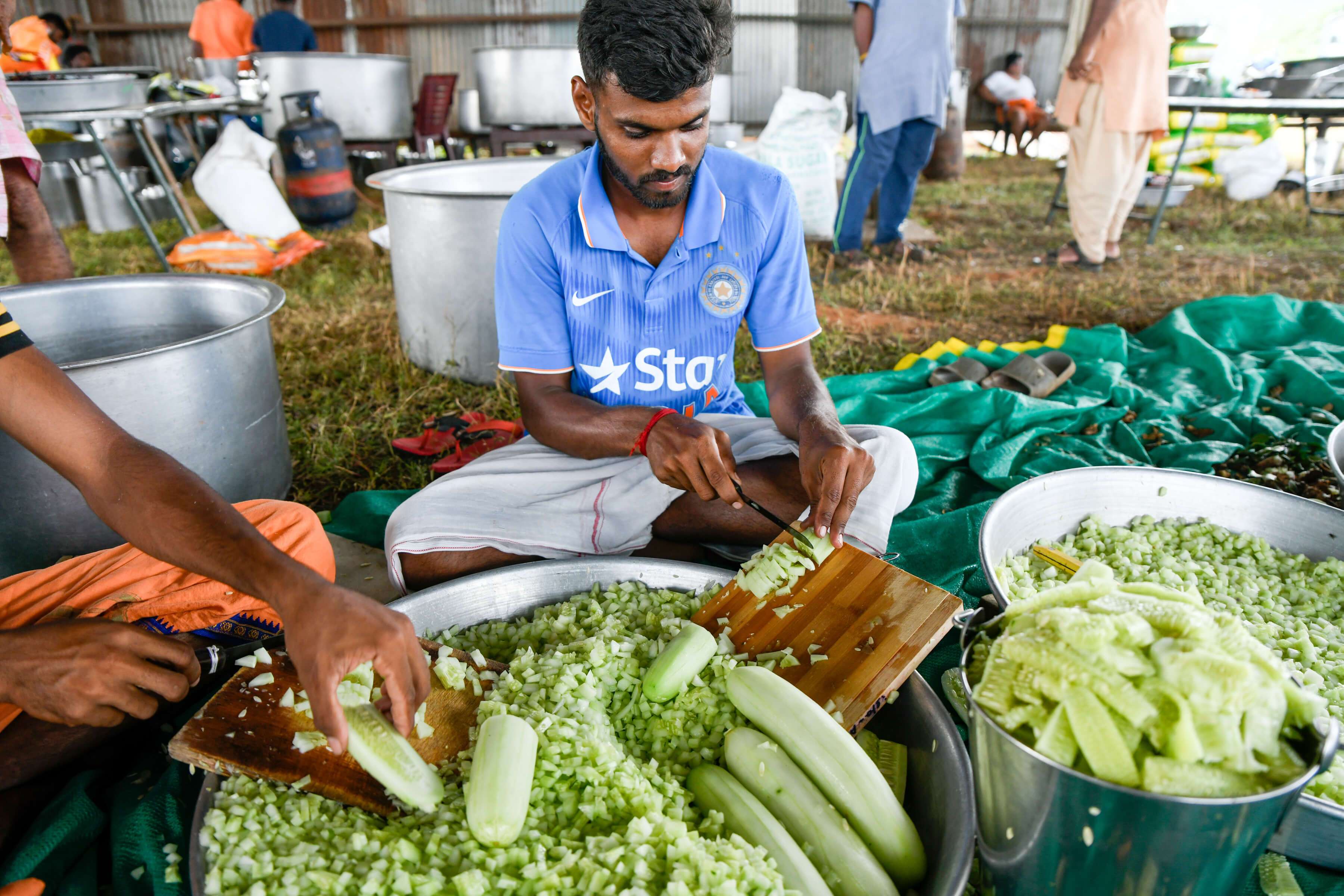
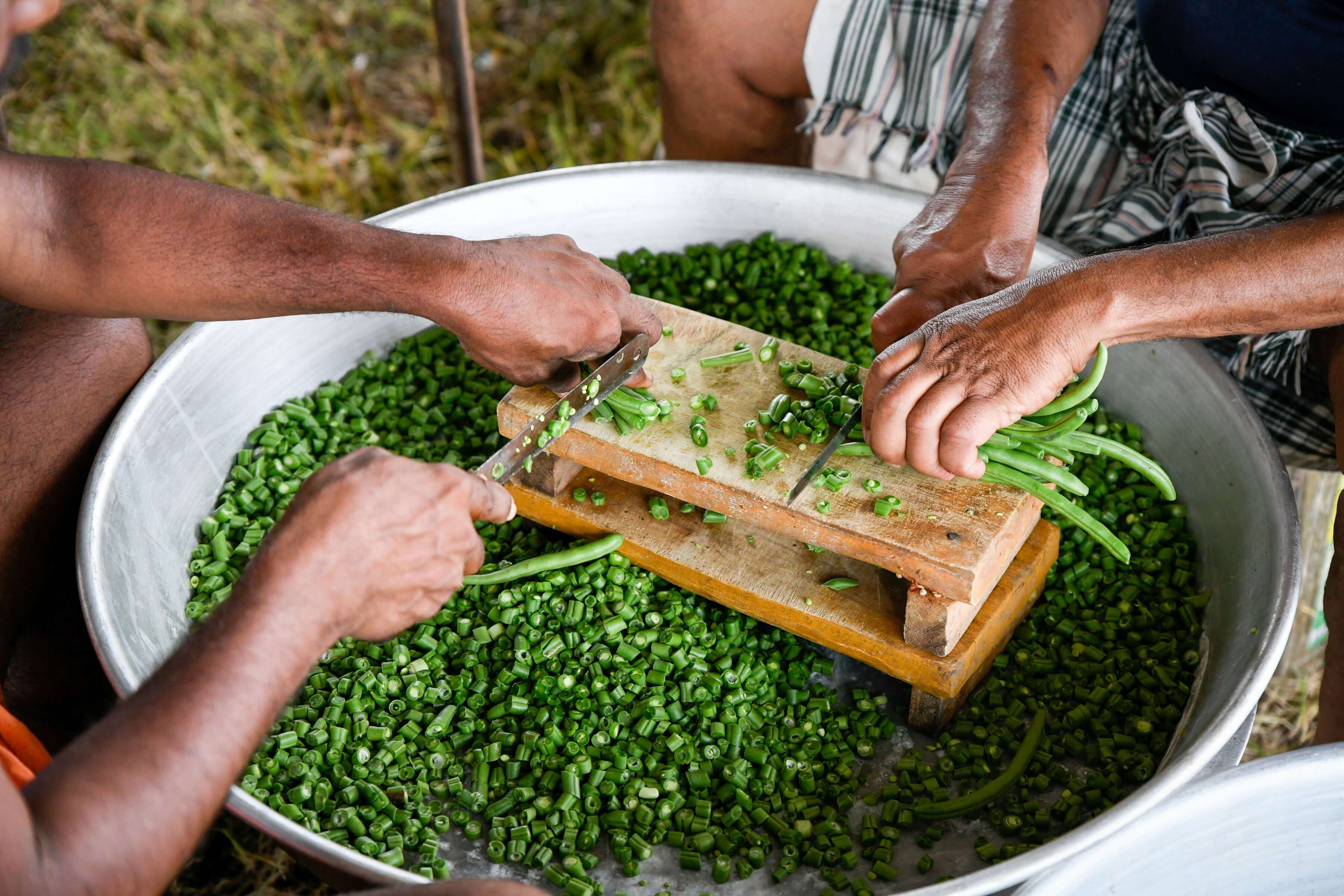
Two months ahead of the consecration, the Akshaya (ashram kitchen) team set up a temporary kitchen to cook food for the workers and volunteers on-site. Everything seemed to be going smoothly, but then parts of the kitchen got waterlogged by a sudden torrent of rain on 2 October – just a week before the consecration.
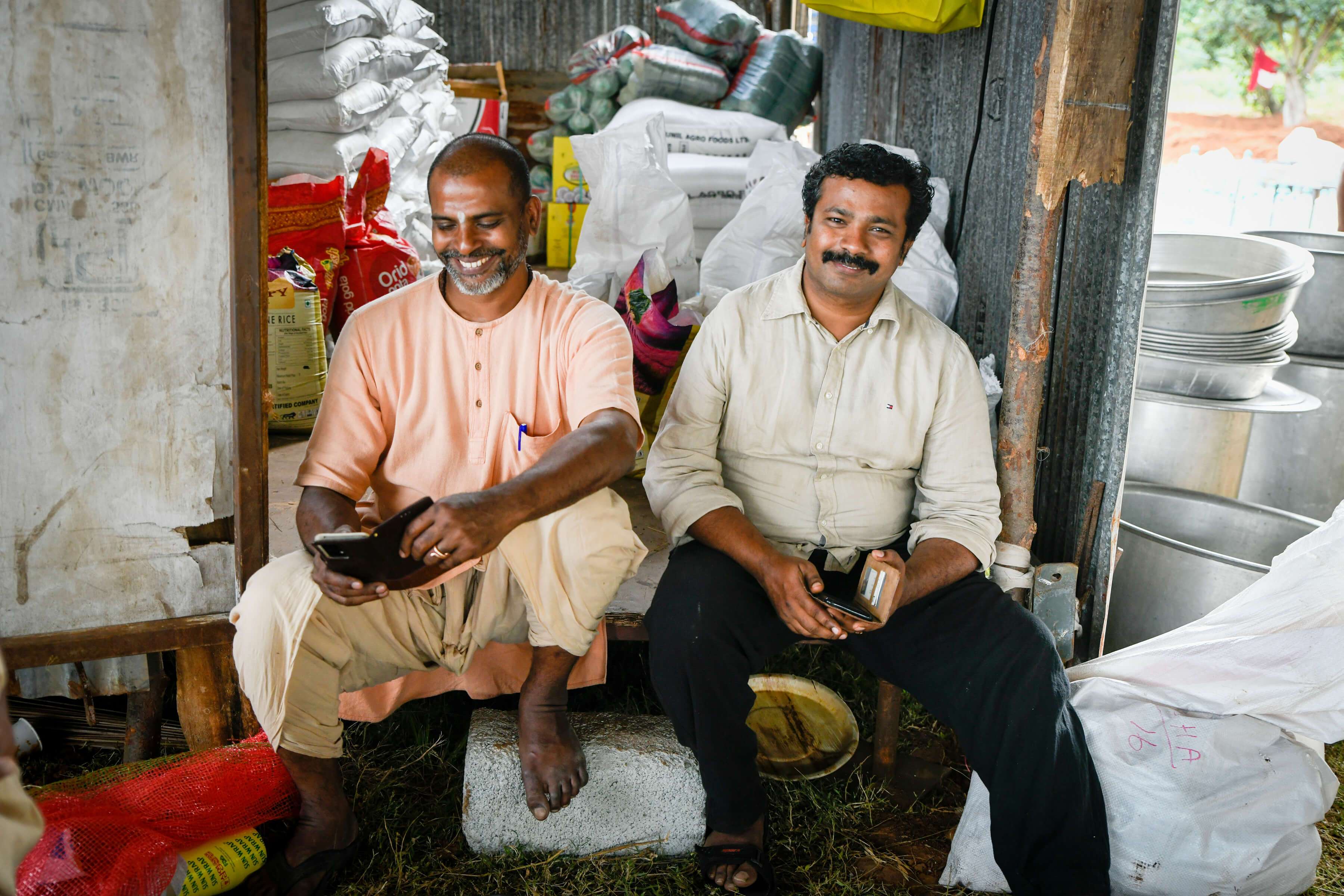
When Swami Devabahu, the coordinator for the Akshaya team, arrived on 4 October, what had once been a kitchen was now a partly submerged piece of land. Laughing, he recounts, “I reached the location, and my Akshaya was not there! Luckily, with the generosity of a few people, we shifted all the supplies to a Kalyana Mandapam, about 4 km away. But again, due to lack of electricity and water, preparing meals proved difficult. Since we were operating from a remote location, it also became hard to gauge the number of people arriving daily.”
Although the Akshaya team had their plates full (pun intended), they ensured the participants were well-fed and fueled. On the day of the event, the program kitchen was up and running, and a wholesome meal of sambar sadam and sakkarai pongal was served for brunch.
“Without a break, from morning to evening, we cooked to feed the almost 18,000 participants and volunteers who were there for the event. Every time the food was about to run out, we’d send another batch,” shares Swami, sporting a beaming smile. It’s safe to assume that the food was so delicious that it was in high demand throughout the day. Whatever situation cropped up in the kitchen, Swami quickly came up with a solution.
After days of super intense activity, the Akshaya team sat in the kitchen at night, cracking jokes, and sharing hilarious incidents that occurred. Bowling over in laughter, Swami recalls one of these situations, “For hours, all the cooks were hunting for the sanjeevini kanji packets that had disappeared overnight. Turned out one of the cooks made a makeshift bed out of them for an added layer of softness.”
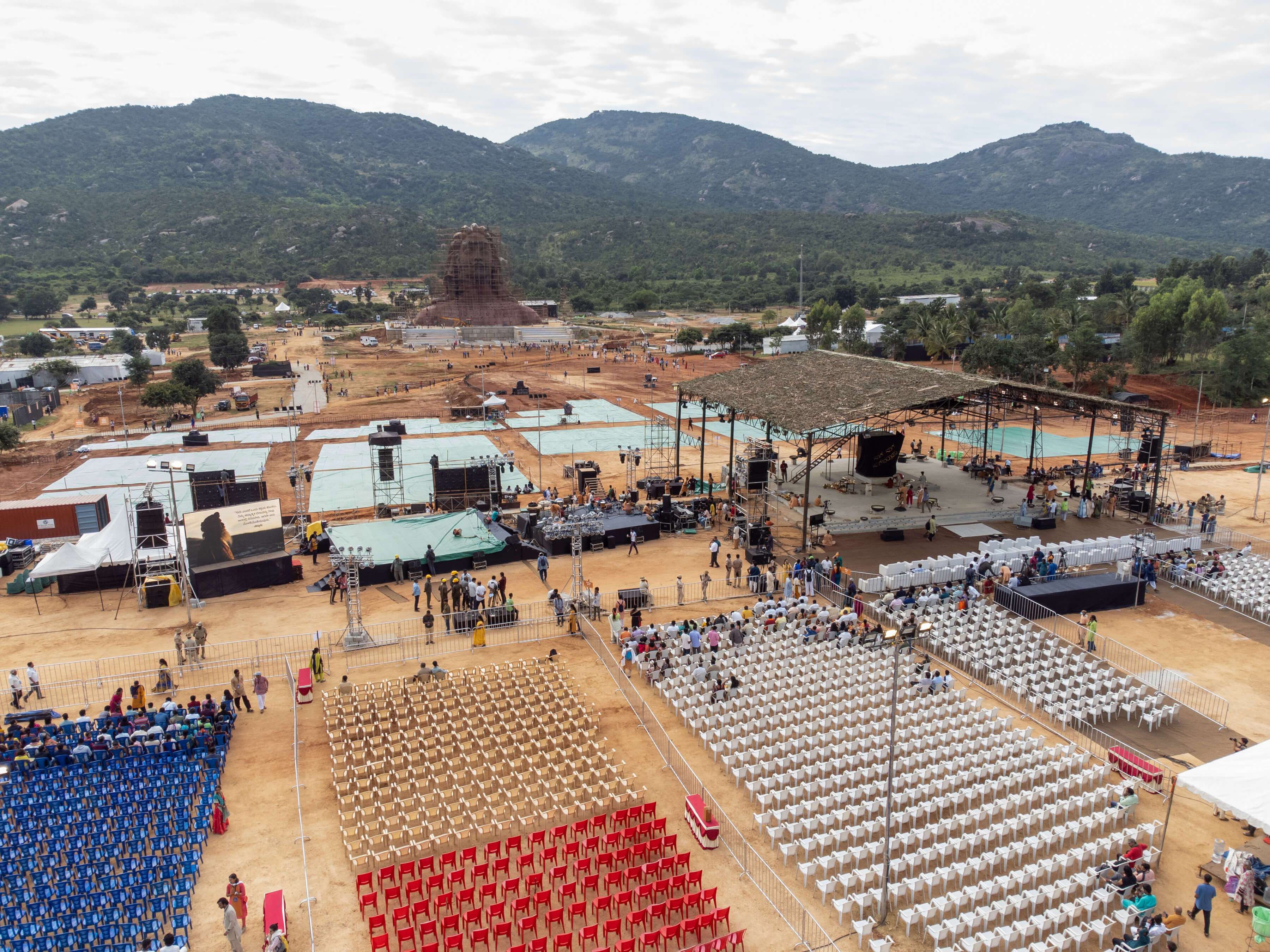
Over 35 teams fell under the larger umbrella of Program Management. Some of these teams included enrollment, venue preparation, seating, parking, signages, check-in, audio, LED setup, transport, and toilet maintenance.
The 600–700 volunteers were divided into 7 clusters with 5 area teams. Weekly meetings were held to collaboratively discuss progress, ideas, and concerns. During the 2 months of preparations, almost 350 volunteers stayed in village marriage halls and nearby hotels to cut out the 2-hour commute from and to Bengaluru. On the main day, there were close to 1200 volunteers at the venue.
The program team and dedicated volunteers went all out to ensure the event came to life smoothly. However, the tasks at hand didn’t come without challenges. Swami Prabodha says, “While organizing events was not new to us, we were seized by an unsettling feeling when we first laid eyes on the land. At first, we were unsure how the participants would sit since the entire area was hilly. The constant rain didn’t help our situation either.”
Once the land was leveled, the Program team sealed the seating area to prevent vehicle movement or footsteps from pockmarking the ground. But the perpetual rain turned the red soil into a quicksand-like composition, making it tough to move around without slipping. “We were checking with the meteorological department for weather forecasts daily,” shares Swami.
“Due to the rain, we didn’t know whether we would be able to complete all the arrangements on time. But with Sadhguru’s grace, everything turned out well.” He further adds, “Even though we know Sadhguru’s blessings are always with us, it doesn’t mean we slacken off. We must do whatever is needed.”
As soon as the last session came to a close, nearly 16,000 participants thronged toward Naga for darshan. The program team swiftly set up barricades to ensure a safe and orderly movement of such a massive crowd. Traversing the slushy red soil was hardly an impediment for the determined devotees. In just about 1 ½ hours, everyone had an up-close darshan of Naga and started departing.
Meanwhile, some volunteers collected cushions, chairs, stationary, and other items, while others helped distribute the packed dinner and support around the parking space. Everyone was engaged in their respective volunteering activities, which lasted the better part of the night.
On 10 October, after Guru Pooja at 5:30 a.m., the shrine was officially opened to the public. But before the first devotees arrived, the entire temple premises had to be cleaned – especially the trail of muddy footprints the participants had left in their wake. The temple team and brahmacharis took this up. Due to the lack of water on site, they brought a tractor with water, parked it near the shrine, and cleaned up the space.
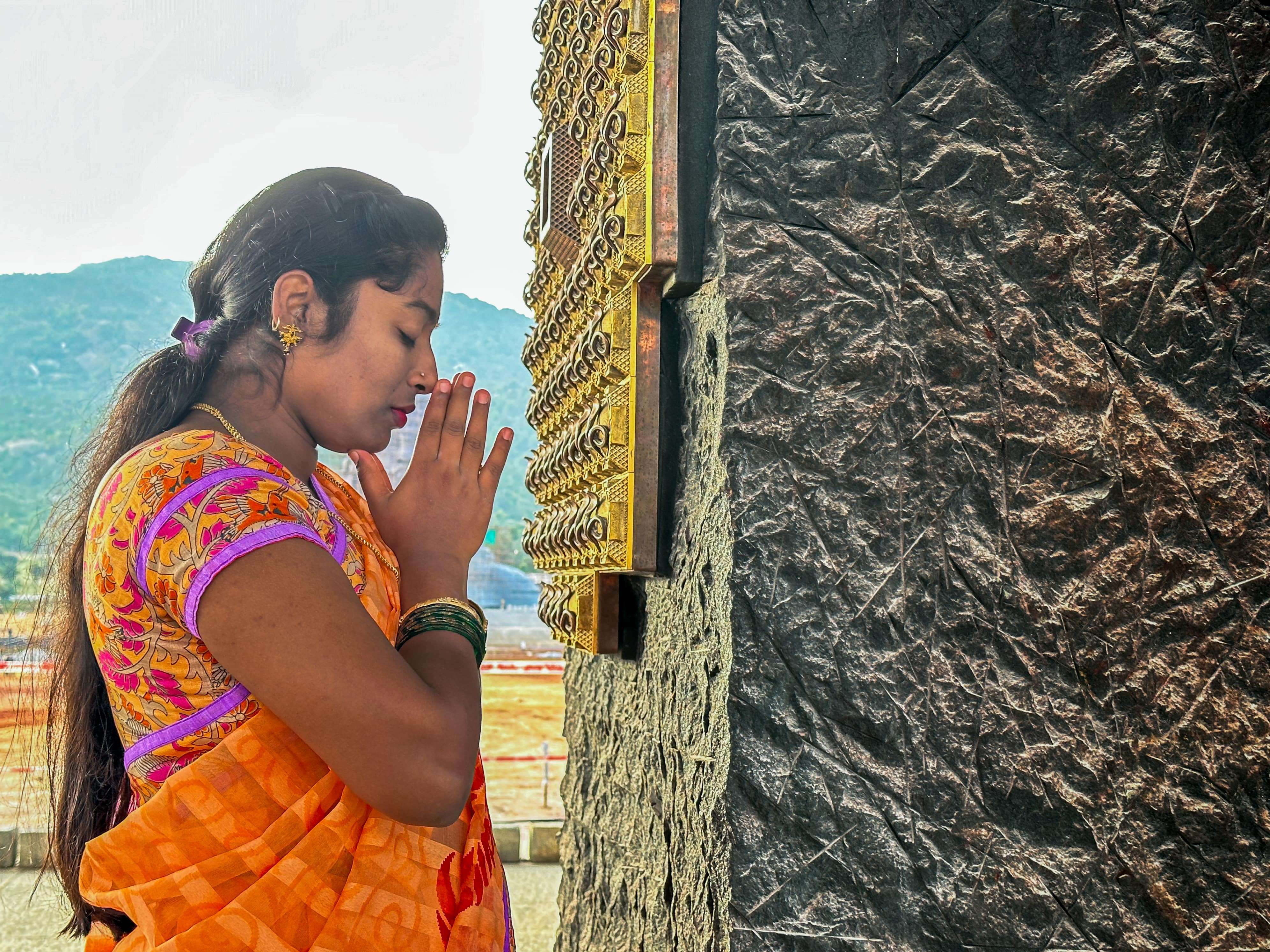
Currently, the shrine is open from 6 a.m. to 8 p.m. seven days a week, with arati taking place at 6:20 a.m., 12:20 p.m., and 6:20 p.m. Every morning, Naga is adorned with a handmade garland of flowers. Devotees can offer whatever they wish to Naga, ranging from fruits and flowers to sweets, incense, and camphor oil.
The Isha Yoga Center, Bengaluru, with the Naga shrine is located near Nandi Hills in Chikkaballapur district, 65 km north of Bengaluru and 45 km from the Kempegowda International Airport, Bengaluru. Bus and taxi services are available from Bengaluru city to Chikkaballapur town. The Karnataka State Road Transport Corporation also recently launched bus services between Chikkaballapur and Isha Junction (on weekdays)/Isha Yoga Center (on weekends).