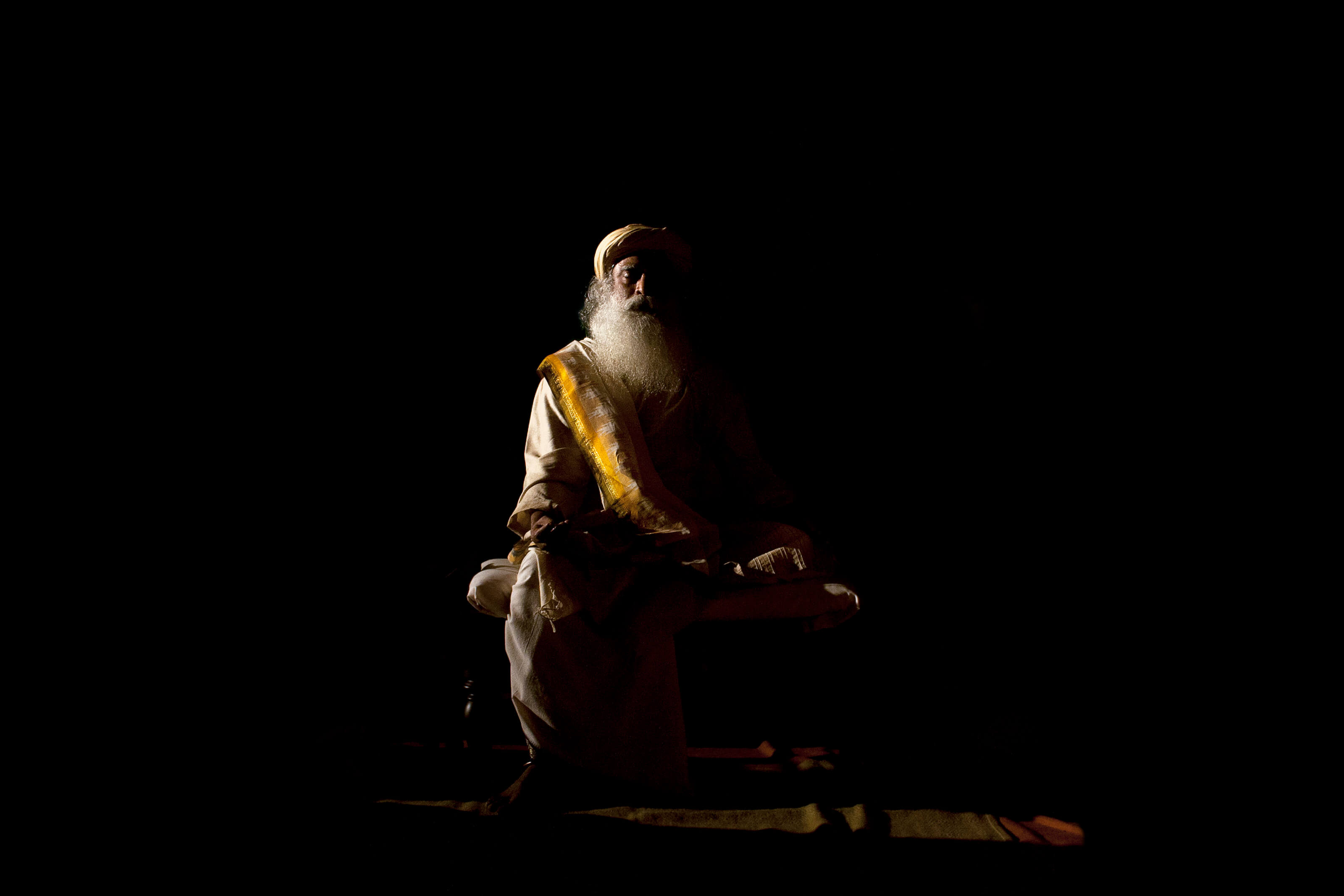
Why do brilliant young people choose spiritual growth over conventional life paths? They might sense that there’s more to life than the usual metrics of success – career, marriage, and house. “A human being is an incomplete project,” Sadhguru explains, offering a different vision of what it means to live a fulfilling life.

Question: Sadhguru, some say you “take” young people who have a bright future ahead of them to fulfill your “personal agenda.” What’s your take?
Sadhguru: They are right – I only “take” bright people, whether young or old. What would I do in dim company? I am not against dim-witted people, but it is difficult to work with them.
Everything I do is personal because I include everything in existence as part of myself. But your idea of what is personal might be different from mine.
That reminds me of this story: Once there was a small grocery store owner who had a pet parrot. The lively bird was the main attraction of the shop – he was always chatting with customers. The store owner was happy because the parrot fulfilled its purpose.
One day, while the owner was in the bathroom, the grocery store cat spotted a mouse and pounced on it violently. The parrot got scared and flew frantically around the shop. In his panic, he knocked down a jar of expensive almond oil. The jar fell and shattered on the floor, creating an expensive mess.
When the owner returned and saw what had happened, he glared at the parrot and shouted, “You fool! You knocked down such an expensive item.” He grabbed a small stick and began hitting the bird on the head. Despite the parrot’s cries, the man continued until all the feathers on the bird’s head fell out. From then on, the parrot sat in a corner of the store, bald and depressed.
After some time, the store owner was very remorseful. He offered the parrot the best food and constantly tried to talk to it. He begged, he pleaded, he apologized, but the parrot would never utter a word. The desperate owner even asked his customers to speak to the bird, explaining, “He’s angry with me.” But despite all attempts, the parrot never responded; he just sat there, bald and depressed.
One day, a huge man with a completely bald head entered the shop. The moment the parrot saw him, he forgot his depression. He flew to the counter, perched himself there, and asked, “So you knocked down a jar of almond oil too?”

Everyone understands life only as they know it; how else could they understand? Unfortunately, most people have structured their whole lives in such a way that every step, every relationship, every act is about what they can extract from others.
Even when they get married, they are only thinking of how much money, pleasure, and other things they can get out of it. If they look at any activity, they only think in terms of how someone could be using others, because they cannot think any better than that.
I do not think I have “taken” enough young, bright people because there is so much to be done for them as human beings. A human being is an incomplete project. I am “taking” people to complete the project.
When I look at people – the way they are, the way they live, and the way they have structured their lives – I can clearly see they will die as incomplete projects. When I see the possibility that they could be completed, then I want them. Some have already gone; others are still here, but they are already gone.
Whoever is talking about this – I know many people are – what does it matter? People always find something to talk about; is there anything they do not talk about?
Whenever a spiritual process happens and people are drawn to it, the first question that comes up is always about a “personal agenda.” If young women are involved, you know what they are thinking. If it is young men, they assume bonded labor or something else. People simply cannot think beyond their primitive instincts; that is their fundamental problem.
If they manage to think beyond that, the next thing they can conceive of is only money. They have nothing beyond these things in their life.
Such people’s comments and opinions are meaningless. No one should be guided by such opinions, but unfortunately, the world often is. That is also one of our projects: to free the world from the opinions of people who cannot think beyond these two basic drives.

This also happened to Gautama the Buddha. Wherever he went, people gathered, and young men and women would leave their families to become monks. With 40,000 monks following him, there were at least 20,000 angry families. That is not easy to handle.
Unlike today, where you can still maintain contact by phone and email, once they went to Gautama, they just disappeared; the families never saw them again. He would make sure the monks were sent to places where no one could see or meet them for many years.
Naturally, there was anger among the families. A few people devised a plan to discredit him. During one of his larger gatherings in a bigger town, a woman who appeared heavily pregnant came forward, stood before him, and exclaimed, “Enough of all this spiritual talk! You made me pregnant. What are you going to do about this child? What do you have to give to my baby?”
In front of the entire assembly, this woman claimed that Gautama had made her pregnant. He did not say anything because that would have been beneath his dignity. He simply looked at her. She was a professional who had come there for remuneration. Under his steady gaze, she became so uncomfortable that she shifted nervously, and the pillow she had under her dress to make her look pregnant fell onto the ground. Then he continued his talk. He faced many such situations throughout his life, and he was not alone.
This also happened to Lao Tzu, such a gentle being; he had no agenda, personal or otherwise.
One day, an unmarried young woman who cleaned his house became pregnant. When her father wanted to know who was responsible and beat her severely, she thought it best to say it was Master Lao Tzu.
Furious, the father gathered the village elders, and they confronted Lao Tzu: “The girl says you are responsible for her pregnancy.”
Lao Tzu responded, “Is that so?”
They called him a charlatan, destroyed his house, beat the monks, and chased them away. Only Lao Tzu continued to live there.
As her pregnancy progressed, the girl was overcome by guilt and told her father the truth – it was not Master Lao Tzu. But her father was too terrified to tell the townspeople, fearing they would take his head for what he had done to the Master.
When the baby was born, the townspeople brought the infant to Lao Tzu and said, “This is your baby – you take care of it.”
Lao Tzu looked at the child and said, “Is that so? This is my baby? Okay.” He took care of the baby.
Eventually, the girl could not keep silent any longer and told the whole town: “It was not Master Lao Tzu. It was the man at the fish market.”
The villagers went to Lao Tzu, fell at his feet, and said, “Master, this is not your baby! We wrongly accused and insulted you.”
Lao Tzu said, “Is that so?”
They took back the child, and he went on with his life.
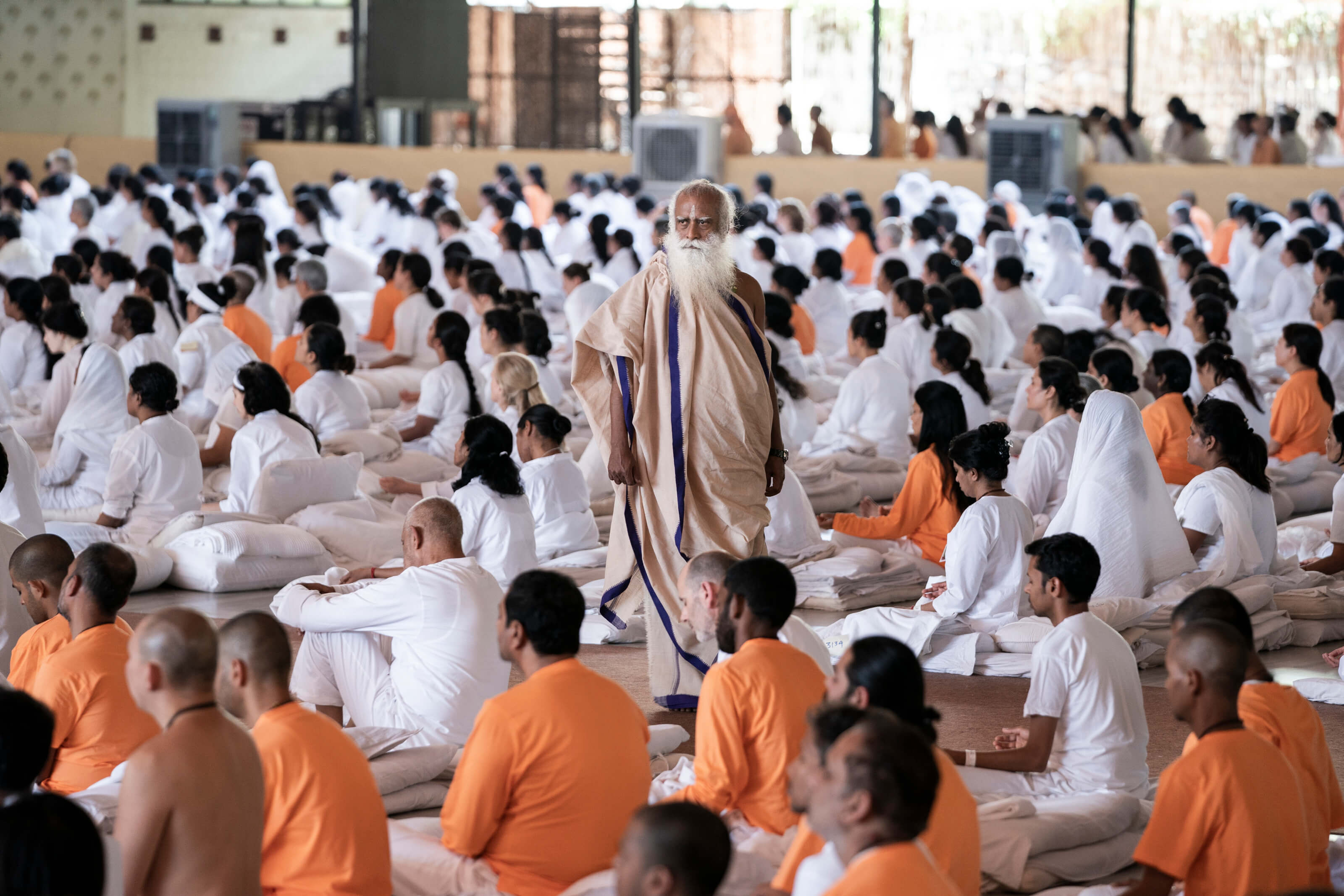
Other Yogis handled such situations differently; they would give people the works. It depends on the sensitivity of the society they lived in, but generally, no one gets spared. These things have always happened.
To those who are struggling with such issues: if you have a problem, do not be here; go and start a campaign. What is the issue? I am seeing how to weed out those who are not really focused on what this is – just wasting their time and mine, and their life and mine. I want to use what I have left effectively for those who really want to make use of it.
I do not want to waste my time and life on people who are constantly on a roller coaster. I want to spend my time on people who genuinely want to see something beyond their present limitations. This is only for such individuals; it is not entertainment. People who are struggling with personal agendas, please find a nice, pure place where no one will ask you to do anything.

This is a persistent problem in the world. Those who are talking like that are probably worried that their children will come to us and do something good, which they themselves could not do.
People worship Vivekananda, Gautama the Buddha, Jesus, Mother Teresa, and others, but if their own children show such qualities, they stamp them out immediately. Their own sons and daughters must go to the university, study, make money, get married, and reproduce.
They expect their children to go through everything they themselves have gone through, as if depression, lack of purpose, and fear of everything were an essential part of life. For this foolishness, they will pay a heavy price – this is not a punishment or curse; it is because they have created fundamental contradictions about life within themselves.
They say that those who have come to us are bright. If they are bright, they must know what they are doing. That means those who are making these accusations must be the stupid ones who do not know what they are doing and are overly concerned about what others are doing. It is hard to work with stupid people.
If you look at the young people who have come to us, you will see they do not have many of the same struggles that their parents have had. They are not perfect human beings, but they are definitely more advanced projects. I will see that these projects are completed in this lifetime.