In the quest for spiritual growth and enlightenment, the path can often feel labyrinthine, filled with questions and uncertainties. How does one become an ideal disciple for a Guru? Sadhguru humorously elaborates on how excessive knowledge without true understanding can be tormenting and stresses the importance of not making one’s spiritual journey a social currency. This exploration might redefine your understanding of true knowledge and ultimate dissolution. Dive in to discover if you are an investigator, curiosity seeker, diligent learner, or breeze-like devotee.

Question: Namaskaram, Sadhguru. I’m fairly new to the spiritual process. I understand that during this process, we need a Guru for growth and progression. What should I do, and what should I avoid, to be the ideal disciple for the Guru?
Sadhguru: What should you do? There are different ways people embark on a spiritual path. Some begin as investigators, some out of plain curiosity. Others seek to learn something new to enhance their lives.
Some people come to acquire knowledge that will improve their lives. Others come to dissolve. You can approach the spiritual process as an investigator, a curiosity seeker, a disciple who wants to learn, or a devotee who wants to dissolve. It is an individual choice. No one can force you to be something other than what you are right now.
If you are an investigator, I will enjoy engaging with you, but the way I am, you will not enjoy it. If you are a curiosity seeker, I will entertain you. If you are a learner, it means you want to gather something. This is an ancient instinct: human beings, as hunters and gatherers, want to accumulate things. They believe that filling their bags will enhance their lives. They fail to understand that the larger and fuller the bag becomes, the more burdensome it is, regardless of its contents.
Imagine if each of you were given 20 kilograms of gold nuggets and had to walk back to your hometowns without using any vehicles. Even if it is gold, the burden of its weight would be overwhelming. No matter what you are gathering, the more you accumulate, the more burdensome it becomes. That is the fate of a disciple.
A devotee, on the other hand, becomes less and less until they become nothing. They go like a breeze, without any great effort.
If you want to fill yourself with knowledge, it will become burdensome. Most people will not get the urge to dissolve until the burden of life grinds them down; otherwise, they always think they will do it tomorrow.
Life itself is not a burden; it is the way you hold it that makes it burdensome. You can either use life as a flotation device and float through it effortlessly, or you can carry it on your head. You can either simply float with the planet as it turns, or you can make your experience such that you feel you are carrying the entire world on your head.
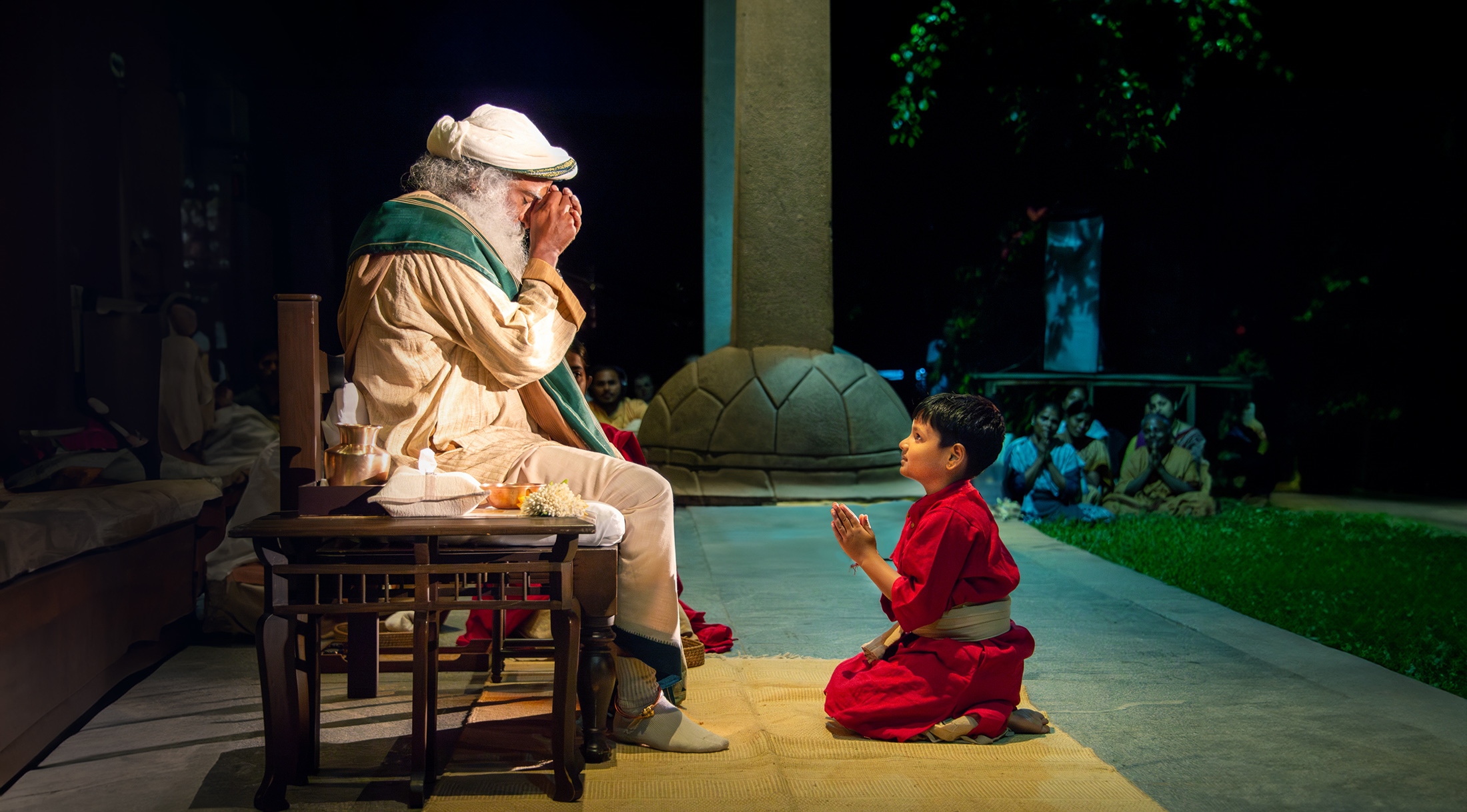
If you carry it on your head, we call you a disciple. It is a very respected, coveted position because you are in the “Guru University.” But if you are a devotee, there is no burden. You will pass gently, like the breeze.
The ideal disciple quickly reads everything, listens to everything that has been said, fills their head with it, and struggles. They become so tormented that they want to unburden themselves from it all.

There is a story of a Japanese Buddhist monk who was in search of a good Guru or Zen Master. He attached himself to an ashram for twelve years. One day, the master said, “You have realized. There is no point in you simply being here. It is time for you to go out and spread the message.” On the way, the monk met another senior monk who was still wandering and wanting to know.
That monk asked, “You spent twelve years there. What did you get to know?” The monk said, “Oh, there was nothing in that ashram that I did not already know.” The other monk asked, “Really? Then why did you spend twelve years there?” He said, “Well, it took me that much time to realize that there is nothing here that I did not already know. Once I realized that, my Master said, ‘Now you have realized, you can go out and spread the message in the world.’”
An ideal disciple should not waste time filling themselves with everything I have said and with things that others claim I have said but I actually have not. When you fill yourself with all that, you will get totally confused. Only when you realize the burden of thinking you know without really knowing will you be saved. As long as you feel like you know, but you actually do not know anything, it is torture. But this torture should mature you. Otherwise, with tidbits that you have picked up here and there, you will try to share your experience with others, which we always tell you not to do.
If you discuss your spirituality with others, whatever tidbits you have picked up here and there will become social currency. For example, one might say, “When I sit like this, do you know what happens to me? My Guru personally appears and initiates me into something special. He has not done this for anyone else but me because I’m the ideal disciple.” Once you make social currency out of your spiritual process, you are finished.
This is why we stop anyone we see talking spirituality. Once you do that, you are totally gone. It will torture you because what I say may seem contradictory at times. Only spiritual teachers who come from a scripture will say the same thing to everyone. I am not like that. If I talk to one person, I will say one thing. If I talk to another person, I will say something else.
What is the point of speaking to someone in a way that is not relevant to them? But that is what happens when you make an authority the truth in your life. Whether it is a person, a Guru, a scholar, a book, or a scripture – if you make that the authority, you have lost it.
Let me tell you a story. In Tennessee, among older, wealthy families, it was common to have a large, leather-bound Bible. In one such family, a young boy who had just learned to read returned home from his boarding school on the East Coast. Excited about his new skill, he wanted to read everything he saw.
When he opened the family’s large Bible, a dried leaf that had been pressed between the pages fell out. The boy, in his excitement, called out to his mother, “Mama, come and see what I’ve found!” When she came, he exclaimed, “Look, Adam’s underwear!”

We do not know what all falls out of books, but some scholars do, and because of that, they are deeply burdened by the weight of knowledge. Generally, I do not know whether I have a head or not. Compared to your brawn, your brain is far more porous; it is important that the breeze goes through it. The more open the brain is, the better it works. It should not be clogged with all the things you have gathered, either in a university library, from other people, or from Sadhguru.
The idea is to cleanse it so that when you sit here, just as your nostrils are open and breathing, your brain should also breathe. Then you become an ideal disciple. You do not burden yourself with knowledge, but you cannot leave – that is a good disciple.