Imagine waking each morning to a life on auto-pilot. This isn’t just the reality for prisoners; it’s also true for many of us who are seemingly free but caught in invisible cages of our own making. We often believe a new place or lifestyle will change everything, but what if the real key to transformation lies within us?
Dive into the heart of genuine change beyond surface-level tweaks to a profound inner transformation. Discover a path of self-redefinition that starts not by changing our surroundings but by changing our very way of being.
Questioner: I have been stuck in conflict for years, wanting to change my life dramatically, possibly moving to India. My family is supportive, my business offers freedom, but I still feel stuck. I admire your work and want to contribute to a rural community, but I’m unsure if my desire for change is real or just a dream. What should I do?
Sadhguru: Whether you go to India or Antarctica, you are still the same person, so what is the point? You want to change, but by changing the external circumstances of your life, nothing truly changes. Whether you are in London or in rural India, real change will happen only when something within you changes. If to facilitate this change, you want to move to India, Africa, or somewhere else in the world, that is a minor rearrangement, but it should not be the focus.
Going to India or changing a village should not be the focus. If something has happened within you that has made such a significant difference that you want to share it, then you go wherever it is most conducive to share that experience, whether it is in your family situation, your business, on the streets of London, or in rural India.
The point is not where you are and what you do. The order of priorities should be being, doing, having. First, establish your way of being. Once your way of being has changed, you will naturally find your way to where you need to be and what is most suitable for you to find expression. Relocating is not a big decision you have to make.
If your way of being has changed, you will naturally move toward where you can be most useful and find maximum expression. Otherwise, what does it matter where you are? How you are really matters both for you and everyone around you. Where you are neither matters for you nor for anyone around you.
If you have already been through Inner Engineering, it would be good to go through Bhava Spandana and Samyama as well. This is not some marketing ploy to take you from one program to another. If people were better prepared, or if society had prepared you more adequately, there would be no need for multiple programs; we would do everything in one shot.
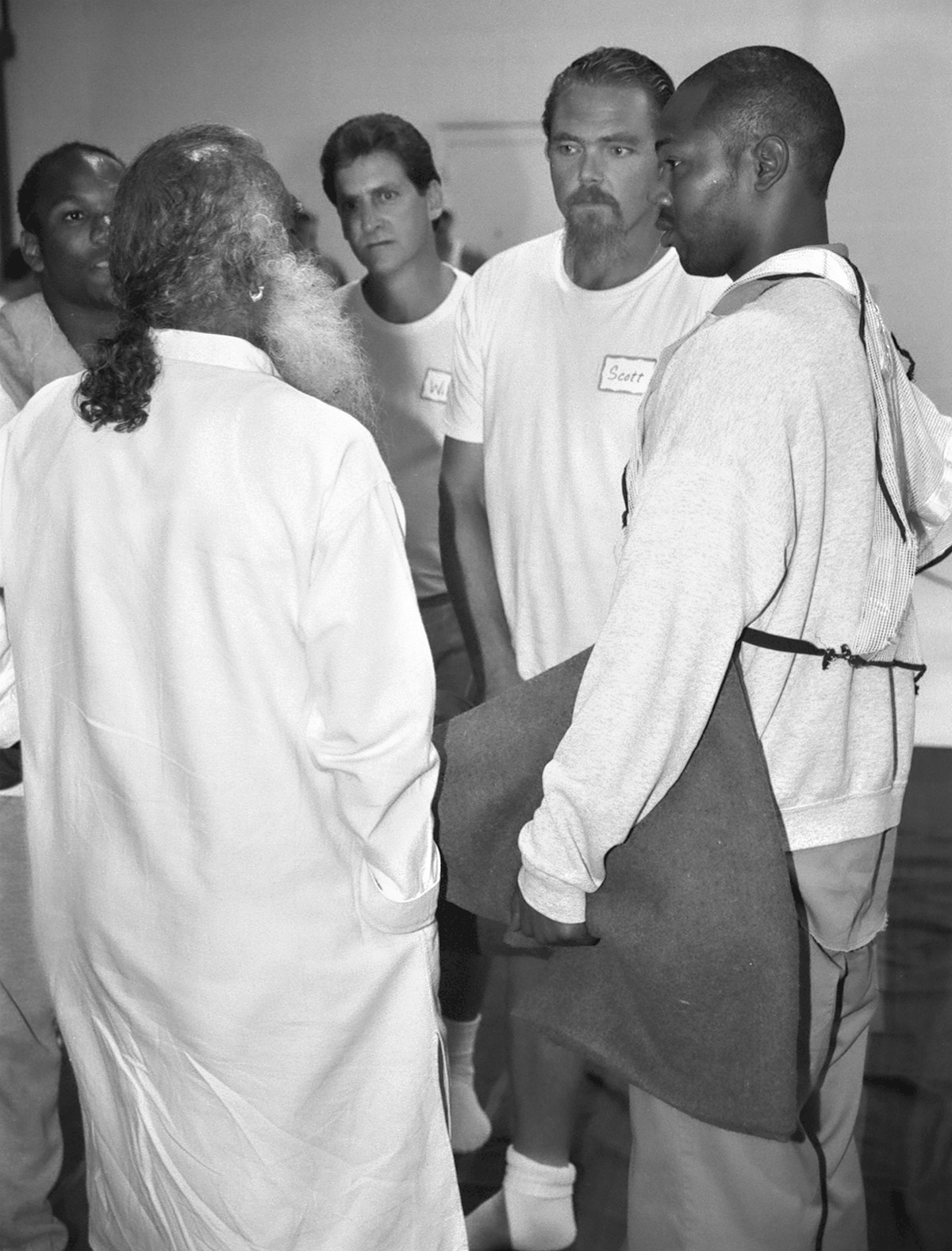
This happened when we first received permission to go into a prison and talk to inmates. I had planned to give an introductory talk on the first day, but there were people who had been locked up for eight to fifteen years, many of whom would be there for the rest of their lives. Their longing was such that we completed an Inner Engineering program in a single day. We followed it up with Bhava Spandana and then Samyama. By the end of the program, they were in a different state altogether.
A similar thing occurred when I taught a program in a Pennsylvania prison, where life sentences are without the possibility of parole. Since there is no hope for a better possibility, there is no incentive for a human being to behave in a responsible way.
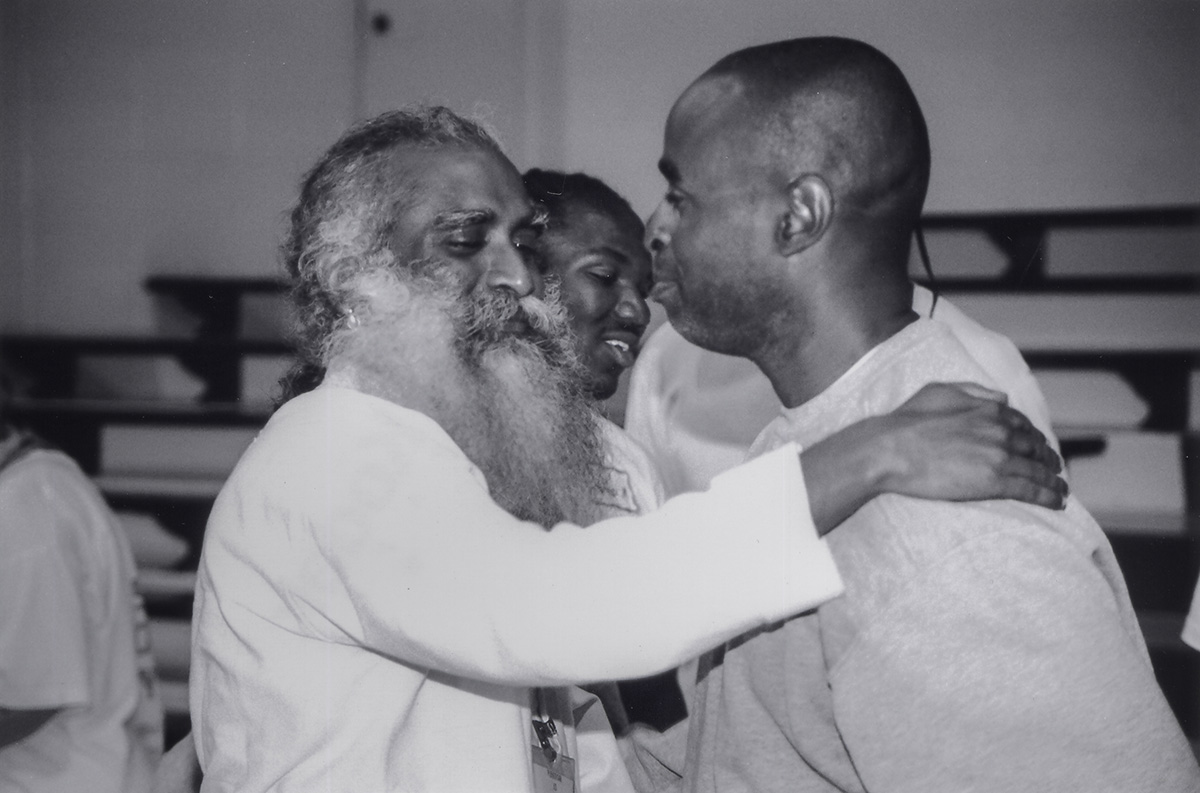
There was a tall Black man who had been there for 30 years after a robbery he pulled off at age 18, during which he shot three people. Considered extremely dangerous and violent, he had been kept in solitary confinement all these years. I got special permission to spend some time with him in his cell.
Prison is a very unique environment. Everything is structured; you do not have to pay bills; food is provided on time; you are woken up punctually; and doors are opened and closed for you. You can always go to bed on time, and you never have to overwork. It seems perfect, except that someone else is controlling everything for you – that is the only problem. But if you are sensitive to it, you will notice there is indescribable pain in the air, just because human beings are locked up.
When this particularly violent inmate decided to join the program, everyone was surprised, and an armed guard was stationed inside the classroom. Despite my request to have the guard outside, prison regulations required his presence inside. The guard stood there with his gun at the ready the whole time.
On the fourth day, this inmate broke down and wept like a child. He shared that for thirty years, he had been unable to sit still, constantly pacing his cell. Now that he had started meditating, for the first time, he could sit in one place, and this realization overwhelmed him.
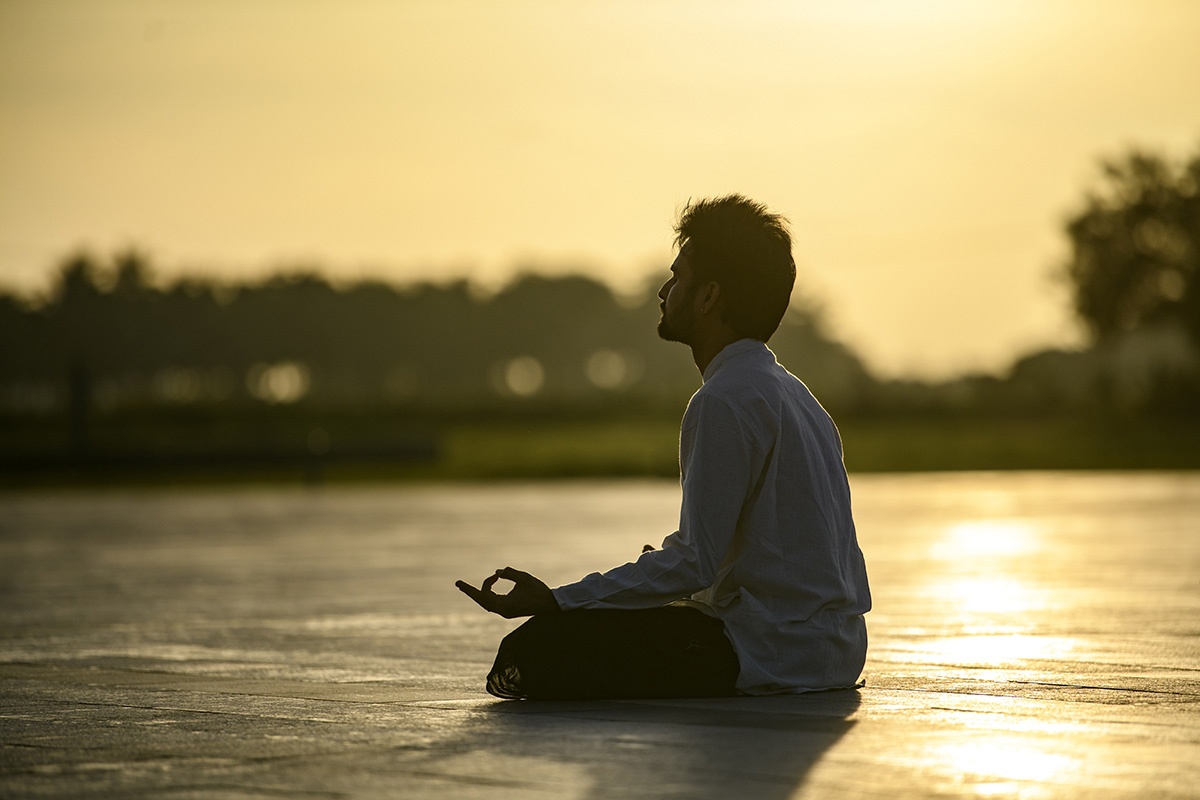
The ability to sit with ease is a simple yet profound thing that eludes most human beings, not just prisoners. If everyone could sit with total ease, there would be no need to initiate people into meditation. Many individuals are in a worse state than prisoners. For this inmate, the system caused it, but most other people on the planet are causing it to themselves. They have made themselves so restless that they cannot sit in one place even when there is nothing to do.
Most human beings always have to do “their thing.” People doing their thing is destroying the planet. This is simply because they cannot sit in one place with total ease; that is not meaningful to them. They have to keep doing something all the time. This is not just that one man in the prison’s problem – this is the whole world’s problem.