Capturing a black hole’s image was a milestone for science, offering a stunning visual to Einstein’s abstract concepts of space and gravity. Turning from telescopes to the mind space, Sadhguru challenges us to look deeper, suggesting that knowing the universe might demand more than scientific observation. Dive into his perspective on how to truly comprehend the cosmos.
Questioner: Namaskaram, Sadhguru. The Event Horizon Telescope recently took the first ever picture of a black hole, which further propels Einstein’s theory of relativity, which describes gravity as a consequence of the warping of space and time. They say a black hole is anything but an empty space. It is just a large collection of matter squeezed into a small area, which results in a gravitational force that is so strong that not even light can escape. So, my question is, how does gravity impact space-time?
Sadhguru: Your legs and backside are telling you how long you have been sitting here only because of gravity. If there were no gravity, there would be no problem, would there? This is the kind of scientific wisdom that is being propagated in weekly magazines, online articles, and WhatsApp messages – not entirely wrong, but too simplistic. But there is an anomaly in the question. You said that gravity is a consequence of the warping of space-time, but the last part of the question contradicts that.
Sciences should not be approached frivolously; it needs a certain level of involvement and engagement. I think that less than ten people on the planet truly grasp the theory of relativity – maybe 25 at the most, and even their understanding might be somewhat limited. Albert Einstein himself was aware that the limitations of his understanding and openly spoke about them.
So it is better not to make up things like, “space-time is warping somewhere.” Nothing in the universe is a straight line; everything is warping. That is the nature of existence and the planet itself. When you really look at it on a large scale, everything is warping, and even the sun’s rays do not come to you as a straight line; there is also a warp to them. You cannot confine the nature of the universe to a fixed concept in your mind.
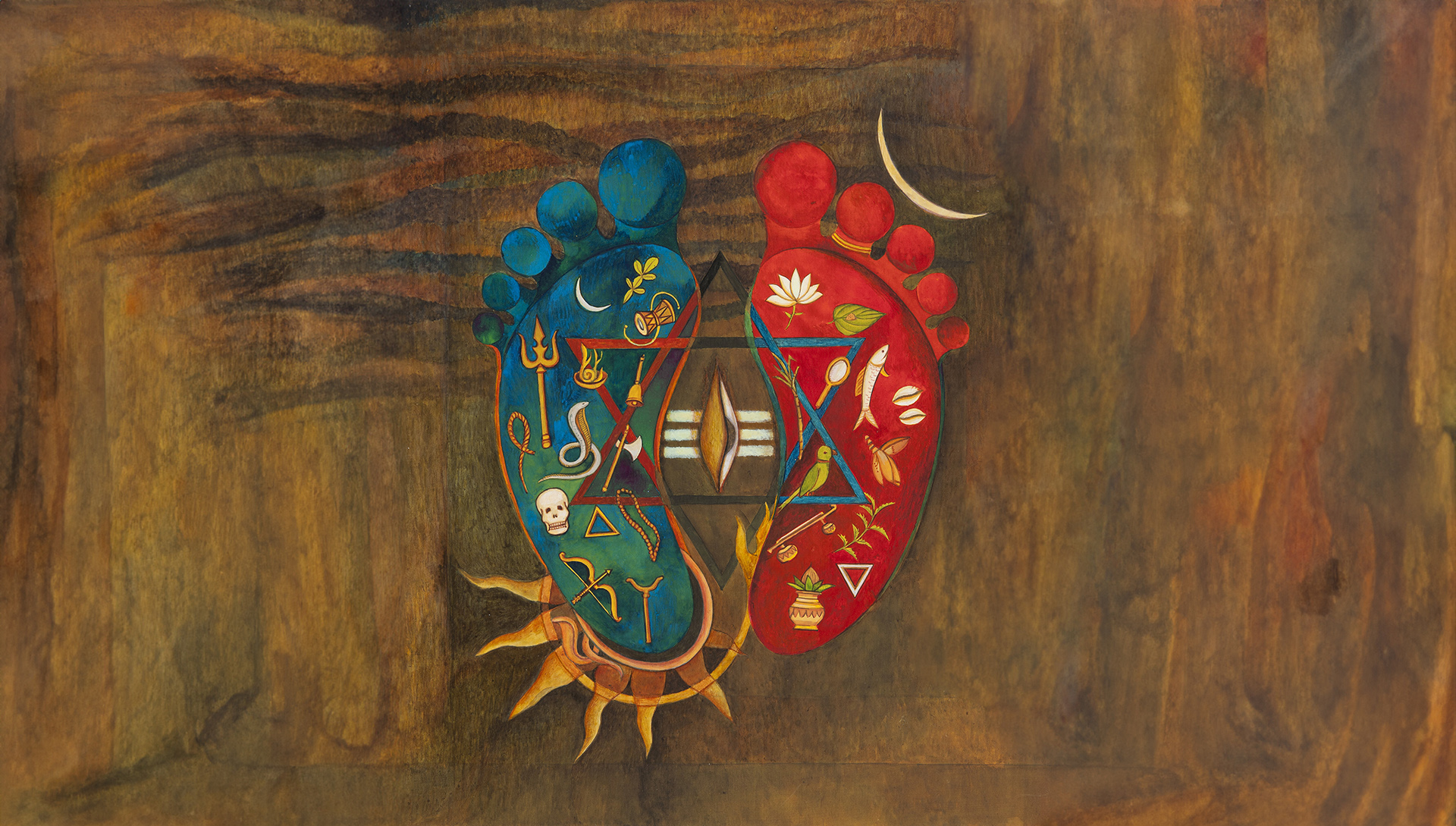
In Yogic culture, there are beautiful images where Shiva sits with an open mouth from which galaxies emerge. There are other depictions where all the galaxies are being sucked back. So, Shiva represents that which is not physical in nature. Whether you want to call it a black hole, dark energy, or by some other name, it is perfectly okay. I am not trying to verbalize scientific principles; I am just sharing dialectical expressions. What these images say is that everything comes from nothingness and goes back into nothingness. In a way, science is coming close to that space, but do not try to set a certain understanding in stone in your mind.
Once Shankaran Pillai invented a mechanical toy that children were supposed to assemble themselves and make work. A young mother, after unsuccessfully trying to put it together, asked, “Is this not too complicated for an eight-year-old?” Shankaran Pillai said, “No, this is very important because this toy will prepare children to live in today’s world: whichever way you put it, it is wrong.”

Whichever way you try to figure out the nature of the cosmos, you are already wrong, not because your conclusions are wrong, but because you are using the wrong tool. Using the mind to comprehend the cosmos is like trying to measure the depth of the ocean with a ruler. You will inevitably come to wrong conclusions.
Your mental tools are such that they make you feel the cosmos is bottomless. The mind can do certain things, but it is not equipped to handle everything. If you bring your mind to a state where you are not constantly caught up in your drama but you engage in it by choice, then you might figure out more than what you are currently able to see. But this does not mean you have captured the whole picture in your mind. There are other ways. But if you think you can grasp everything by thought alone, that is a foolish approach.
I think modern physicists are about to acknowledge that “We not only do not know – we will not know.” This means they admit that the instruments we have are not good enough to really know anything. So, do not try to fix it in your mind. It does not work like that.
When you say “space is warped” or “time is warped,” what does this really mean in your understanding? This is the problem with the current education system: it is just words upon words. You gain vocabulary but no living experience of anything. You must invest a little more to educate yourself beyond books, words, and textbook sciences. Pay a little more attention to any part of creation – maybe a flower, a leaf, an ant, or a tree – to learn more about life. If you try to pay attention to the stars, you will see how daunting it is. Just pay attention to something.
Nothing in the universe will open up for you without attention. Today, attention deficit is considered a qualification. Unfortunately, more significance has been given to thought than to attention. Instead of sharpening your instruments of attention, you have complicated the thought-making process. Your thoughts are based on the limited memory that you have. You cannot think anything beyond that. Your ability to pay attention is a far more significant instrument of life than your thought process. This is what modern societies have gotten wrong. You need to train your attention, not your thinking. If you are interested in your children’s future, that is what you should do.
When you have children, you must treat them as your own life. If you do not have that commitment and dedication, you should not have children. If you were a tiger or a tigress, ninety percent would be determined by genetics and instinct, and only ten percent by education – by what you teach and demonstrate. But as a human being, only ten percent of who you are is determined by genetics, and a full 90 percent is due to learning.
Your behavior, speech, posture, and how you keep yourself are extremely important when you have children around you. It is not about doling out moral nonsense that no one listens to. Children do not listen to your great teachings. They pay attention to how you sit, stand, behave, and look upon other people. When you have children around you, you must evolve.